
Jacaranda Identification Guide
Identify jacaranda by its lavender-blue trumpet flowers, lacy fern-like bipinnate leaves, and round woody seed pods. Covers flowers, leaves, pods, look-alikes, and habitat.
Read the full Jacaranda encyclopedia entry →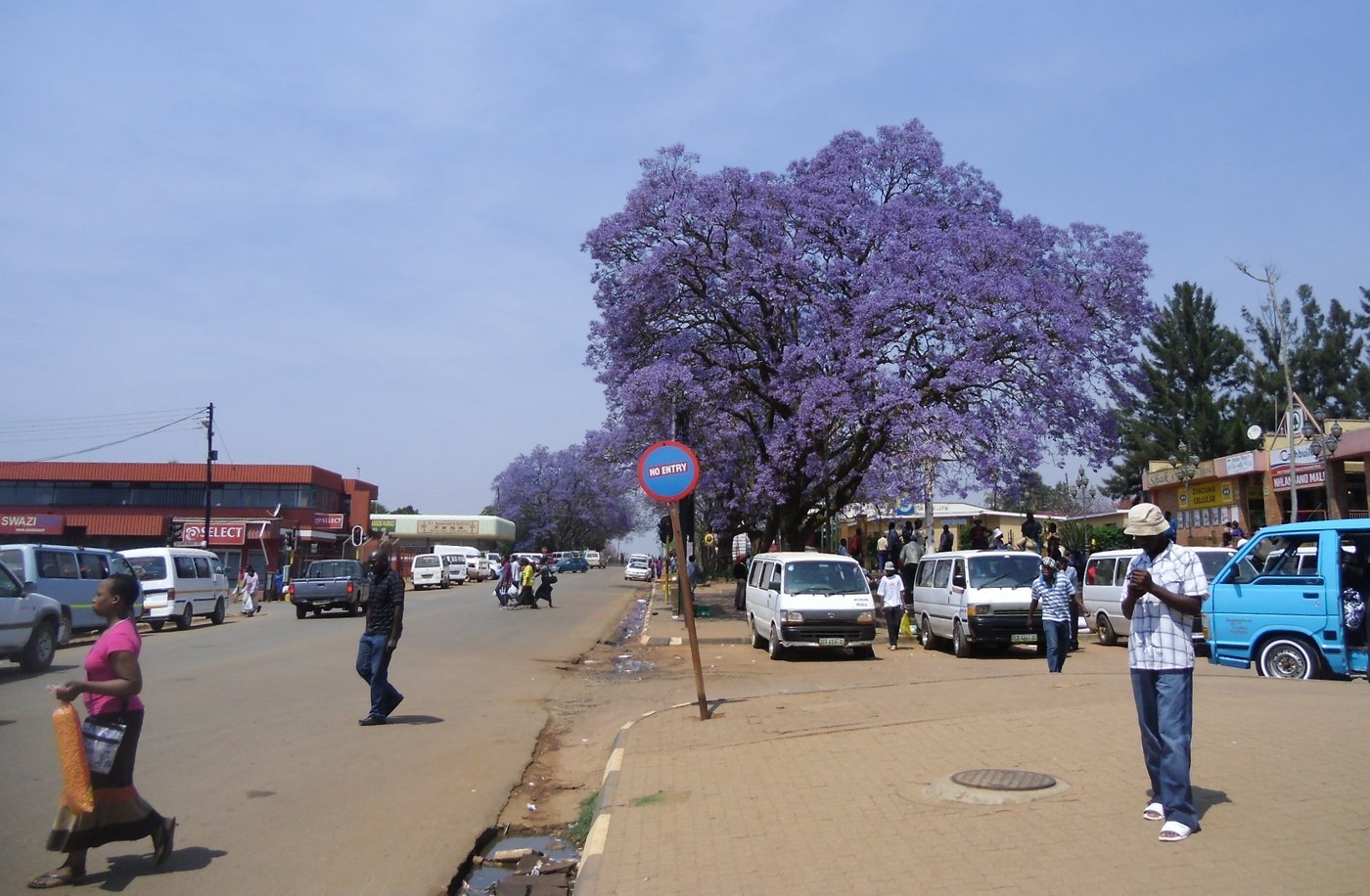
Key Identifying Features
Jacaranda (Jacaranda mimosifolia) is a spectacular subtropical tree famous for clouds of lavender-blue, trumpet-shaped flowers that blanket the canopy and carpet the ground beneath. Even out of bloom it is recognized by its delicate, fern-like, doubly compound foliage and round, woody seed pods. It grows 25-50 feet with a spreading, often umbrella-shaped crown.
Flowers
- The standout feature: dense, upright panicles of tubular, bell- to trumpet-shaped flowers in violet-blue to lavender, each about 1.5-2 inches long.
- Flowering is profuse, often on bare or nearly bare branches in spring/early summer, turning whole trees purple.
- Fallen flowers form a striking purple carpet beneath the tree — a reliable seasonal clue.
Leaves & Stems
- Leaves are opposite, large (up to 18 inches), and bipinnately compound (twice-divided), giving a soft, fern-like or mimosa-like texture — the species name mimosifolia means 'mimosa-leaved.'
- Each leaf carries many pairs of small side divisions, each with numerous tiny pointed leaflets.
- Foliage is bright green; the tree is briefly deciduous to semi-evergreen depending on climate.
Fruit
- Fruits are distinctive flat, round-to-oval woody capsules about 1.5-3 inches across, brown and hard, resembling castanets.
- They split open along the edge to release many thin, papery winged seeds and often persist on the tree.
How to Tell It Apart from Look-Alikes
- Mimosa / silk tree (Albizia julibrissin) has similarly lacy bipinnate leaves but bears pink powderpuff flowers and long flat bean-like pods, not blue trumpets or woody discs.
- Royal poinciana (Delonix regia) also has fern-like leaves but flaming red-orange flowers and long pods.
- The combination of blue trumpet flowers + round woody capsules + fern-like opposite leaves is unique to jacaranda.
Where You'll Find It
Native to South America, jacaranda is planted as a street and ornamental tree in warm, frost-free regions worldwide — southern California, Florida, the Gulf Coast, Mediterranean climates, Australia, and South Africa. It cannot tolerate hard freezes. Look for purple-flowering avenues in spring.
Quick ID Checklist
- Lavender-blue trumpet-shaped flowers in large clusters
- Fern-like, bipinnately compound opposite leaves
- Round, flat woody seed capsules like castanets
- Purple flower carpet on the ground in bloom season
- Warm, frost-free climates; common street tree
Lacy mimosa-like leaves plus blue trumpet flowers and woody disc pods confirm jacaranda.
Frequently asked questions
How do I tell jacaranda from a mimosa (silk) tree?
Both have lacy fern-like leaves, but jacaranda bears lavender-blue trumpet flowers and round woody disc pods, while mimosa has pink powderpuff flowers and flat bean-like pods.
When does jacaranda bloom?
It produces its mass of violet-blue flowers in spring to early summer, often on nearly bare branches, and the fallen petals form a distinctive purple carpet below.
What are the round woody discs under a jacaranda?
They are the tree's seed capsules, flat brown woody pods up to about 3 inches across that split open to release papery winged seeds.
Can jacaranda grow in cold climates?
No, it is a frost-tender subtropical tree that thrives only in warm, largely frost-free regions and is killed or damaged by hard freezes.