
How to Care for Jacob's Ladder
A graceful woodland perennial with ladder-like foliage and clusters of blue bell-shaped flowers in late spring.
Read the full Jacob's Ladder encyclopedia entry →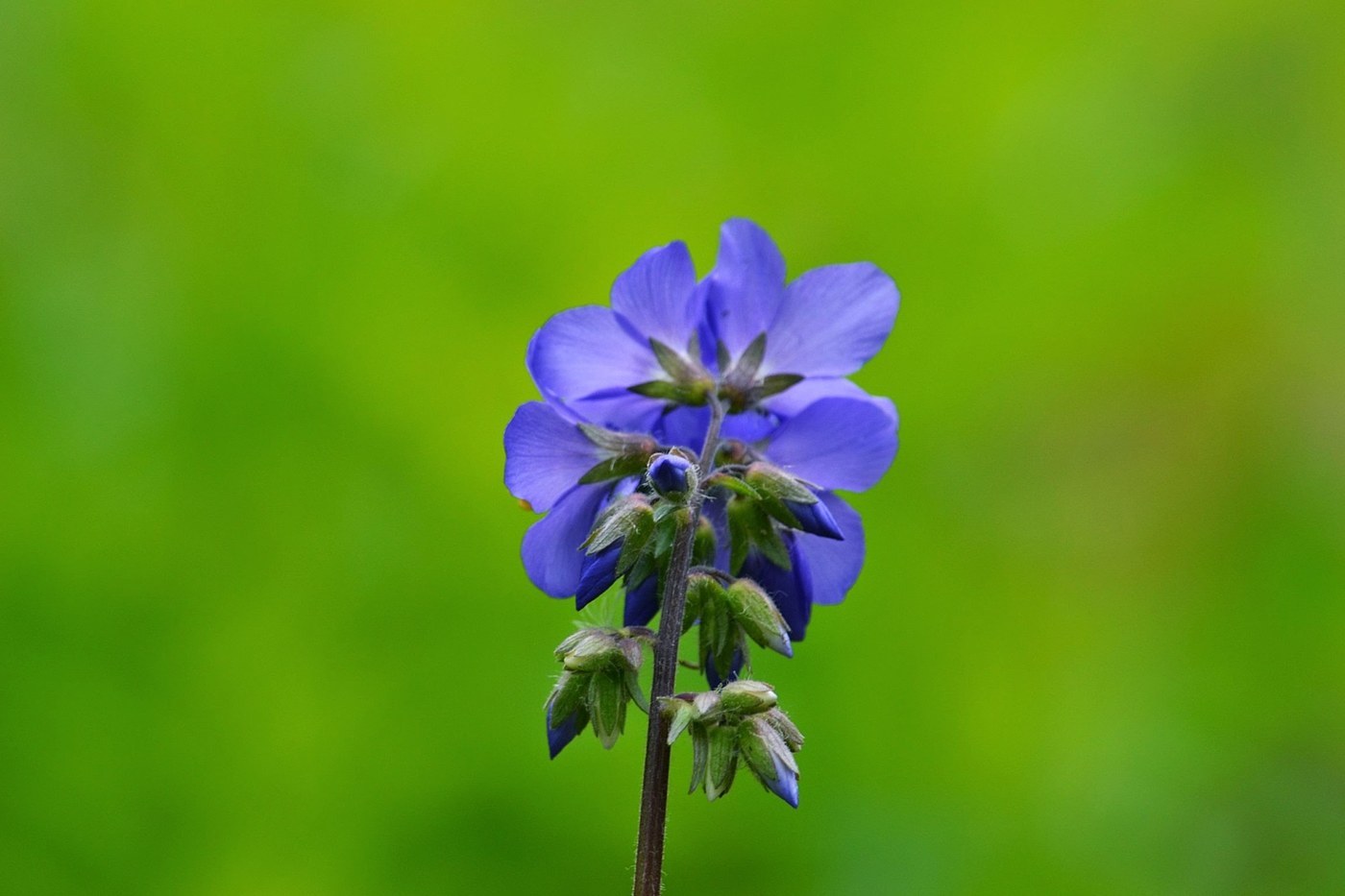
Jacob's Ladder (Polemonium caeruleum) is a graceful, clump-forming perennial named for its distinctive ladder-like pinnate leaves. In late spring it sends up airy clusters of nodding, bell-shaped blue flowers with bright yellow stamens. Easy to grow in cool, moist gardens, it brings a soft cottage-garden charm to part-shade borders and woodland edges.
Light
Jacob's Ladder grows well in part shade to full sun, though it performs best with morning sun and afternoon shade, especially in warmer regions where hot full sun can scorch the delicate foliage. In cooler climates it tolerates more sun as long as the soil stays reliably moist.
Water
Provide regular water to keep the soil evenly moist; this is a plant that dislikes drying out. Consistent moisture keeps the foliage lush and prevents the leaf scorch and early decline that occur in dry conditions. Take care not to let it sit in waterlogged soil, however, as good drainage is still important.
Soil & Potting
Grow in rich, humus-heavy, well-drained soil that retains moisture, much like a cool woodland floor. Amend with compost or leaf mold to boost fertility and water retention. A slightly acidic to neutral pH is ideal. Mulching around the base helps keep roots cool and moist through summer.
Humidity & Temperature
Hardy across roughly USDA zones 3-7, Jacob's Ladder is a cool-climate lover that resents extreme heat and humidity. In hot, muggy summers the foliage can decline; providing shade, moisture, and good air circulation helps it cope. It welcomes cool spring temperatures and a cold winter dormancy.
Feeding
A light feeder, Jacob's Ladder benefits from a spring application of compost or a balanced slow-release fertilizer as growth resumes. Rich, organic soil usually supplies most of its needs. Avoid excessive feeding, which is unnecessary and can produce weak, floppy growth.
Propagation
Propagate by division in spring or early fall, or by seed. Divide established clumps every few years to maintain vigor and multiply plants. Seed can be sown fresh and may self-sow modestly in the garden. Named cultivars, including variegated forms, are best propagated by division to keep their traits true.
Repotting / Pruning
Divide congested clumps every three to four years in spring to keep them healthy and free-flowering. Deadhead spent flower stalks after blooming to tidy the plant and encourage possible rebloom. If the foliage looks tired or scorched by midsummer heat, cut it back and water well; fresh new growth often follows once temperatures ease.
Common Problems & Pests
Jacob's Ladder is generally low-trouble but can suffer leaf scorch and browning in hot, dry, or overly sunny conditions; keep it cool and moist to prevent this. Powdery mildew and leaf spot may appear in humid, crowded settings, so ensure good air circulation. Slugs and snails occasionally chew the tender foliage in damp weather. Overall it is an easy, rewarding perennial when its cool, moist preferences are met.
Seasonal Care Tips
In spring, refresh mulch, apply compost, and divide clumps as needed while enjoying the fresh ladder-like foliage. The main bloom comes in late spring to early summer, so deadhead afterward to tidy up. Through hot summers, prioritize consistent moisture and shade; cut back scorched foliage if needed. In fall, the plant dies back naturally, and no special winter protection is required in its hardiness range.
Frequently asked questions
Why is the foliage on my Jacob's Ladder turning brown?
Brown, scorched foliage usually means too much sun, heat, or dry soil. Jacob's Ladder is a cool-climate plant that wants consistent moisture and afternoon shade. Move it to a cooler spot, keep the soil evenly moist, and cut back tired foliage to encourage fresh growth.
How much sun does Jacob's Ladder need?
It grows in part shade to full sun, but does best with morning sun and afternoon shade, particularly in warmer areas. In cool climates it can take more sun as long as the soil stays reliably moist.
How do I propagate Jacob's Ladder?
Divide established clumps in spring or early fall, which also keeps them vigorous. You can also grow it from seed, and it may self-sow modestly. Named or variegated cultivars should be divided rather than seed-grown to stay true to type.
Should I cut back Jacob's Ladder after flowering?
Yes, deadhead spent flower stalks after the late-spring bloom to tidy the plant and sometimes encourage rebloom. If the foliage becomes scorched in summer heat, cut it back and water well to prompt fresh new growth.