
Jacob's Ladder Identification Guide
How to identify Jacob's ladder (Polemonium) by its ladder-like rows of paired leaflets and clusters of cup-shaped blue (or white) flowers with bright yellow stamens.
Read the full Jacob's Ladder encyclopedia entry →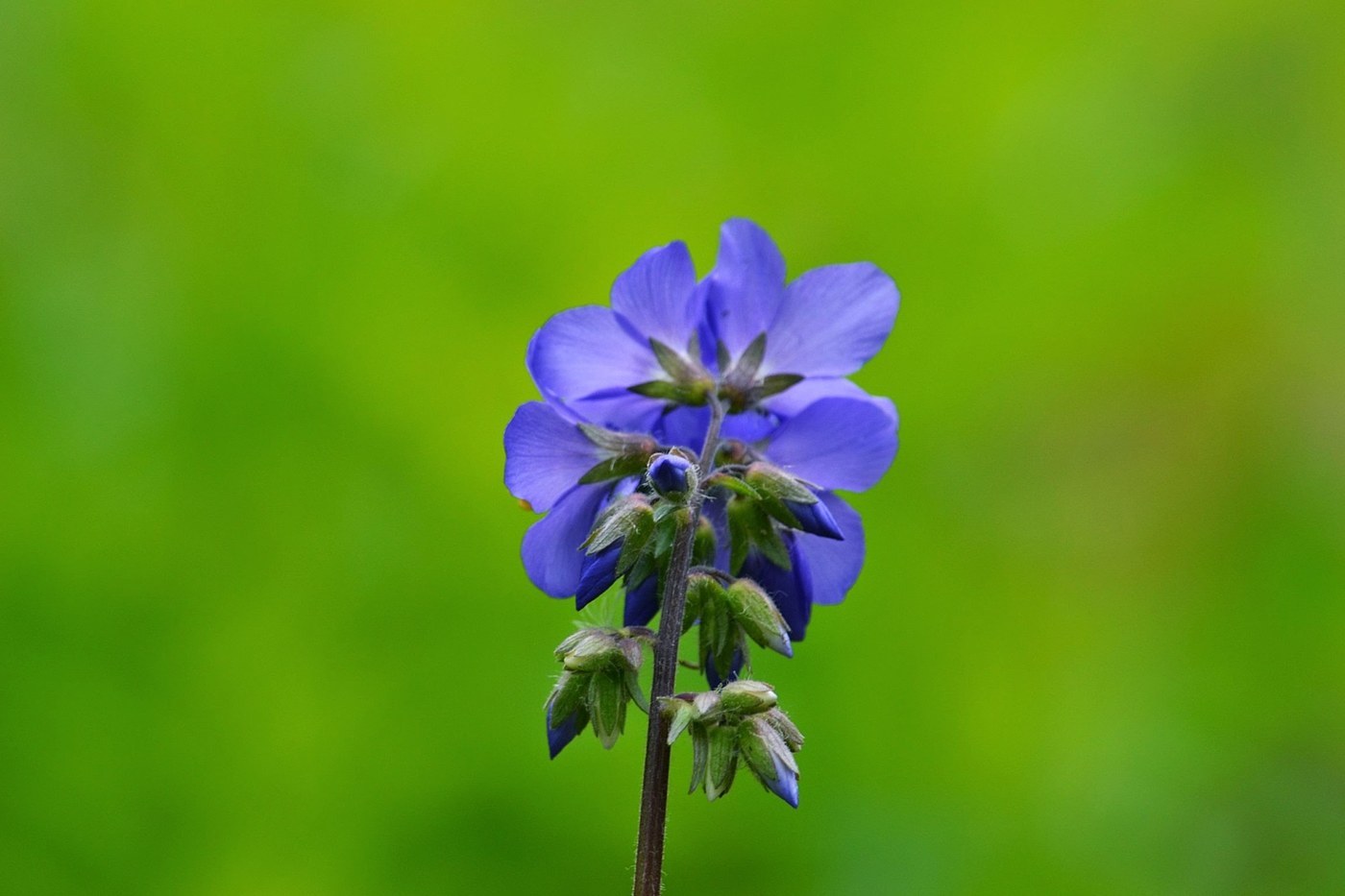
Key Identifying Features
Jacob's ladder (Polemonium) is a clump-forming perennial in the phlox family (Polemoniaceae). Its name and best clue is the pinnate leaf: many small leaflets arranged in neat opposite pairs up a central stalk like the rungs of a ladder. Above the foliage rise clusters of open, cup- or bell-shaped flowers, usually blue to lavender (sometimes white or pink) with prominent yellow or orange stamens.
- Leaves pinnate with paired "ladder-rung" leaflets
- Flowers cup/bell-shaped, 5-lobed, in nodding-to-erect clusters
- Color usually lavender-blue with contrasting yellow stamens
- Neat mounded fern-like foliage clump
Leaves & Stems
The foliage is the headline: each leaf is divided into many (11–27) small, lance-shaped leaflets set in opposite pairs along the rachis, creating a delicate, ferny ladder pattern. Leaves are mostly basal with some up the stem. Stems are slender, upright, often slightly sticky-hairy near the top, forming a tidy clump 30–90 cm tall depending on species.
Flowers & Fruit
Flowers are borne in loose terminal clusters (panicles or cymes). Each is open and cup-shaped with five rounded lobes, around 1.5–2 cm across, typically clear blue to violet, with a white or yellow throat and showy projecting stamens tipped with yellow-orange anthers. White and pink forms exist. Bloom is late spring to early summer. Fruit is a small dry capsule. The ladder leaves plus blue cups with yellow stamens together confirm the genus.
How to Tell It Apart from Look-Alikes
- Vetches / legumes: also have pinnate ladder-like leaves, but pea-shaped flowers and often tendrils, not open blue cups.
- Valerian: divided leaves and clustered flowers, but flowers are small and pinkish-white in flat heads, scented, without the yellow stamens.
- Phlox (relative): flat 5-lobed flowers but a long narrow tube, undivided leaves, and no ladder foliage.
- Polemonium reptans (creeping): a lower, looser native form; still shows the ladder leaves and blue cups.
Where You'll Find It
Jacob's ladder grows wild in damp meadows, woodland edges, mountain grasslands, and stream sides across the Northern Hemisphere. In gardens it is grown in borders and cottage gardens in moist, well-drained soil and sun to part shade. It is an early nectar plant for bees.
Quick ID Checklist
- Leaves pinnate with paired ladder-rung leaflets
- Cup/bell-shaped, 5-lobed flowers in clusters
- Usually blue/lavender with yellow stamens
- Neat ferny mounded clump, late spring–early summer
- Phlox-family perennial of moist meadows and gardens
Frequently asked questions
Why is it called Jacob's ladder?
The name refers to the leaves, whose many small leaflets are arranged in neat opposite pairs along a central stalk, resembling the rungs of a ladder, after the biblical ladder to heaven.
What color are the flowers?
Most commonly clear blue to lavender with contrasting yellow or orange stamens, though white and pink forms exist. The open, five-lobed cup shape with showy stamens is characteristic.
How can I avoid confusing it with a vetch, which also has ladder-like leaves?
Check the flowers. Vetches have pea-shaped (two-lipped) flowers and often climbing tendrils, while Jacob's ladder has open, cup-shaped five-lobed blue flowers and grows as an upright clump.
Where does Jacob's ladder grow naturally?
In moist meadows, woodland edges, mountain grasslands, and along streams across the Northern Hemisphere. In gardens it prefers moist but well-drained soil in sun to partial shade.