
Japanese Andromeda Identification Guide
Identify Japanese Andromeda (Pieris japonica) by its drooping chains of urn-shaped flowers, whorled evergreen leaves, and bright red new growth.
Read the full Japanese Andromeda encyclopedia entry →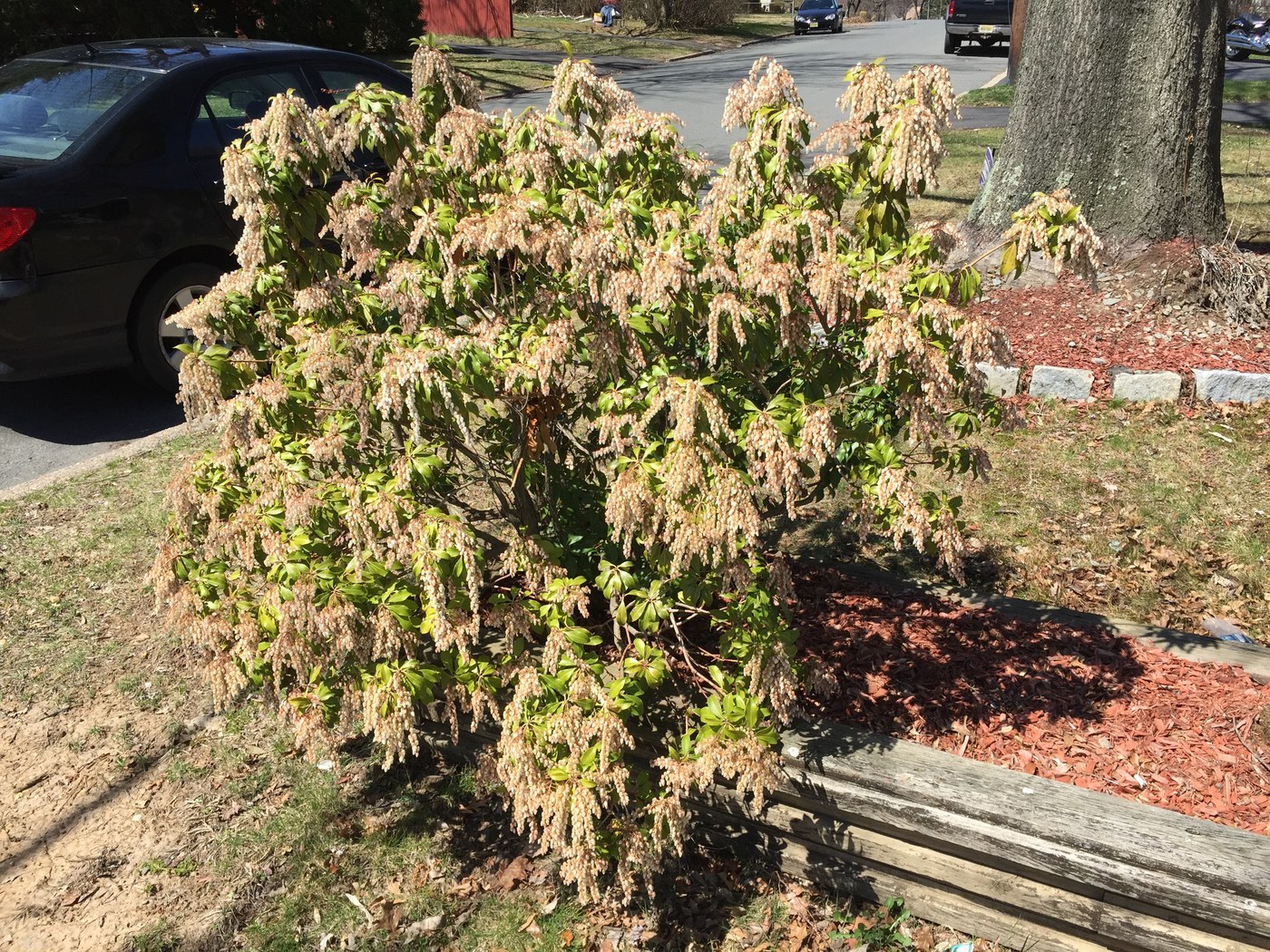
Key Identifying Features
Japanese Andromeda (Pieris japonica), also called lily-of-the-valley shrub, is a broadleaf evergreen shrub in the heath family (Ericaceae). It is recognized by cascading clusters of small white (or pink), urn-shaped flowers, whorled, leathery evergreen leaves, and bright bronze-red new growth in spring. Showy reddish flower buds are visible through winter.
- Evergreen shrub, typically 4–10 ft tall, mounded to upright
- Drooping panicles of urn/bell-shaped flowers in early spring
- Leaves arranged in whorl-like rosettes at branch tips
- Vivid red, copper, or pink new foliage
Leaves & Stems
Leaves are simple, alternate but crowded into whorl-like clusters at the ends of branches, lance-shaped to oblong, 1.5–3.5 in long, leathery, glossy dark green, with finely toothed margins. New growth emerges in striking shades of bronze, red, or pink before maturing to green; some cultivars ('Mountain Fire', 'Flaming Silver' which is also variegated) emphasize this. Stems are stiff and the plant has a layered, tiered appearance.
Flowers & Fruit
Flowers hang in drooping or spreading clusters (panicles) 3–6 in long, each flower a small, waxy, urn-shaped bell about ¼ in long, white in the species and pink or red in cultivars — strongly resembling lily-of-the-valley. They appear in early to mid-spring, and the flower buds form the previous summer, remaining conspicuous (often reddish) through winter. Fruit is a small, dry, brown five-parted capsule that persists.
How to Tell It Apart from Look-Alikes
- Mountain laurel (Kalmia): Evergreen Ericaceae relative, but has cup/saucer-shaped flowers (not urn-shaped) borne upright in rounded clusters.
- Leucothoe: Has similar drooping white flower chains but arching stems and leaves spaced along the stem rather than whorled at the tips.
- Lily-of-the-valley (Convallaria): A small herbaceous groundcover, not a woody shrub, despite the similar flowers.
The whorled evergreen leaves + drooping urn-flower chains + red new growth + persistent reddish buds combination is diagnostic.
Where You'll Find It
Native to Japan, eastern China, and Taiwan; widely planted across USDA zones 5–8 in shaded foundation beds, woodland gardens, and alongside rhododendrons and azaleas (which share its acid-soil, part-shade preference). It needs moist, acidic, well-drained soil.
Quick ID Checklist
- Broadleaf evergreen shrub with tiered branches
- Leaves whorled at branch tips, finely toothed, leathery
- Bronze-red new growth in spring
- Drooping chains of urn-shaped (lily-of-the-valley) flowers
- Reddish flower buds visible all winter
- Acid-loving; grows with rhododendrons
Frequently asked questions
Why does my Pieris have red leaves?
Japanese Andromeda produces vivid bronze-red or pink new growth in spring that gradually matures to dark green; some cultivars are bred for especially fiery new foliage.
What do the flowers look like?
They hang in drooping clusters of small, waxy, urn-shaped bells that closely resemble lily-of-the-valley, usually white but pink or red in some cultivars.
How do I tell it from mountain laurel?
Mountain laurel (Kalmia) has upright, cup-shaped flowers, while Japanese Andromeda has drooping chains of urn-shaped flowers and bright red new growth.