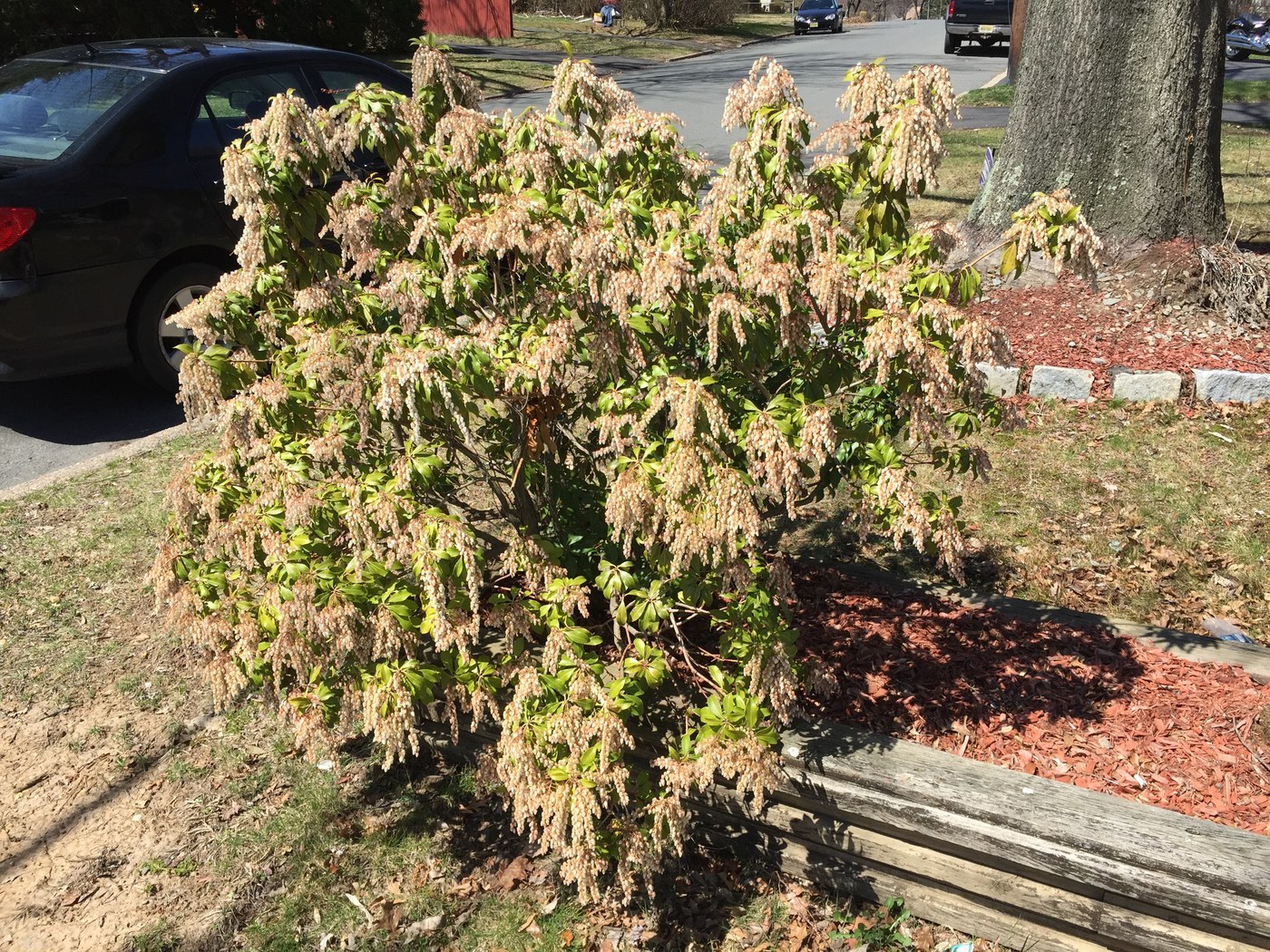
Japanese Andromeda
Pieris japonica
Japanese andromeda is an elegant evergreen shrub with cascading clusters of urn-shaped flowers in early spring and colorful new growth. It pairs beautifully with azaleas and rhododendrons.
- Light
- Part shade to dappled sun
- Water
- Regular; keep evenly moist
- Difficulty
- Moderate
Got a plant like this?
Identify any plant from a photo, free.
Overview
Japanese andromeda (Pieris japonica), also called pieris or lily-of-the-valley shrub, is a broadleaf evergreen prized for year-round interest. In late winter and early spring it drips with chains of small, urn-shaped white or pink flowers resembling lily-of-the-valley.
New foliage emerges in striking shades of bronze, copper, or red before maturing to glossy green, and drooping flower buds add winter texture. Cultivars such as 'Mountain Fire' and 'Valley Valentine' showcase vivid new growth or deep pink blooms.
As an acid-loving member of the heath family, it thrives in the same conditions as rhododendrons and azaleas.
How to identify it
A rounded, layered evergreen shrub.
- Flowers: pendulous, branched clusters (panicles) of small, urn-shaped white or pink flowers in early spring
- Buds: reddish flower buds form in fall and persist through winter
- New growth: bronze, red, or coppery young leaves maturing to glossy dark green
- Leaves: narrow, leathery, lance-shaped, whorled at branch tips
- Habit: dense and mounded, usually 4–8 ft tall depending on cultivar
Care & growing
Needs acidic, woodland-like conditions.
- Light: part shade or dappled light; protect from hot afternoon sun and drying wind
- Water: keep soil consistently moist; mulch to retain moisture
- Soil: moist, acidic, humus-rich, well-drained—the same as for rhododendrons
- Temperature: hardy in USDA zones 5–8
- Feeding: light spring feeding with an acid-loving plant fertilizer
- Pruning: little needed; remove spent flowers and shape after bloom
- Propagation: semi-hardwood cuttings; watch for lace bugs in too-sunny sites
Habitat & origin
Pieris japonica is native to Japan, eastern China, and Taiwan, where it grows in mountain forests and on slopes in cool, moist, acidic, well-drained soils.
In cultivation it is a mainstay of shade and woodland gardens across temperate regions, frequently combined with azaleas, rhododendrons, camellias, and other acid-loving companions.
Frequently asked questions
Why is Pieris called andromeda?
It was historically classified in or near the genus Andromeda and retains the common name 'Japanese andromeda,' though it is now placed in Pieris.
Why does the new growth look red?
That's normal and prized—many cultivars produce bronze, copper, or fiery red young leaves that mature to green.
What conditions does pieris need?
Cool part shade with moist, acidic, well-drained soil—the same conditions that suit rhododendrons and azaleas.
Japanese Andromeda guides
In-depth guides for identifying, growing, and caring for Japanese Andromeda.
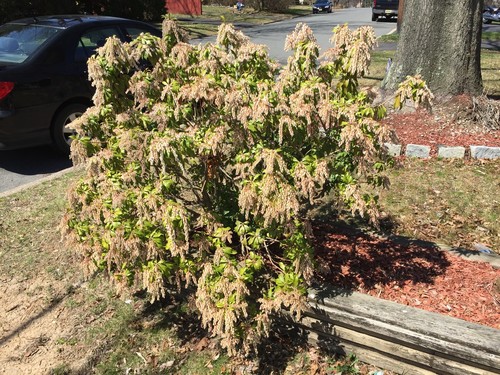
How to Care for Japanese Andromeda
An elegant evergreen shrub with cascading spring flowers and bronze new growth; give it part shade, acidic moist soil, and shelter from harsh sun and wind.
Japanese Andromeda Identification Guide
Identify Japanese Andromeda (Pieris japonica) by its drooping chains of urn-shaped flowers, whorled evergreen leaves, and bright red new growth.