
Japanese Black Pine Identification Guide
Identify Japanese Black Pine (Pinus thunbergii) by its long stiff paired needles, distinctive silvery-white winter buds, and picturesque irregular form.
Read the full Japanese Black Pine encyclopedia entry →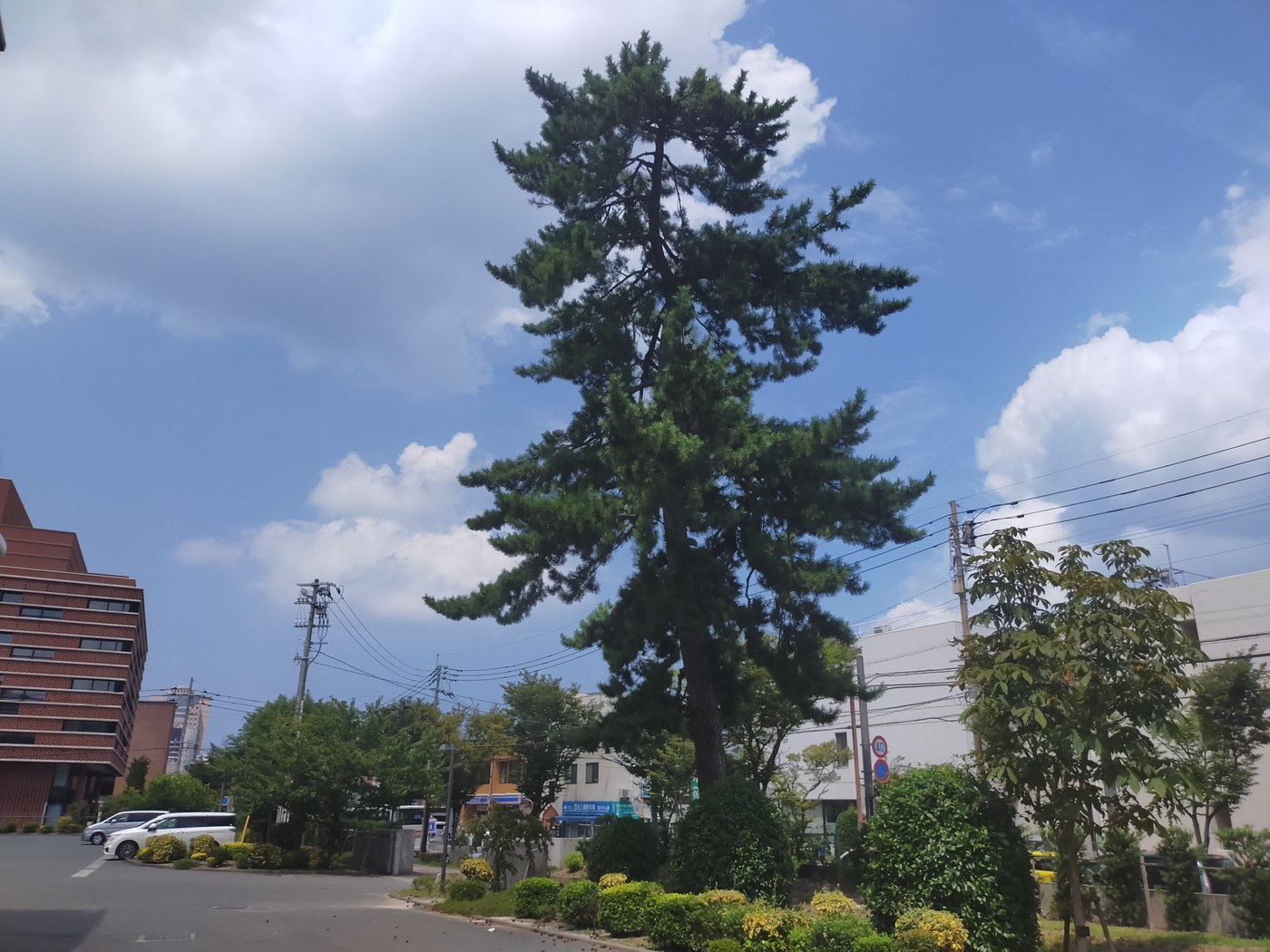
Key Identifying Features
Japanese Black Pine (Pinus thunbergii) is a medium evergreen pine, 20-40 ft tall in cultivation, prized for its rugged, irregular, often windswept and picturesque form - a classic bonsai and coastal landscape tree. Its standout diagnostic feature is its prominent silvery-white, cylindrical winter buds that contrast sharply with the dark foliage, plus long, stiff, dark green paired needles.
- Form: irregular, asymmetrical, often leaning or sculptural
- Buds: distinctive silvery-white, candle-like
- Needles: long, stiff, sharp, dark green, in pairs
Leaves & Stems
Needles are borne two per bundle, are 3 to 4 1/2 inches long, stiff, sharply pointed and dark green, twisting slightly. They are noticeably rigid - a needle resists bending and can prick. The most reliable clue is the terminal buds: large, cylindrical, and coated in conspicuous silvery-white scales (the "candles" of new growth in spring are also whitish). The bark is dark gray-black and develops deep, blocky fissures with age - hence "black pine."
Flowers & Fruit
Seed cones are 1 1/2 to 3 inches long, conical, brown, with scales bearing a small prickle; they often cluster and may persist. Yellow pollen cones form at the base of new shoots in spring. As with all pines, there are no flowers - reproduction is via cones.
How to Tell It Apart from Look-Alikes
- Japanese red pine (Pinus densiflora): paired needles too, but softer, more slender needles, reddish-orange bark, and reddish-brown (not silvery-white) buds.
- Austrian pine (Pinus nigra): very similar long stiff paired dark needles, but buds are whitish-brown and resinous, not bright silvery-white, and the form is more uniformly dense and upright.
- Scotch pine: shorter, twisted blue-green needles and orange flaky bark.
The long stiff dark paired needles + bright silvery-white cylindrical buds + dark fissured bark + irregular form confirm Japanese black pine.
Where You'll Find It
Native to coastal Japan and Korea, it is highly salt- and wind-tolerant and widely planted along seashores, in Japanese-style gardens, and as bonsai and sculpted specimens. Look for its artfully irregular silhouette in coastal plantings and ornamental gardens; trained specimens are often pruned into open, layered cloud-like forms.
Quick ID Checklist
- Needles in pairs, long (3-4.5 in), stiff and sharp, dark green
- Prominent silvery-white cylindrical terminal buds
- Dark gray-black, deeply fissured bark
- Irregular, picturesque, often windswept form
- Salt-tolerant; coastal and Japanese-garden plantings
Frequently asked questions
What's the most reliable feature for Japanese black pine?
Its terminal winter buds: large, cylindrical, and covered in bright silvery-white scales. Combined with long, stiff, dark green paired needles, this distinguishes it from similar pines.
How do I separate it from Austrian pine?
Both have long stiff dark paired needles. Japanese black pine has distinctly silvery-white buds and a more irregular, sculptural form, while Austrian pine has whitish-brown resinous buds and a denser, more uniform shape.
Why is it called 'black' pine?
The mature bark is dark gray to nearly black with deep, blocky fissures, contrasting with the orange or reddish bark of related red pines.
Is it good for bonsai?
Yes, it is one of the most popular bonsai species, valued for its rugged bark, vigorous response to pruning, and ability to be trained into layered, windswept forms.