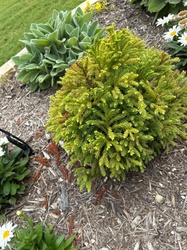
Japanese Cedar Identification Guide
Identify Japanese Cedar (Cryptomeria japonica) by its soft awl-shaped needles spiraling around the twigs, reddish stringy bark, and small spiky round cones.
Read the full Japanese Cedar encyclopedia entry →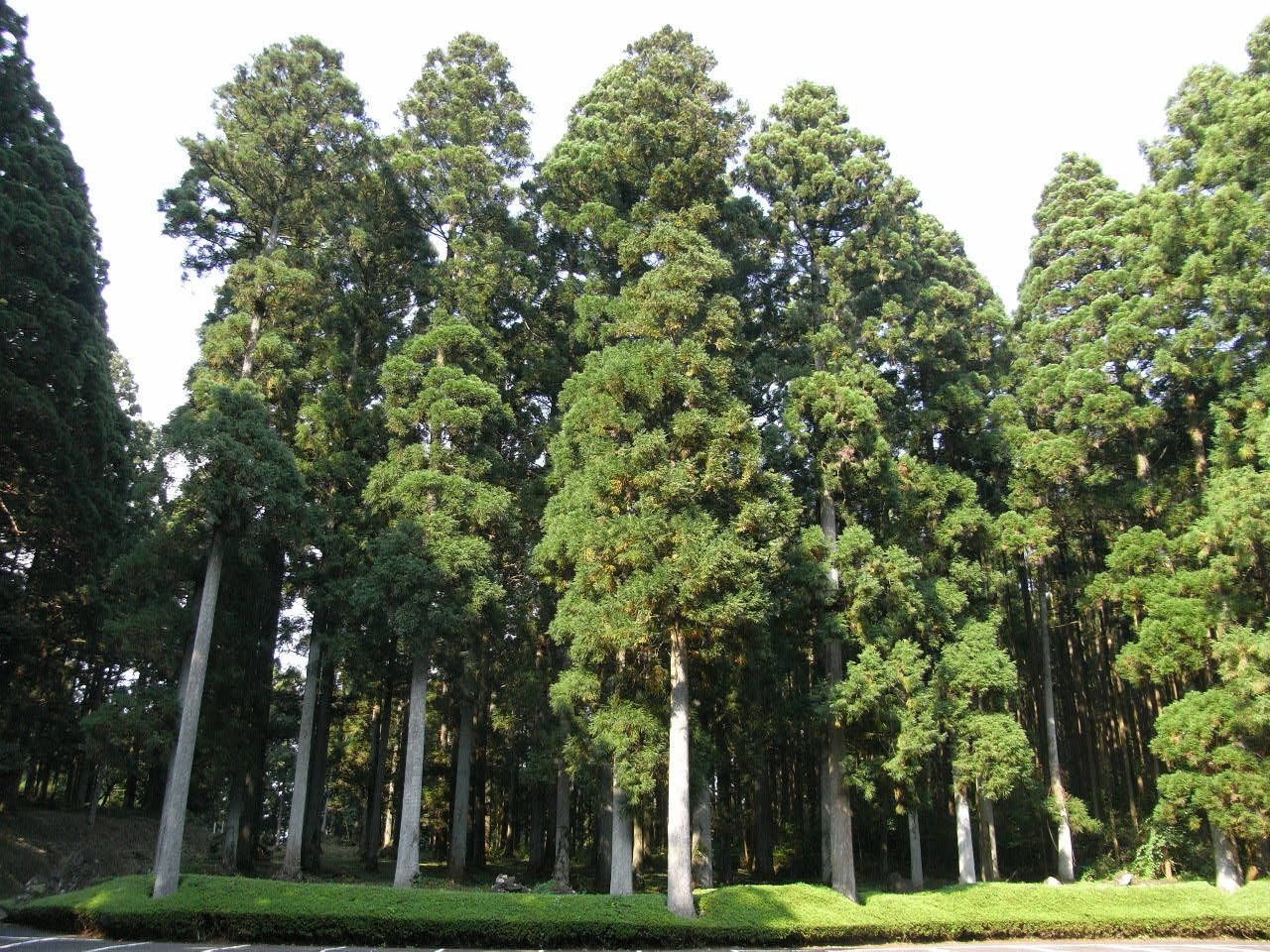
Key Identifying Features
Japanese Cedar (Cryptomeria japonica), or sugi, is a tall evergreen conifer native to Japan and widely planted as an ornamental and timber tree. It is recognized by its soft, awl-shaped (needle-like) leaves that curve inward and spiral around the shoots, its reddish-brown, fibrous peeling bark, and small round cones with spiky scales.
- Dense, conical crown, often with a slightly drooping leader
- Bright green to blue-green foliage in spirally arranged awl leaves
- Soft, slightly prickly texture (not flat sprays)
- Bark peeling in long reddish-brown strips
Leaves & Stems
Leaves are small, awl-shaped (subulate) needles, about 0.25-0.75 inch long, that curve forward and inward and are arranged in spirals in five ranks around the twig, making the shoots look bottle-brush-like and three-dimensional. Foliage is green to blue-green in summer and many cultivars turn bronze or reddish-purple in cold winter weather. Unlike true cedars or cypresses, the leaves are not flat scales or clustered tufts. The branchlets are softly textured but the leaf tips can feel slightly prickly.
Flowers & Fruit
Male pollen cones are small, oval, and clustered at branch tips, releasing abundant pollen in late winter to early spring. The female seed cones are round, about 0.5-1 inch across, with woody scales each ending in a pointed, spiky projection, giving the cone a distinctive star- or burr-like look. Cones ripen brown and may persist on the tree.
How to Tell It Apart from Look-Alikes
- Coast Redwood / Giant Sequoia: redwood has flat two-ranked needles; sequoia has awl leaves but huge, much larger cones. Cryptomeria's small spiky round cones differ.
- Junipers: juniper bears berry-like cones and often sharp needles or scale leaves, not spiky woody round cones.
- Araucaria (Monkey Puzzle): stiff, sharp, broad triangular leaves — far more rigid.
- True cedars (Cedrus): needles in clusters on spur shoots and barrel-shaped cones.
Spiraling soft awl leaves curving inward plus small spiky round cones and red stringy bark confirm Japanese Cedar.
Where You'll Find It
Native to Japan (and parts of China), extensively planted there for forestry and around temples. Worldwide it is a popular ornamental and screening conifer in temperate gardens, including the dwarf cultivar 'Globosa Nana' and the columnar 'Yoshino'. It prefers moist, well-drained, slightly acidic soil and full sun to part shade.
Quick ID Checklist
- Soft awl-shaped needles curving inward, spiraled on the twig
- Bottle-brush-like three-dimensional shoots
- Reddish-brown fibrous peeling bark
- Small round cones with spiky scale tips
- Often bronzing in winter
Spiraled inward-curving awl leaves and burr-like round cones identify Japanese Cedar.
Frequently asked questions
Is Japanese Cedar a true cedar?
No. Despite the name, it is not a true cedar (Cedrus). It is the sole species in the genus Cryptomeria, more closely related to redwoods and cypresses.
Why does my Japanese Cedar turn brown or bronze in winter?
Many cultivars naturally bronze or take on reddish-purple tones in cold weather, then green up again in spring. This is normal seasonal color, not damage.
How do I distinguish it from a redwood?
Redwoods have flat needles arranged in two ranks, while Japanese Cedar has awl-shaped needles that curve inward and spiral around the shoot, plus small spiky round cones.
What do the cones look like?
They are small, round, woody cones up to about an inch wide, with each scale ending in a sharp point, giving them a spiky, burr-like appearance.
Japanese Cedar identified by the community
Recent Japanese Cedar specimens identified with Plant Identifier.