
How to Care for Japanese Stiltgrass
Growing guide for Japanese stiltgrass (Microstegium vimineum), a shade-loving annual grass that thrives in moist, low-light ground.
Read the full Japanese Stiltgrass encyclopedia entry →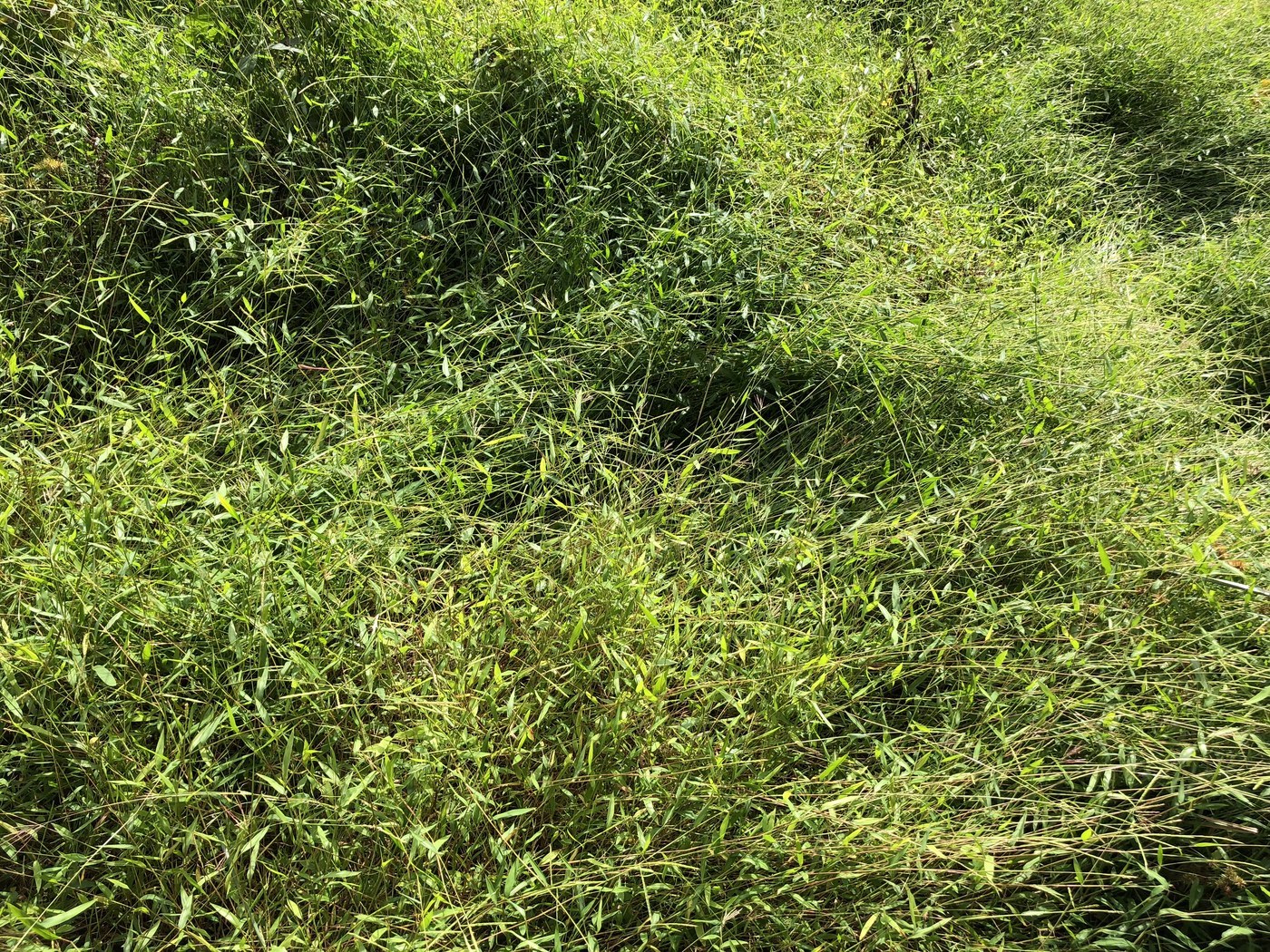
Japanese stiltgrass (Microstegium vimineum) is a delicate, sprawling annual grass with thin, lance-shaped leaves and a distinctive silvery midrib. It spreads readily across shaded, damp ground and is one of the few grasses that flourishes with very little direct sun.
Light
This grass is genuinely shade-adapted. It performs best in shade to part shade, filling in dim woodland-edge conditions where most turf grasses fail. It will tolerate a few hours of morning sun but scorches and thins under harsh, all-day exposure. If you are cultivating it as a soft green groundcover, place it under a canopy or on the north side of a structure.
Water
Keep the soil consistently moist. Stiltgrass favors damp ground and even tolerates temporary flooding and streamside conditions, so it rarely suffers from overwatering. In dry spells the fine foliage wilts and browns quickly, so water whenever the top of the soil begins to dry.
Soil & Potting
It is unfussy about soil and grows in everything from clay to leaf-litter loam, but it thrives in rich, moisture-retentive ground with abundant organic matter. A slightly acidic to neutral pH suits it. In containers, use a standard moisture-holding potting mix and avoid fast-draining cactus blends that dry too rapidly.
Humidity & Temperature
As a warm-season annual it germinates in spring, grows through summer heat, and dies back with the first hard frost. It appreciates humid, sheltered air and mild-to-warm temperatures. There is no need to overwinter plants; it completes its life cycle in a single season and returns from self-sown seed.
Feeding
Stiltgrass needs little to no supplemental feeding in decent soil. If growth looks pale in a poor site, a single light application of balanced fertilizer in early summer is plenty. Over-fertilizing produces floppy, weak stems.
Propagation
The plant reproduces almost entirely by seed, self-sowing prolifically from late-summer flower spikes. Sprawling stems also root at the nodes where they touch moist ground (stolon-like rooting), so you can lift and transplant rooted sections in spring.
Repotting / Pruning
Being an annual, it is not repotted year to year. To keep a stand tidy, shear or mow it in mid to late summer before the seed heads mature; this also limits its very aggressive spread. Remove faded growth after frost.
Common Problems & Pests
Stiltgrass is remarkably trouble-free and largely ignored by pests. Its main horticultural drawback is vigor: it spreads fast and can smother neighboring plants, so contain it deliberately. Prolonged drought is the most common cause of poor appearance, showing as browning, curled leaf tips.
Seasonal Care Tips
Expect fresh green growth in spring, dense fill through summer, and natural die-back in autumn. Cut seed heads before they ripen if you want to limit reseeding, and rake away dead thatch in late winter so new spring seedlings have light and space.
Frequently asked questions
Why is my Japanese stiltgrass turning brown?
The most common cause is dry soil. This grass wants consistently moist ground, so browning and curling usually mean it needs more water. Late-season browning is also normal as the annual dies back at frost.
Does Japanese stiltgrass come back every year?
Not from the same roots. It is a warm-season annual that dies at frost, but it self-sows heavily, so a stand typically returns from seed the following spring.
Can Japanese stiltgrass grow in deep shade?
Yes. It is one of the few grasses that thrives in shade to part shade, making it useful for dim, damp spots where turf grasses fail.
How do I stop it from spreading?
Shear or mow it before the summer seed heads ripen and remove sprawling stems that root at the nodes. Cutting off seed production is the single most effective control.