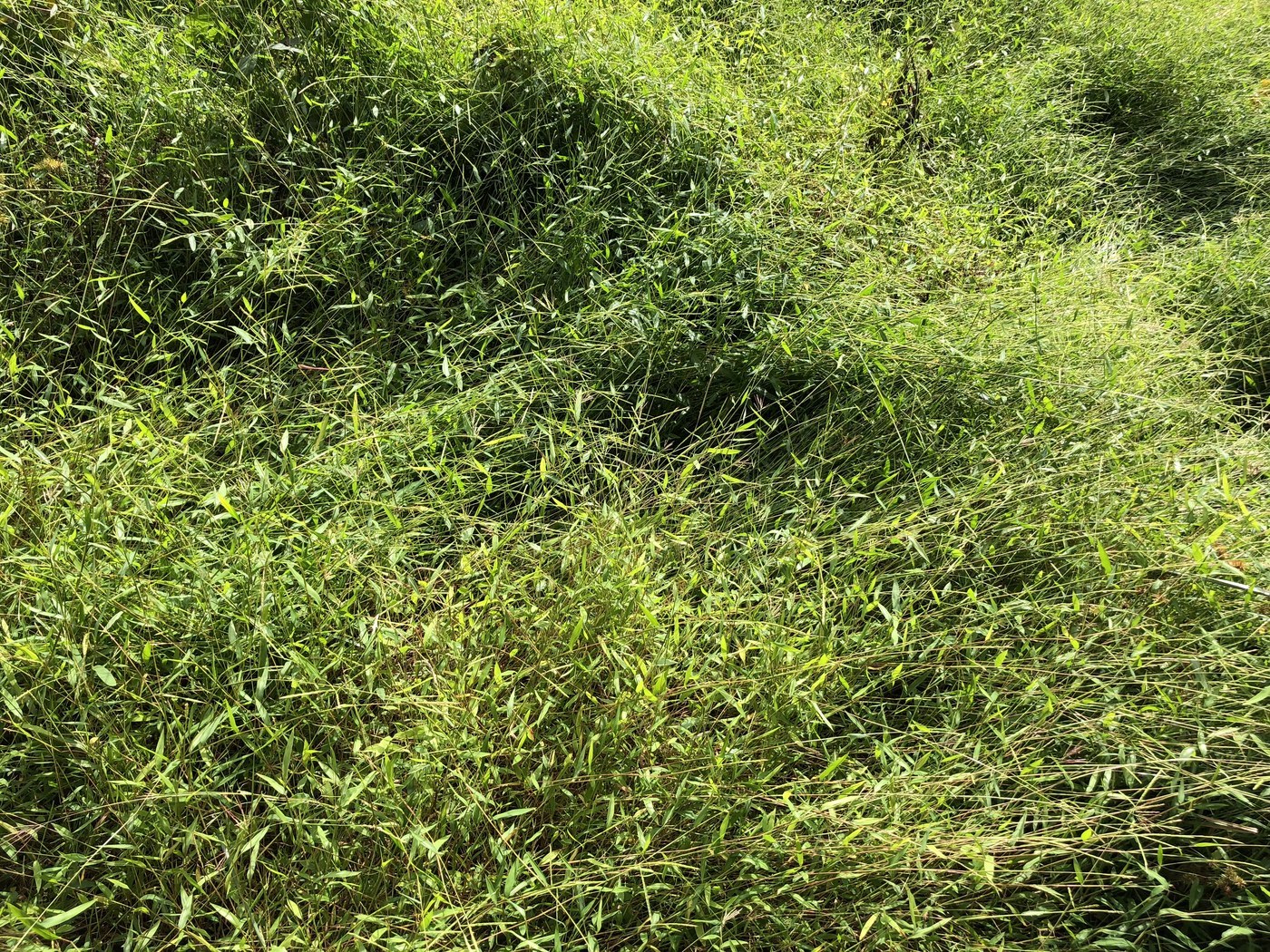
Japanese Stiltgrass
Microstegium vimineum
Japanese stiltgrass is an aggressive annual grass from Asia that has become one of the most damaging invasive plants in eastern North American forests and shaded yards. It forms dense, sprawling mats that crowd out native ground flora.
- Light
- Shade to part shade
- Water
- Moist soils; tolerates flooding
- Difficulty
- Easy
Got a plant like this?
Identify any plant from a photo, free.
Overview
Japanese stiltgrass (Microstegium vimineum) is a fast-spreading annual grass native to temperate and tropical Asia. It was accidentally introduced to the United States around 1919, reportedly used as packing material for porcelain, and has since spread through much of the eastern and central states.
Unlike most grasses, it thrives in low light, allowing it to invade the forest floor, stream banks, ditches, and shady lawns where few other grasses succeed. A single plant can produce hundreds of seeds that remain viable in the soil for years.
It is almost universally regarded as a noxious weed rather than a desirable plant, and management focuses on prevention and control rather than cultivation.
How to identify it
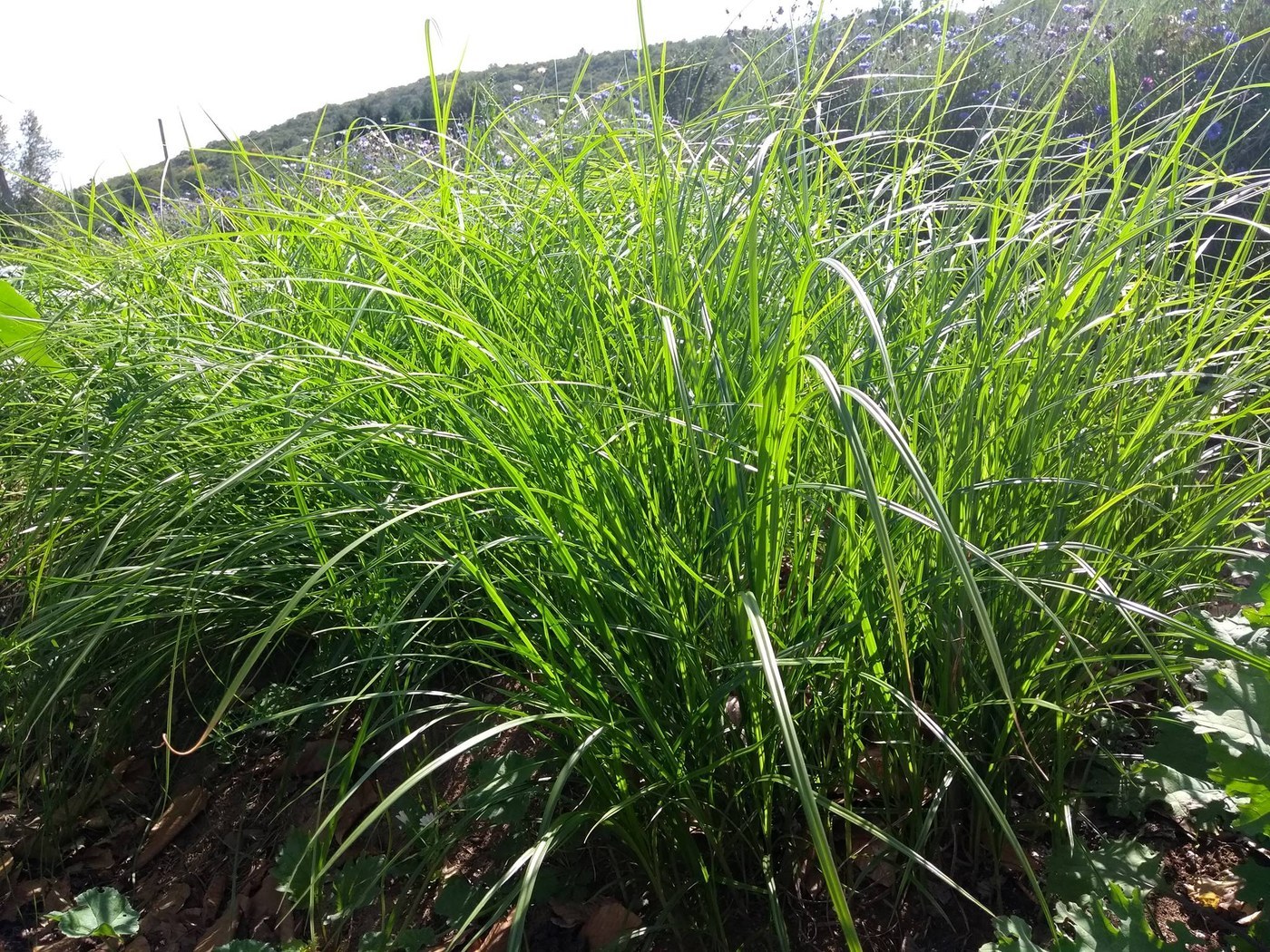
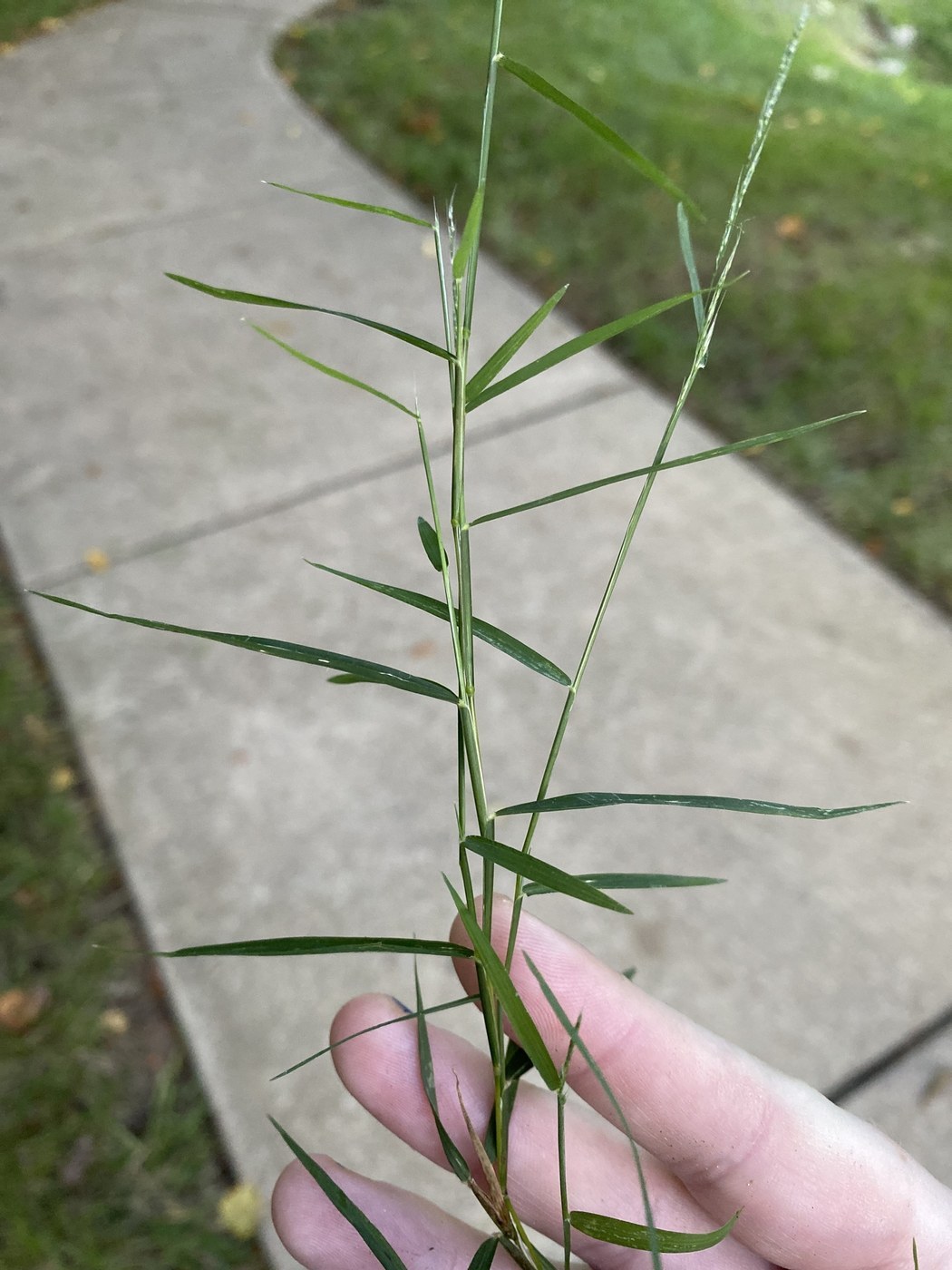
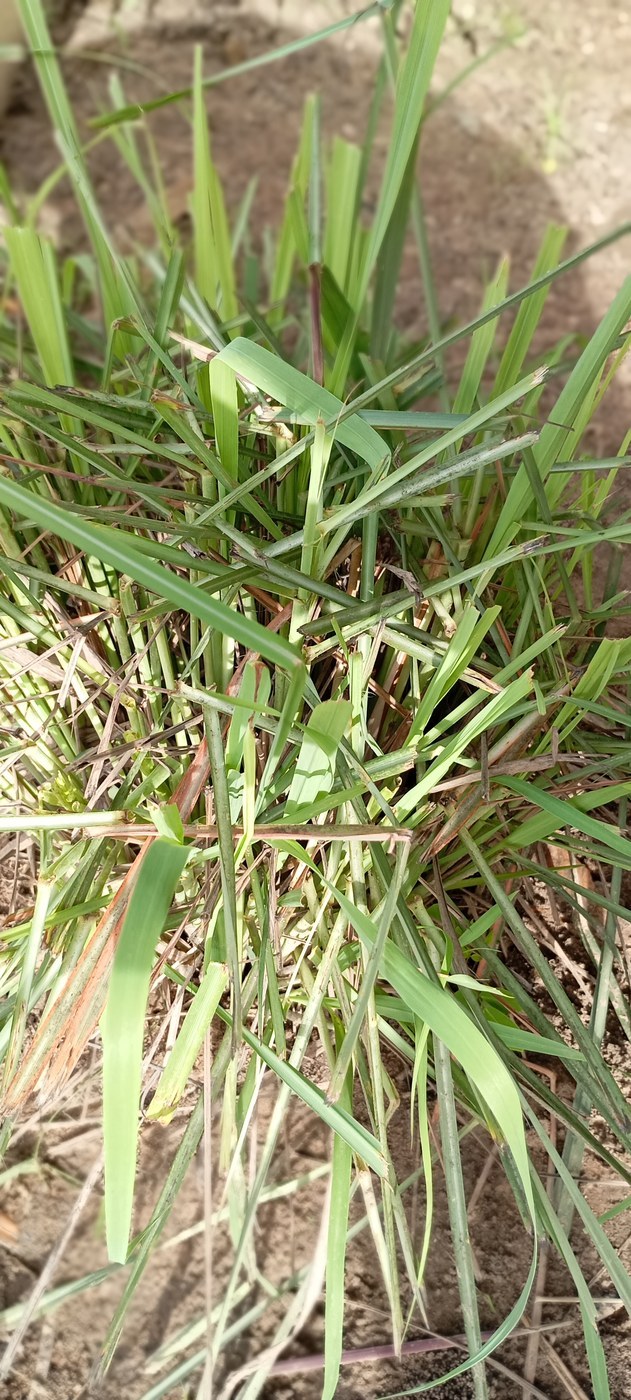
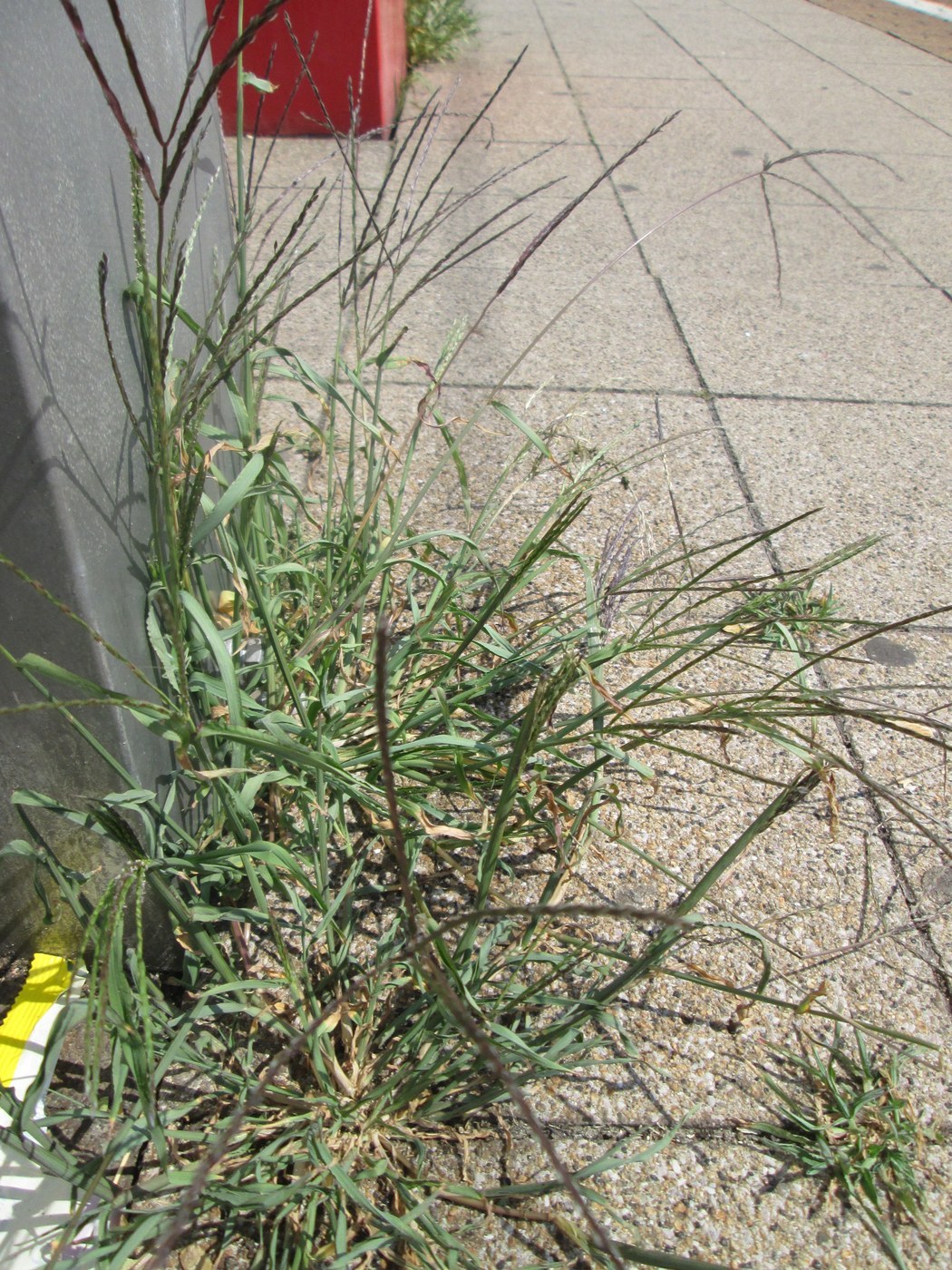
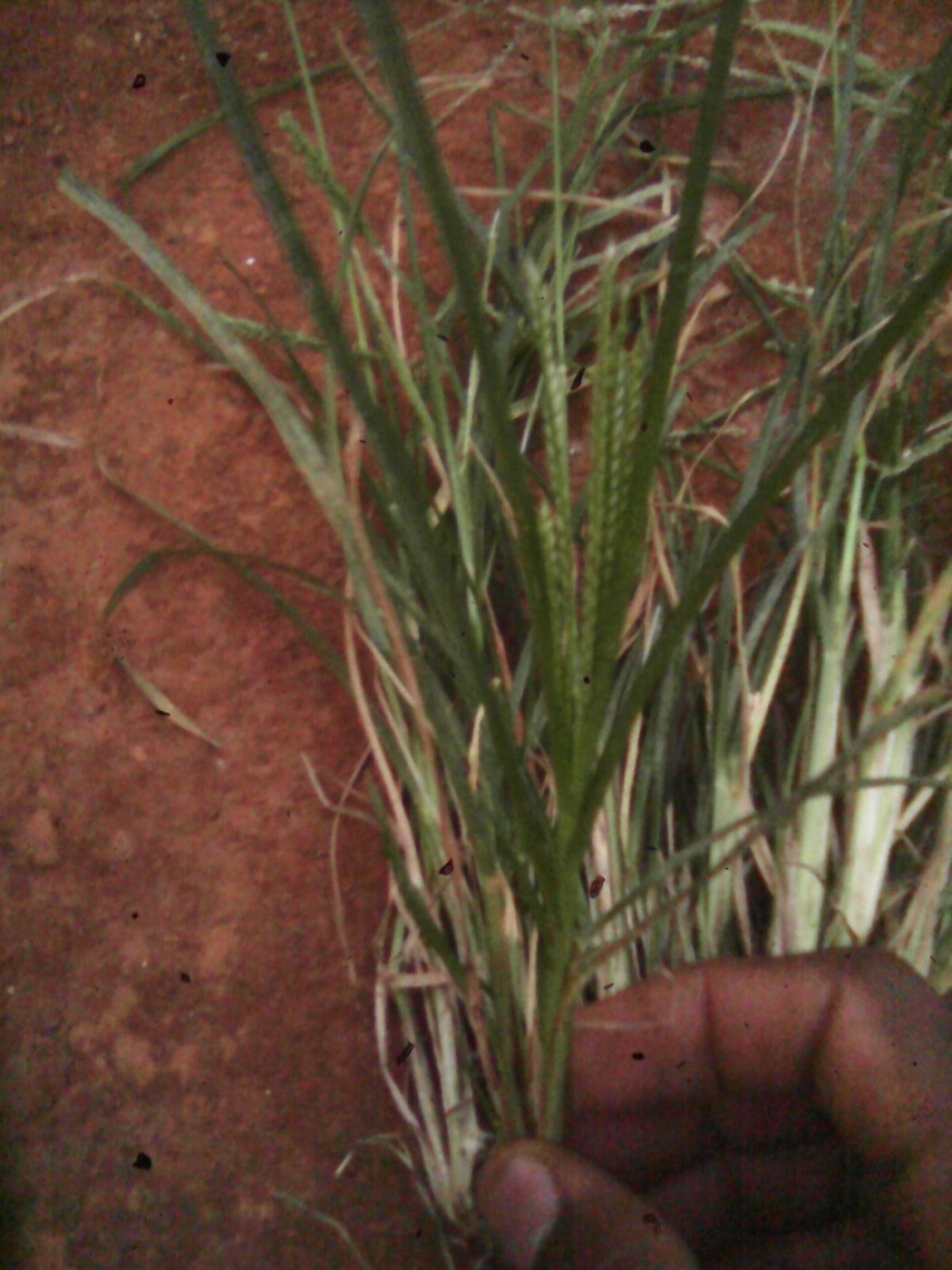
Look for a sprawling, branching annual grass that roots at the lower nodes, giving it a delicate, bamboo-like appearance.
- Leaves: Lance-shaped, 1-3 inches long, pale green, with a distinctive off-center silvery midrib stripe
- Habit: Reclining to ascending stems 1-3 feet long that form dense mats
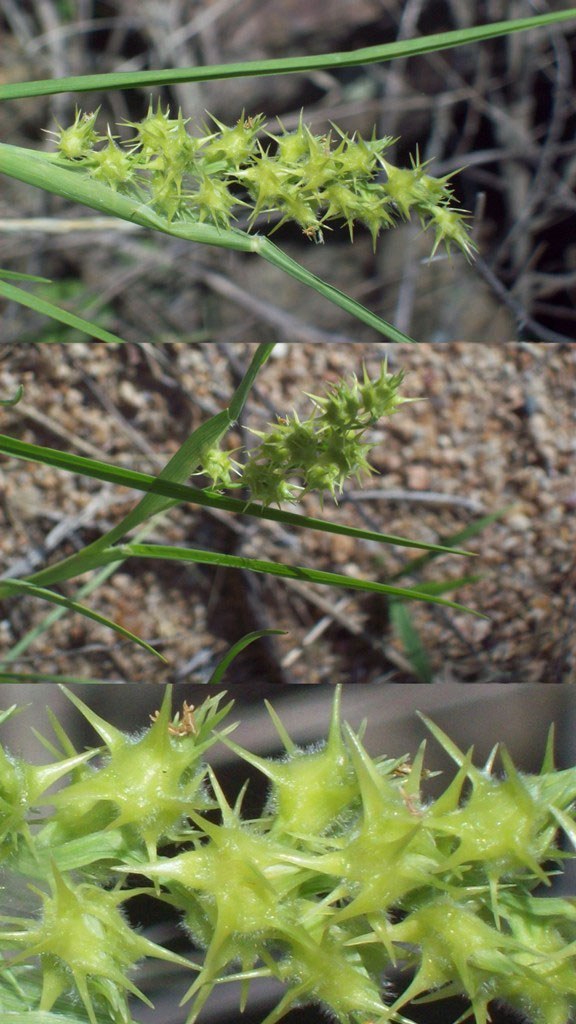
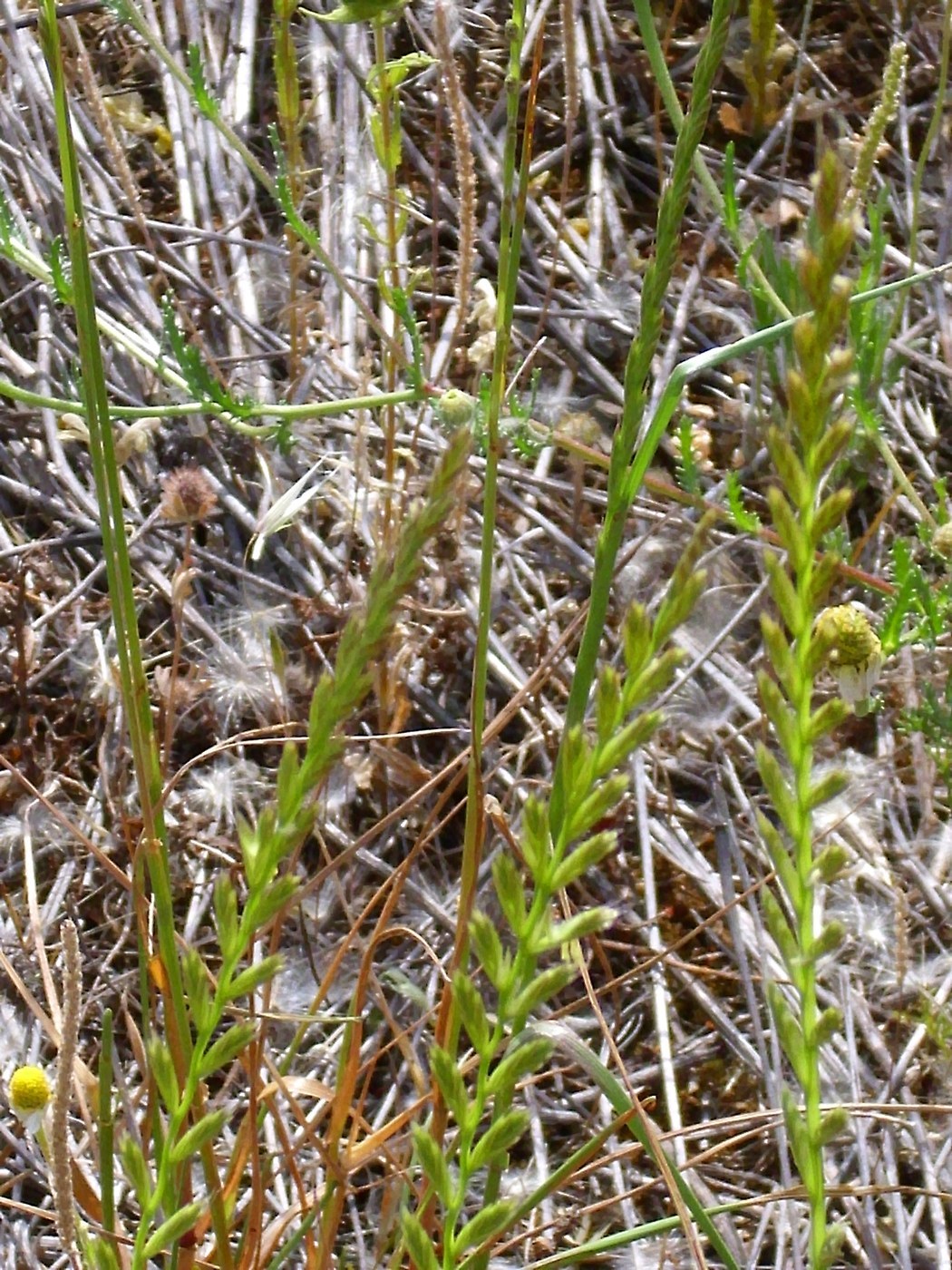
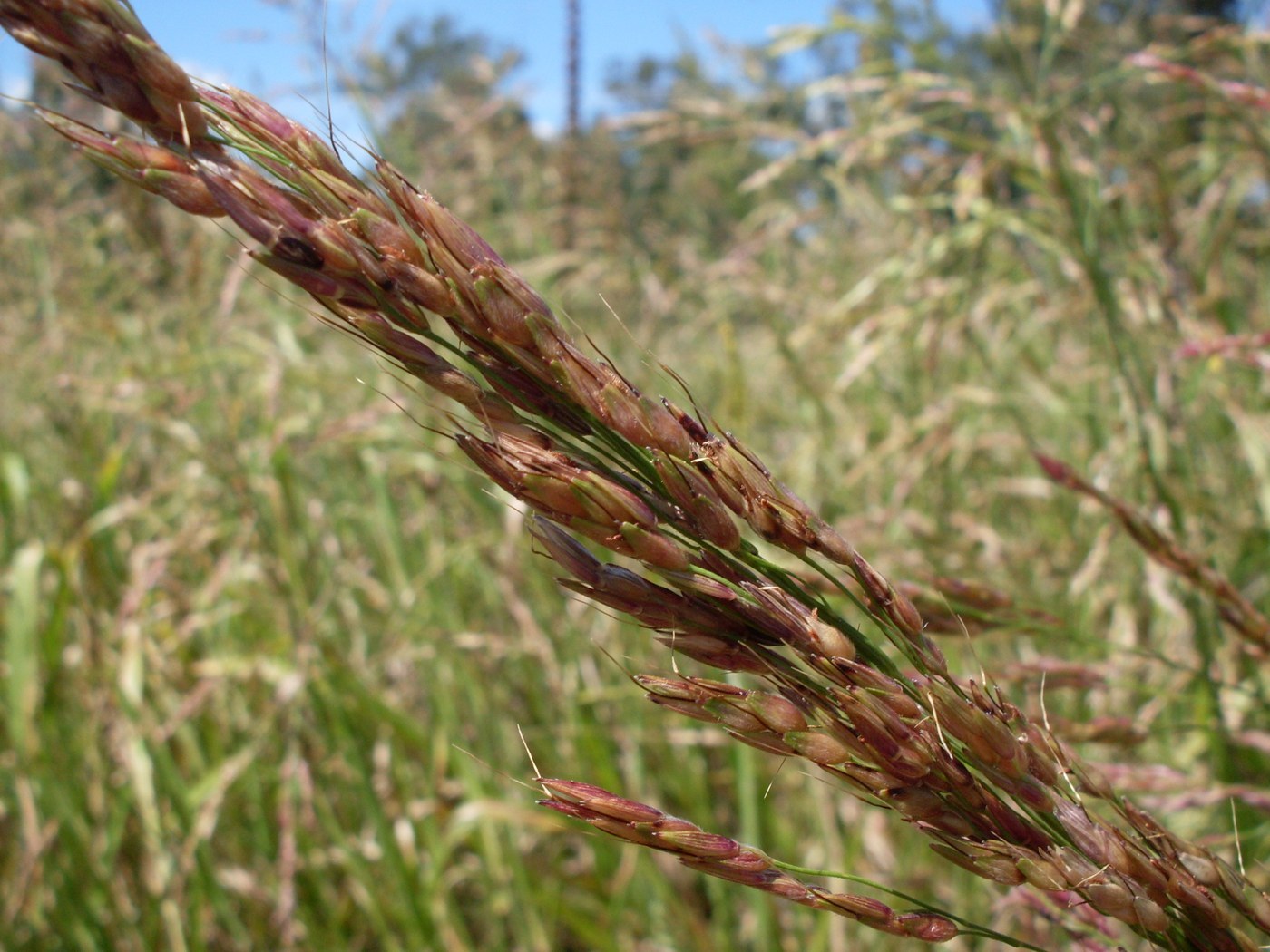
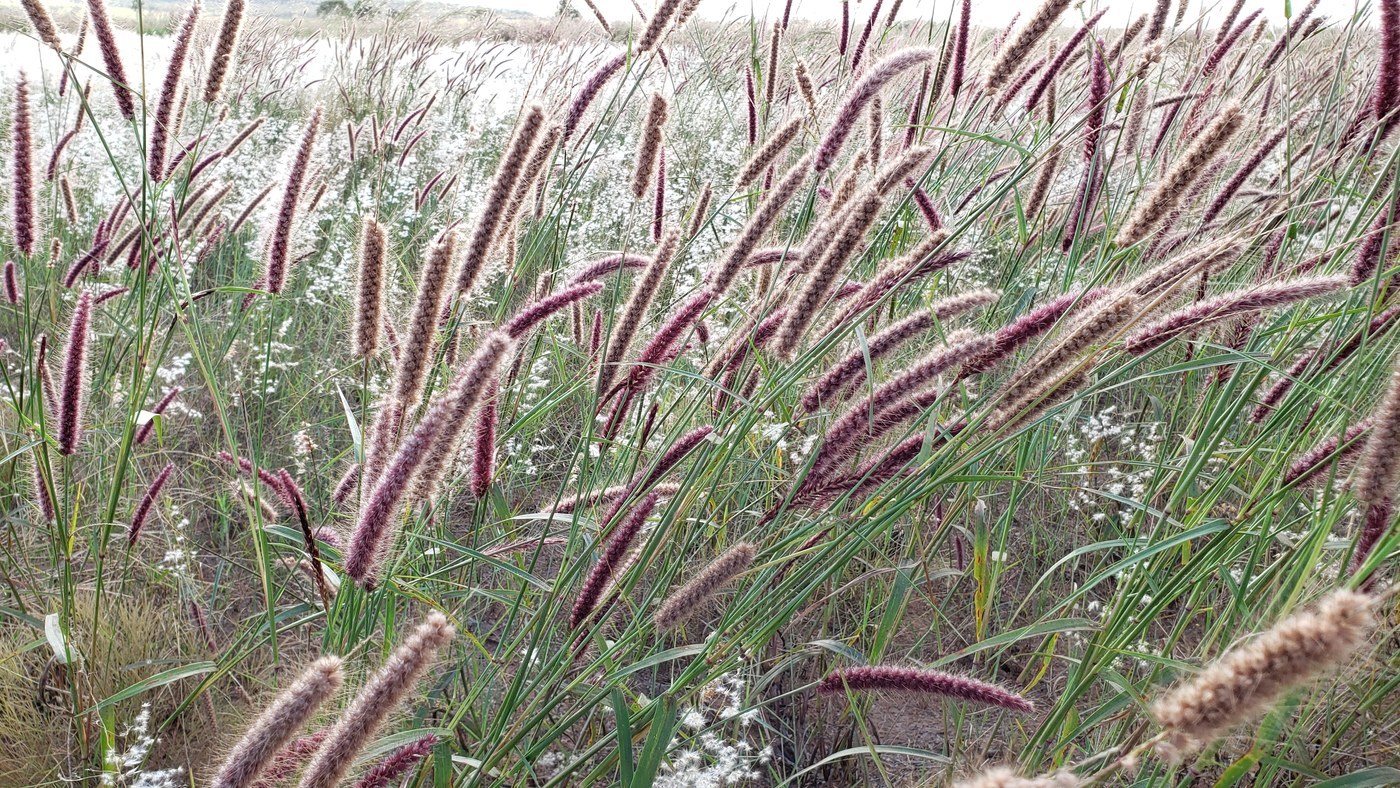
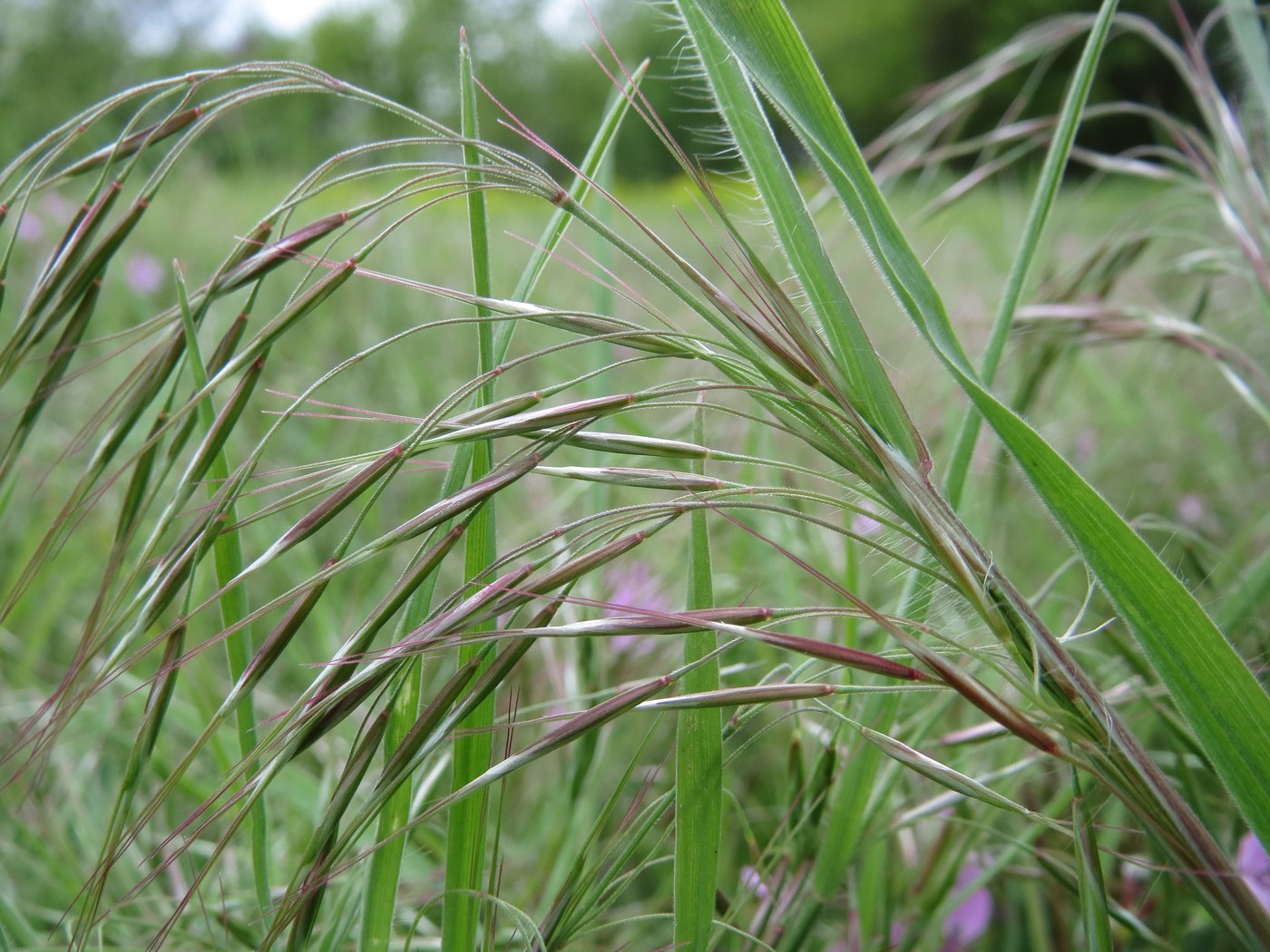
- Flowers: Slender, spike-like terminal and axillary racemes in late summer to fall
- Roots: Shallow and fibrous; stems prop up on stilt-like lower nodes
- Texture: Soft and easily uprooted compared with most turfgrasses
Care & growing
This is an invasive species that should be controlled rather than cultivated. For removal:
- Hand-pull late in summer before seeds set; the shallow roots release easily
- Mow or cut low in late summer (before flowering) to prevent seed production
- Treat large infestations with a grass-selective herbicide or a pre-emergent in early spring
- Persist for several years, since the seed bank remains viable for 3-5 years
- Avoid disturbing soil unnecessarily, as bare ground encourages germination
Habitat & origin
Native to Japan, Korea, China, India, and other parts of temperate and tropical Asia. In its introduced range it blankets the eastern United States from Florida to New England and west to the Great Plains.
It favors moist, shaded to partly shaded sites: floodplain forests, stream and ditch banks, roadsides, trail edges, and disturbed woodland. It is highly tolerant of low light, acidic soils, and seasonal flooding.
Frequently asked questions
Why is Japanese stiltgrass such a problem?
It tolerates deep shade, spreads rapidly by abundant seed, and forms dense mats that smother native woodland plants and tree seedlings, degrading forest ecosystems.
How do I get rid of it in my yard?
Hand-pull or mow it in late summer before it sets seed. Because it is an annual with a multi-year seed bank, repeat control for several seasons.
Is it the same as bamboo?
No. Its reclining, node-rooting stems can look bamboo-like, but it is a soft annual grass, not a woody bamboo.
How can I identify Japanese stiltgrass?
Look for pale green, lance-shaped leaves with an off-center silvery midrib stripe on reclining stems that root at the lower nodes.
Japanese Stiltgrass guides
In-depth guides for identifying, growing, and caring for Japanese Stiltgrass.
How to Care for Japanese Stiltgrass
Growing guide for Japanese stiltgrass (Microstegium vimineum), a shade-loving annual grass that thrives in moist, low-light ground.
Japanese Stiltgrass Identification Guide
How to recognize Japanese stiltgrass (Microstegium vimineum), a sprawling invasive annual grass, by its silvery-striped leaves and reclining, bamboo-like stems.