
Japanese Yew Identification Guide
How to identify Japanese Yew (Taxus cuspidata) by its flat dark needles in V-shaped rows, fleshy red berry-like arils, and dense shrubby form.
Read the full Japanese Yew encyclopedia entry →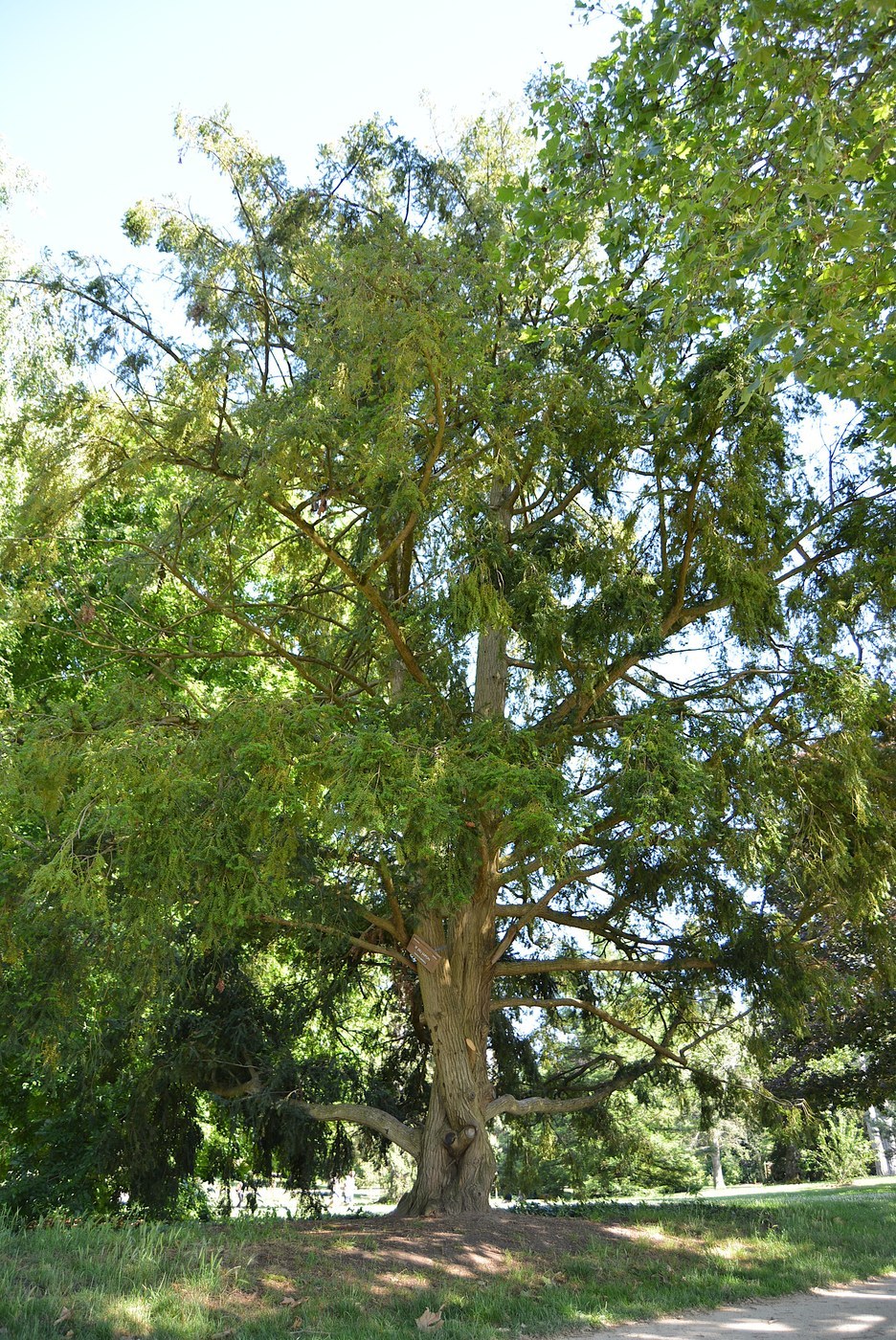
Key Identifying Features
Japanese Yew (Taxus cuspidata) is a dense evergreen shrub or small tree widely used in foundation plantings and hedges. Recognize it by flat, soft, dark green needles arranged in a loose V-shape along the twig, reddish-brown flaky bark, and—on female plants—bright red, fleshy, cup-shaped berries (arils) with a hole at the end.
Leaves & Stems
- Needles flat, 0.4 to 1 inch, dark green and glossy above, paler yellow-green to dull beneath (no bright white bands), with an abruptly pointed (cuspidate) tip.
- Needles arranged in two rows angled upward in a shallow V, more irregular and ascending than the flat combs of firs.
- Soft and flexible — not stiff or prickly.
- Twigs green at first; bark thin, reddish-brown, scaly and peeling.
- Habit dense and bushy, often wider than tall, responding well to shearing.
Flowers & Fruit
- Yews are usually dioecious (separate male and female plants).
- Female plants bear single seeds partly enclosed in a fleshy, bright red, cup-like aril ("yew berry") open at the tip — not a true cone.
- Male plants release small pollen cones in spring.
How to Tell It Apart from Look-Alikes
- Firs and hemlocks have needles with two white stomatal bands beneath; yew undersides are plain pale green.
- Hemlock needles are shorter, finely toothed, and the tree bears small hanging woody cones — yews bear red arils, never woody cones.
- English yew (Taxus baccata) is very similar; Japanese Yew tends to have needles in more distinctly two-ranked rows that angle upward and is far more cold-hardy.
- Plum-yew (Cephalotaxus) has longer needles and large olive-like fruit.
Where You'll Find It
A staple landscape plant across temperate gardens, especially in the northern US and Canada, planted as hedges, foundation shrubs, and topiary. Native to Japan, Korea, and northeast China. Tolerates deep shade and heavy pruning, so it is common on the shady sides of buildings.
Quick ID Checklist
- Flat, soft, dark green needles in an upward V
- Undersides plain pale green (no white bands)
- Reddish-brown peeling bark
- Bright red fleshy arils with an open tip (female plants)
- Dense shrubby, shearable habit
Frequently asked questions
Are the red 'berries' actually fruit?
No. Yews are conifers, and the red structure is a fleshy aril surrounding a single seed, not a true berry or cone. It has a characteristic open hole at the tip.
How do I tell a yew from a hemlock or fir?
Yew needle undersides are plain pale green without white bands, and yews bear red arils instead of woody cones. Firs and hemlocks have white bands beneath and produce woody cones.
How is Japanese Yew different from English Yew?
They are very similar, but Japanese Yew has needles that angle upward in more distinct two-ranked rows and is much more cold-hardy, which is why it dominates northern landscapes.