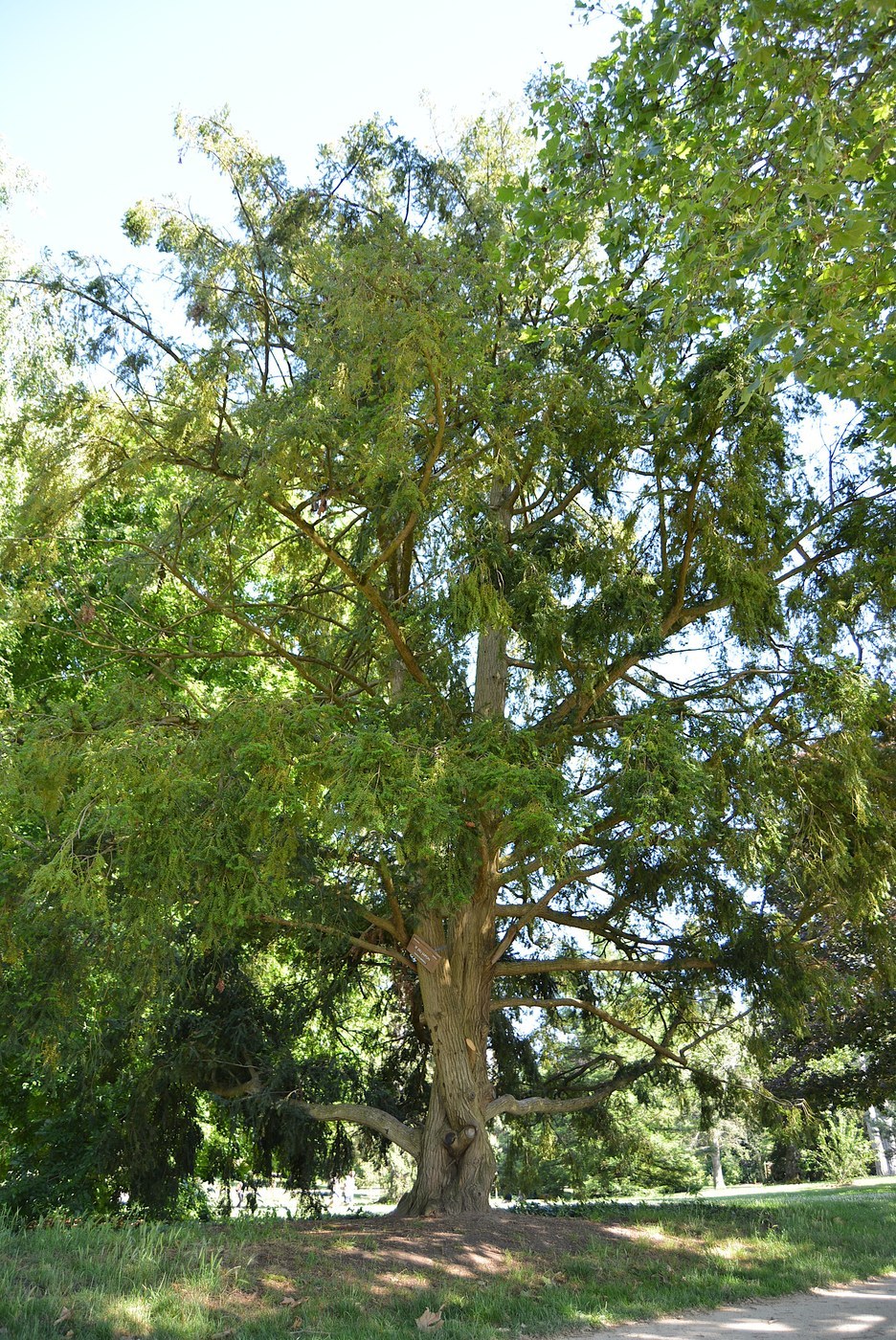
Japanese Yew
Taxus cuspidata
Japanese Yew is a versatile, shade-tolerant evergreen shrub or small tree widely used for hedges, with flat dark needles and red, berry-like arils.
- Light
- Full sun to full shade
- Water
- Moderate; well-drained soil
- Difficulty
- Easy
Got a plant like this?
Identify any plant from a photo, free.
Overview
Japanese Yew (Taxus cuspidata) is a dense, slow-growing evergreen conifer from East Asia, hugely popular as a landscape hedge and foundation plant for its tolerance of shade, shearing, and cold.
It bears bright red, fleshy, cup-shaped arils, each holding a single seed, and develops into a dense, easily shaped form ranging from a low shrub to a small tree depending on the cultivar.
How to identify it
- Needles: Flat, soft, dark green, about 0.5–1 in, arranged in two ranks (V-shape) along the twig, with a pointed tip.
- Fruit: Bright red, cup-shaped, fleshy arils each holding a single hard seed (yews bear arils, not cones).
- Habit: Dense, spreading to upright shrub or small tree, easily sheared.
- Bark: Reddish-brown, thin, scaly.
- Size: Varies widely by cultivar, from 3 ft shrubs to 40 ft trees.
Care & growing
Japanese Yew is remarkably adaptable, growing in full sun to deep shade, and tolerates pruning extremely well.
- Water: Moderate; it must have well-drained soil and resents wet feet.
- Soil: Average, well-drained, near-neutral to slightly acidic.
- Temperature: Cold hardy (USDA zones 4–7).
- Feeding: Light spring feeding if needed.
- Propagation: Easily from semi-hardwood cuttings.
Habitat & origin
Native to Japan, Korea, northeastern China, and the Russian Far East, where it grows in cool forests and mountain slopes.
It is one of the most widely planted hedge and foundation shrubs in temperate gardens across North America, Europe, and Asia.
Frequently asked questions
Why is it so popular for hedges?
It tolerates deep shade, heavy shearing, and cold, making it one of the most versatile evergreen hedges.
Does Japanese Yew grow in shade?
Yes, it is one of the few conifers that thrives in full to partial shade.
How can I identify Japanese Yew?
Look for flat, soft, dark green needles arranged in two ranks along the twig, and bright red, cup-shaped fleshy arils rather than cones.
Where is Japanese Yew native to?
It is native to Japan, Korea, northeastern China, and the Russian Far East, growing in cool forests and on mountain slopes.
Japanese Yew guides
In-depth guides for identifying, growing, and caring for Japanese Yew.
How to Care for Japanese Yew
Grow Japanese Yew (Taxus cuspidata): a slow, shade-tolerant evergreen shrub with dark needles, ideal for hedges, foundations, and topiary.
Japanese Yew Identification Guide
How to identify Japanese Yew (Taxus cuspidata) by its flat dark needles in V-shaped rows, fleshy red berry-like arils, and dense shrubby form.