
Jelly Bean Plant Identification Guide
How to identify the Jelly Bean Plant by its plump bean-shaped leaves that turn from green to bright red in the sun.
Read the full Jelly Bean Plant encyclopedia entry →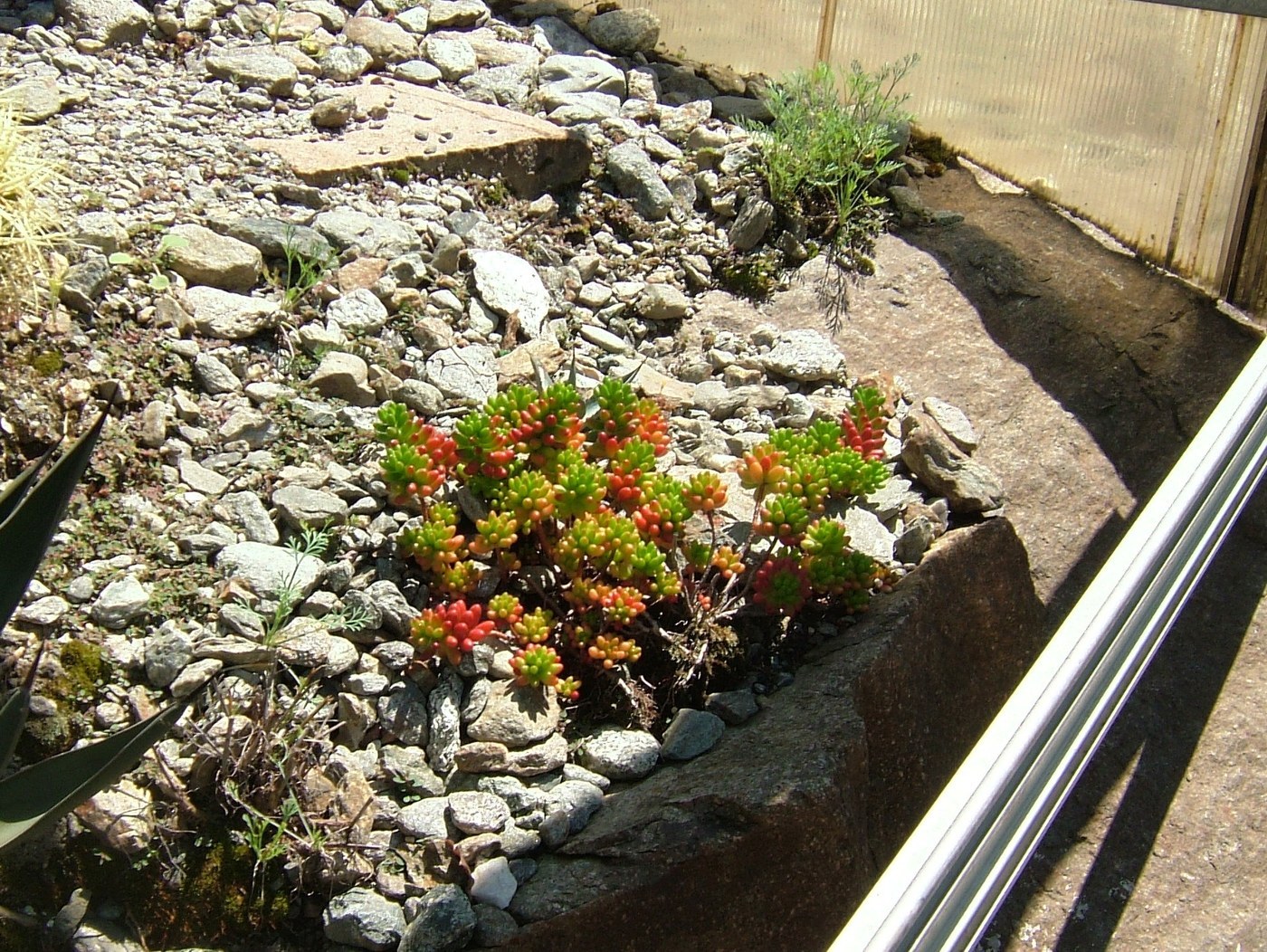
Key Identifying Features
The Jelly Bean Plant (Sedum rubrotinctum), also called Pork and Beans, is a small trailing succulent named for its chubby, candy-like leaves.
- Plump, bean- or jellybean-shaped leaves
- Color shifts from green to bright red with sun stress
- Trailing, branching stems forming low clusters
- Small overall, about 6–8 in (15–20 cm) tall
Leaves & Stems
The leaves are short, fat, glossy cylinders — rounded like jellybeans — attached in loose spirals along fleshy, branching stems. In shade or with ample water they're bright green, but in full sun, heat, or cold they flush red to coppery-red at the tips and over the whole leaf, the trait that makes them look like candy. Leaves detach easily and root where they fall, so the plant spreads and propagates readily. Stems trail and sprawl, often reddening too.
Flowers & Fruit
In spring, mature plants produce small, star-shaped yellow flowers in clusters at the stem tips, typical of Sedum. The blooms are modest; the colorful bean-like foliage is the main identifier.
How to Tell It Apart from Look-Alikes
- Sedum × rubrotinctum 'Aurora': a pink-and-cream variegated version of the same plant with softer pastel beans.
- Jelly Bean / Pork and Beans vs. other Sedum: the fat, glossy, distinctly bean-shaped red-tipped leaves set it apart from smaller-leaved sedums.
- Sedum nussbaumerianum (Coppertone): leaves are more pointed and orange, not rounded jellybeans.
If the leaves look like glossy green-and-red jellybeans that fall off at a touch, it's Sedum rubrotinctum.
Where You'll Find It
A garden hybrid of Mexican origin, it's an extremely common, easy container, rockery, and dish-garden succulent worldwide. It loves full sun (which brings out the red), needs fast-draining soil and little water, and is mildly tender to hard frost. Note its sap can irritate skin in some people.
Quick ID Checklist
- Plump, glossy bean/jellybean-shaped leaves
- Green leaves that flush red in sun, heat, or cold
- Leaves detach and root very easily
- Trailing, branching low-growing stems
- Small yellow star-shaped flowers in spring
- Compact, easy-care succulent
Frequently asked questions
Why are my jelly bean plant's leaves turning red?
Sun, heat, and cold stress turn the green beans bright red, which is the prized 'candy' look. In shade they stay green.
Why do the leaves fall off so easily?
Sedum rubrotinctum leaves detach readily by nature, and each fallen leaf can root into a new plant. Handle gently if you want to keep it intact.
What's the difference between jelly bean plant and the 'Aurora' version?
'Aurora' is a variegated form of the same plant with pink and cream pastel beans, while the standard jelly bean plant is green turning red.
Is the jelly bean plant safe to handle?
Generally yes, but its sap can cause skin irritation in sensitive people, so wash your hands after handling broken leaves or stems.