
How to Care for Jewelweed
Grow Jewelweed (Impatiens capensis), a moisture-loving native annual, in cool partial shade with consistently wet, rich soil.
Read the full Jewelweed encyclopedia entry →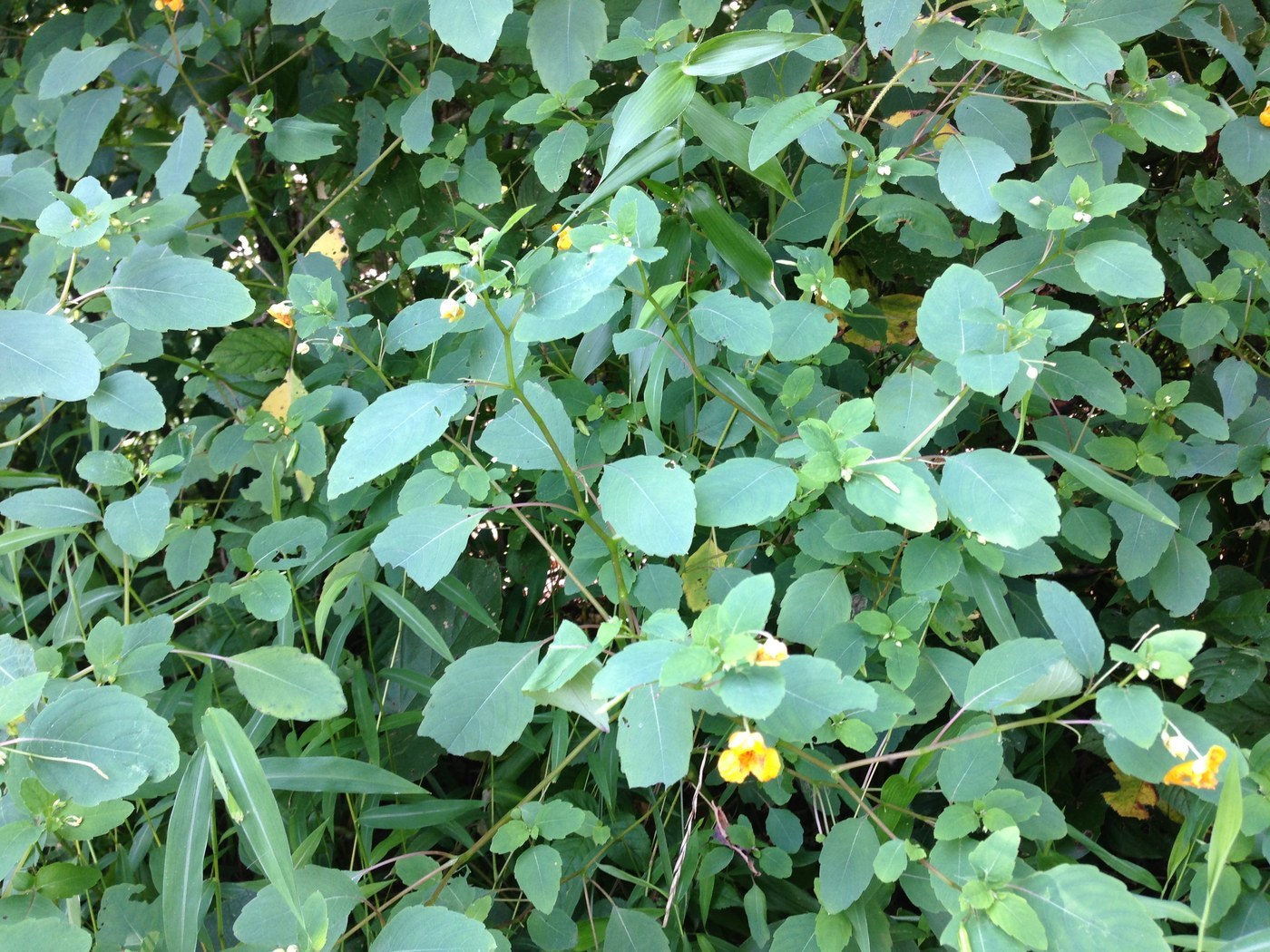
Jewelweed (Impatiens capensis) is a fast-growing native annual prized for its dangling, spurred orange flowers and translucent, jewel-like stems. It thrives in the damp, dappled woodland edges and streambanks it calls home, and it self-sows freely to return year after year.
Light
Jewelweed grows best in partial shade, mimicking the filtered light of its natural woodland-edge and streamside habitats. A few hours of gentle morning sun with afternoon shade is ideal. In deep shade it becomes leggy and flowers sparsely, while full, hot sun scorches the tender foliage and causes rapid wilting unless the soil stays saturated.
Water
This is a thirsty plant that demands consistently moist to wet soil. The stated need is high, and jewelweed will wilt dramatically within hours of the soil drying. Water generously and often, especially in warm weather. It tolerates boggy ground and even the edges of ponds and ditches, making it a natural choice for low, poorly drained spots where other annuals sulk.
Soil & Potting
Provide rich, loamy soil high in organic matter that holds moisture well. Amend planting areas with leaf mold or compost to retain the dampness jewelweed craves. It naturalizes readily in the moist, humus-rich ground of woodland margins. Neutral to slightly acidic soil suits it best.
Humidity & Temperature
Jewelweed favors cool, humid conditions and struggles in hot, dry air. It performs beautifully in temperate climates through spring and summer, then dies back completely with the first frost, as it is a tender annual. High ambient humidity around streams and shaded gardens helps keep the succulent stems turgid.
Feeding
In fertile, organic-rich soil jewelweed needs little supplemental feeding. If growth is weak in poorer ground, a light dose of balanced liquid fertilizer early in the season encourages lush foliage and abundant bloom. Avoid overfeeding, which promotes floppy, weak stems.
Propagation
Jewelweed is grown almost exclusively from seed, and it excels at spreading itself. Its ripe seed capsules burst explosively at the slightest touch, flinging seeds several feet, which is the origin of the nickname touch-me-not. Sow seed in fall or allow existing plants to self-sow; seeds require a period of cold, moist stratification over winter to germinate the following spring. Simply scatter fresh seed on moist soil in a shaded spot.
Repotting / Pruning
As an annual, jewelweed is rarely potted long-term, but seedlings can be started in containers of moist potting mix before transplanting. Little pruning is needed; you may pinch young stems to encourage bushier growth. Thin dense self-sown stands so remaining plants have room and air circulation.
Common Problems & Pests
The most common problem is wilting from dry soil, which is quickly reversed by watering. In hot, stagnant conditions, powdery mildew and other fungal leaf spots may appear, so ensure good airflow. Aphids and spider mites occasionally colonize the soft stems and can be rinsed off or treated with insecticidal soap. Slugs sometimes graze seedlings in damp settings.
Seasonal Care Tips
Expect seedlings to emerge in spring; keep them evenly moist as they establish. Peak flowering runs through summer into early fall, drawing hummingbirds and long-tongued bees. Allow some seed pods to ripen and burst so the colony returns next year. Plants collapse at the first hard frost, so simply clear the spent stems and let the seed bank overwinter in place.
Frequently asked questions
Why does my jewelweed keep wilting?
Jewelweed has very high moisture needs and wilts fast when the soil dries. Water thoroughly and keep the soil consistently moist to wet, especially in warm weather, and it will perk back up quickly.
Does jewelweed come back every year?
It is a tender annual that dies with frost, but it self-sows prolifically. If you let its seed pods ripen and burst, new seedlings will reliably return the following spring.
Can I grow jewelweed in full sun?
It prefers partial shade. Full, hot sun scorches the tender foliage and forces near-constant watering, so a spot with morning sun and afternoon shade or dappled light works far better.
How do I start jewelweed from seed?
Scatter fresh seed on moist, rich soil in a shaded spot in fall. The seed needs cold, moist winter stratification to germinate, so sowing before winter gives the best spring emergence.