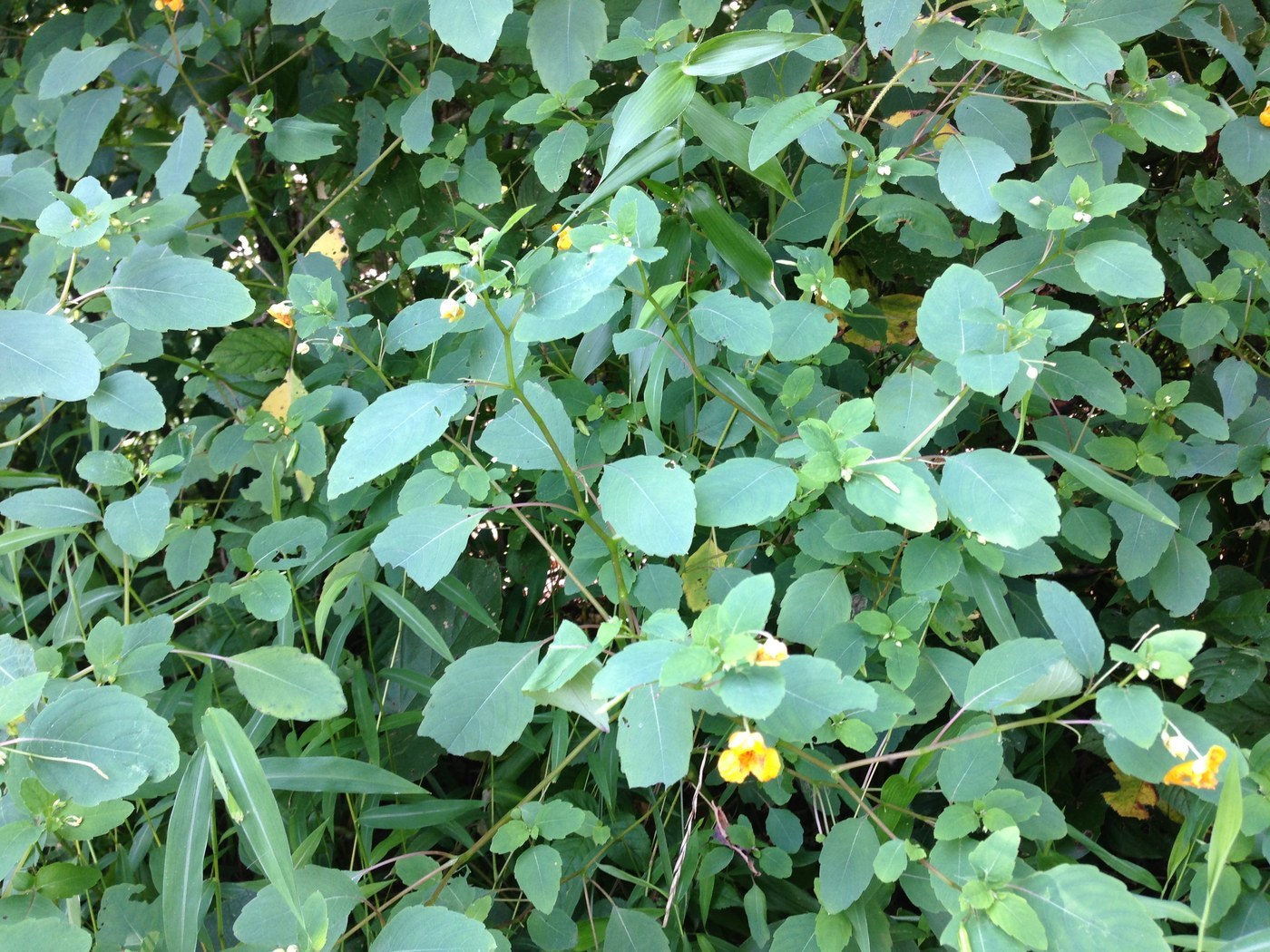
Jewelweed
Impatiens capensis
A native North American annual with dangling orange spotted flowers and seed pods that burst open at a touch. Jewelweed forms colonies in moist, shady habitats.
- Light
- Partial shade
- Water
- High; consistently moist soil
- Difficulty
- Easy
Got a plant like this?
Identify any plant from a photo, free.
Overview
Jewelweed is a succulent-stemmed annual wildflower found in moist, shady habitats across eastern North America. Its common name refers to the way water beads up silvery on its leaves, and its other name, touch-me-not, comes from ripe seed pods that explosively eject seeds when touched.
The orange, trumpet-shaped flowers hang like earrings and are a favorite of ruby-throated hummingbirds and bees, which pollinate them as they feed.
How to identify it
- Flowers: Orange with reddish-brown spots, about 1 inch long, with a curved nectar spur, dangling on slender stalks
- Leaves: Oval, soft, blue-green, with toothed margins; repel water so droplets bead up
- Stems: Translucent, juicy, and hollow, often reddish at the nodes; 2-5 feet tall
- Seed pods: Plump green capsules that spring open explosively when ripe
- Habit: Branching annual that forms dense stands
Care & growing
Jewelweed is easy to grow where conditions are moist and shaded, but it must reseed itself each year as a true annual.
- Light: Partial to full shade
- Water: Needs consistently moist to wet soil; wilts quickly when dry
- Soil: Rich, damp, humusy soil
- Temperature: Frost-tender annual; dies back at first frost
- Feeding: Not needed in rich soil
- Propagation: By seed only; it self-sows abundantly and can be sown directly outdoors in fall
Habitat & origin
Jewelweed is native to eastern and central North America, ranging from Canada south to the Gulf states.
It naturally grows along stream banks, in wet ditches, floodplains, seeps, and the moist margins of woodlands. It often forms large colonies in the dappled shade of damp lowlands.
Frequently asked questions
Why is it called touch-me-not?
Its ripe seed pods are under tension and burst open explosively when touched, flinging seeds several feet away to disperse the plant.
Is jewelweed an annual or perennial?
It is a true annual that completes its life cycle in one season and relies on self-seeding to return each year.
What pollinates jewelweed?
Ruby-throated hummingbirds and bumblebees are its main pollinators, drawn to the nectar-spurred orange flowers.
Jewelweed guides
In-depth guides for identifying, growing, and caring for Jewelweed.
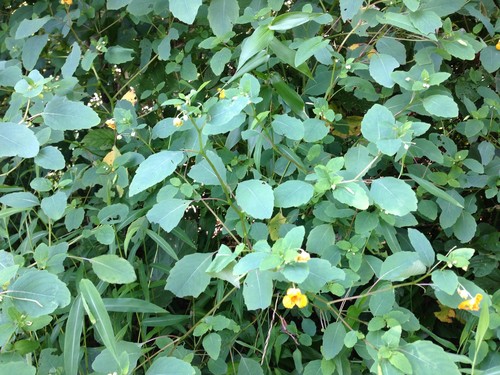
How to Care for Jewelweed
Grow Jewelweed (Impatiens capensis), a moisture-loving native annual, in cool partial shade with consistently wet, rich soil.
Jewelweed Identification Guide
Identify Jewelweed by its dangling orange spurred flowers, translucent watery stems, and seed pods that burst when touched, plus its close link to wet, shady ground.