
How to Care for Joe-Pye Weed
Grow Joe-Pye weed (Eutrochium purpureum), an easy tall native perennial with mauve summer flowers, in sun to part shade and moist soil.
Read the full Joe-Pye Weed encyclopedia entry →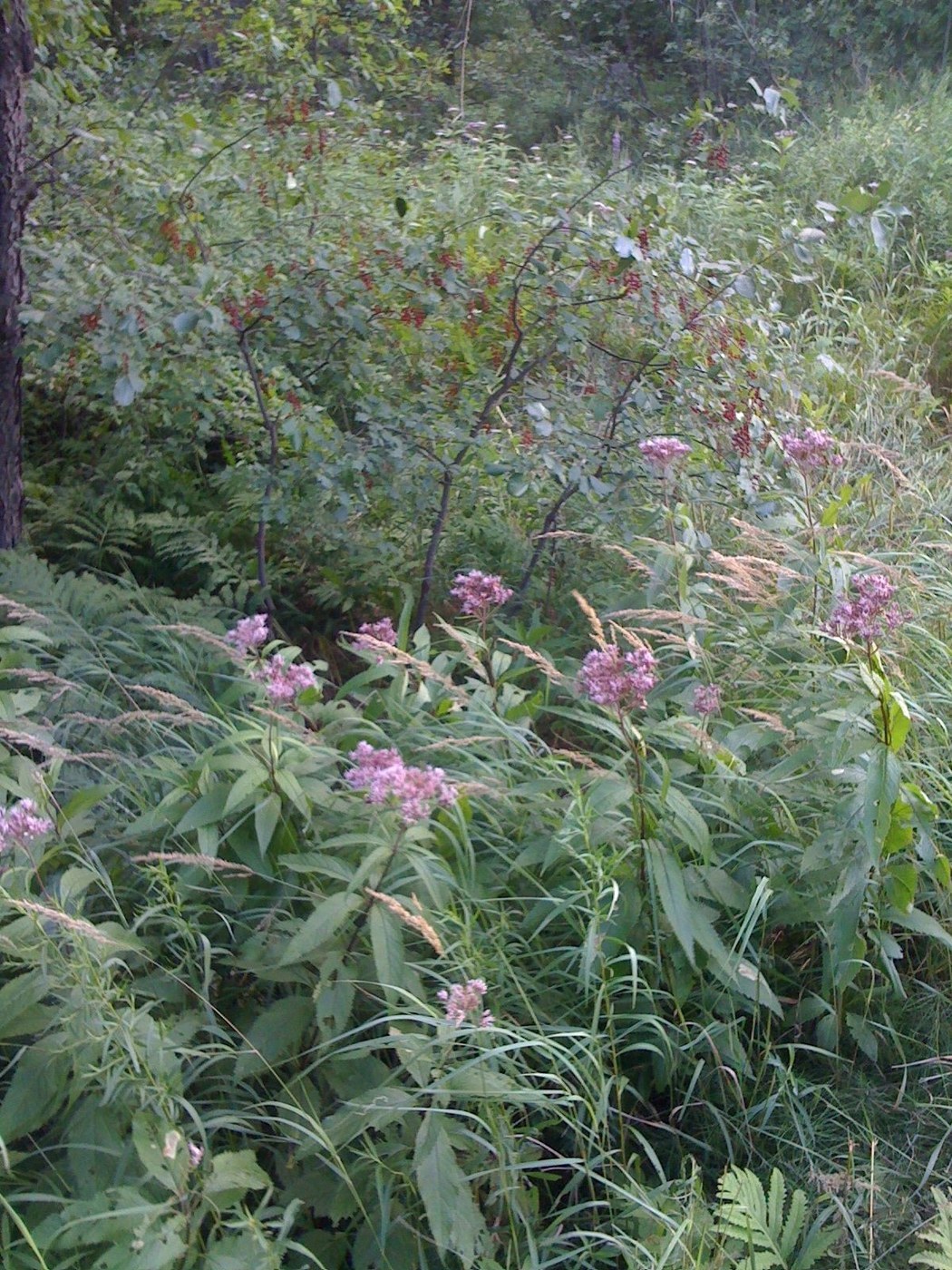
Joe-Pye weed (Eutrochium purpureum) is a stately native perennial that forms tall, upright clumps topped with domed clusters of dusky mauve-pink flowers in late summer. Easy-going and dramatic in the back of a border or a rain garden, it thrives with steady moisture and plenty of light.
Light
Grow in full sun to part shade. Full sun produces the sturdiest, most floriferous stems, while a little afternoon shade is welcome in hot climates and helps keep the plant from wilting on the hottest days. In deep shade it grows floppy and flowers poorly.
Water
This is a moisture-loving plant that likes consistently moist soil and tolerates wet spots and periodic flooding. Water generously, especially in summer and during dry spells, to keep the tall stems turgid and the foliage from scorching. It is far less tolerant of prolonged drought than of wet feet.
Soil & Potting
Joe-Pye weed prefers rich, moisture-retentive soil and is happy in heavy clay and low, damp ground where many perennials struggle. Amend lean or sandy soils with organic matter to boost water retention, and mulch to keep roots cool and moist. It is not fussy about pH.
Humidity & Temperature
A hardy temperate native, it withstands cold winters and returns reliably each spring. It tolerates summer humidity well and appreciates the moisture that comes with it. No special humidity measures are needed; the main concern in heat is keeping the soil from drying out.
Feeding
Feeding needs are modest. In rich soil it may need nothing; in leaner ground, a spring topdressing of compost or a light balanced feed supports its large size. Avoid excessive nitrogen, which can make the already tall stems weak and floppy and may require staking.
Propagation
Propagate by division of the clump in spring, by seed (which benefits from cold stratification and may self-sow in the garden), or from basal cuttings taken in late spring. Division every few years also rejuvenates older, crowded clumps.
Repotting / Pruning
Cut the old stems back to the ground in late autumn or leave them standing through winter for structure, then clear them in early spring. To create a bushier, shorter plant less likely to flop, you can cut the stems back by about a third in early summer before flower buds form. Divide crowded clumps every three to four years.
Common Problems & Pests
Joe-Pye weed is generally trouble-free. The most common issue is wilting and leaf-scorch from drought, so keep it watered. Powdery mildew can appear on stressed or crowded plants in dry conditions with poor airflow; improve spacing and moisture to reduce it. Tall stems in exposed sites may need support.
Seasonal Care Tips
In spring, clear old growth, topdress with compost, and consider an early-summer cutback for height control. Through summer, water generously and enjoy the pollinator-rich blooms. In autumn, let the seed heads stand for winter interest or cut back and mulch. In winter the plant is dormant and hardy underground.
Frequently asked questions
How do I keep Joe-Pye weed from flopping over?
Give it full sun, avoid heavy nitrogen feeding, and cut the stems back by about a third in early summer before buds form to encourage sturdier, shorter growth. Staking helps in windy or shadier spots.
Does Joe-Pye weed need a lot of water?
Yes. It is a moisture-loving plant that thrives in consistently moist and even wet soil. Water generously in summer and dry spells, as it is much more sensitive to drought than to wet conditions.
Can Joe-Pye weed grow in shade?
It grows best in full sun to part shade. Some afternoon shade is fine and even helpful in hot climates, but in deep shade the stems become weak and flowering is sparse.
When and how do I divide Joe-Pye weed?
Divide crowded clumps in early spring every three to four years. Lift the clump, split it into sections each with roots and buds, and replant into moist, enriched soil.