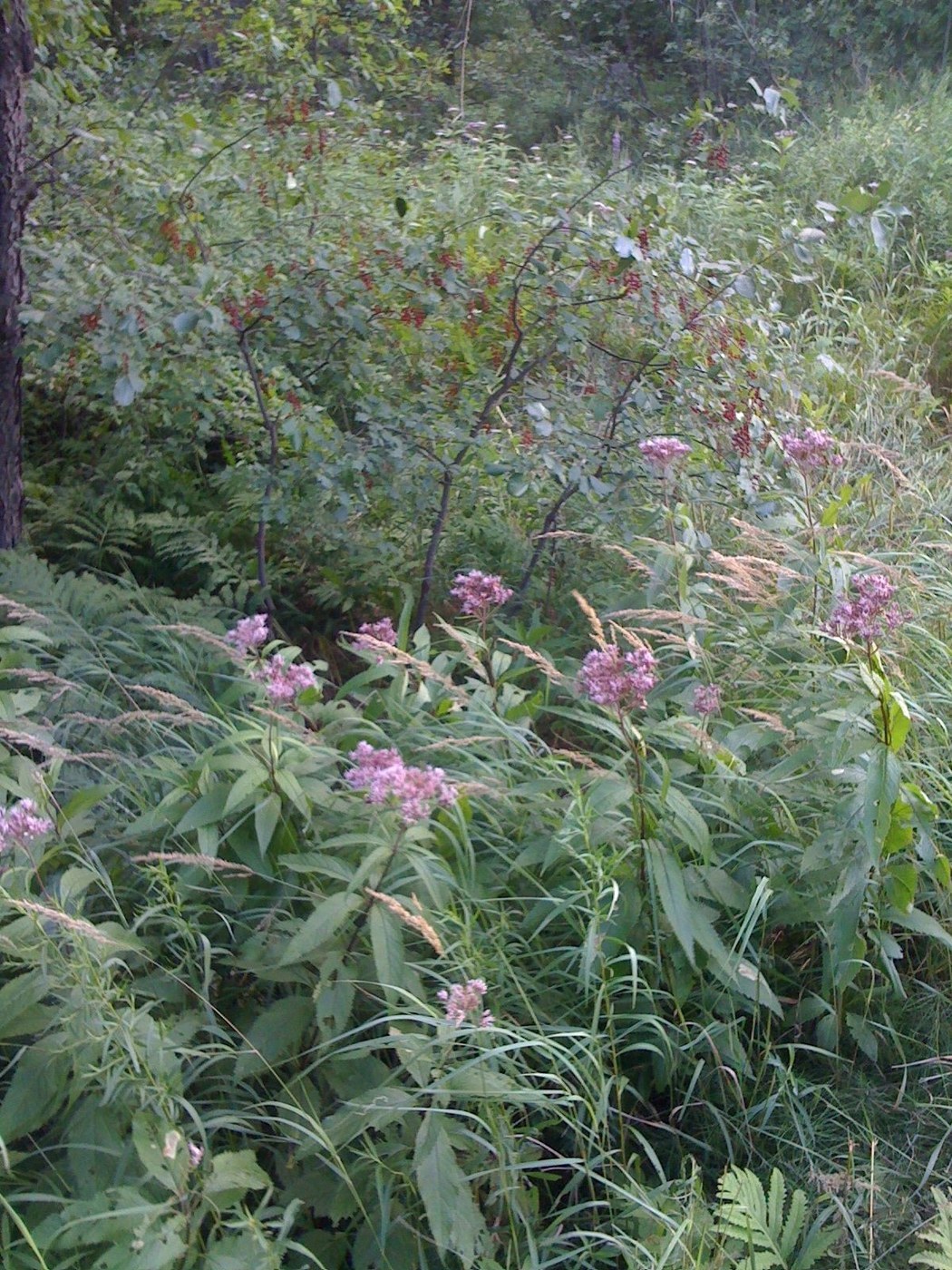
Joe-Pye Weed
Eutrochium purpureum
Joe-Pye weed is a tall, native North American perennial topped with large, domed clusters of mauve-pink flowers in late summer. A pollinator powerhouse, it brings height and butterfly-friendly blooms to moist, sunny gardens and rain gardens.
- Light
- Full sun to part shade
- Water
- High; likes moist soil
- Difficulty
- Easy
Got a plant like this?
Identify any plant from a photo, free.
Overview
Joe-Pye weed (genus Eutrochium, formerly classified in Eupatorium) is a group of tall, clump-forming perennials native to eastern North America. Despite "weed" in its name, it is a valued ornamental and ecological plant.
It produces big, fluffy, dome-shaped flower heads in shades of mauve, dusty pink, and purple atop sturdy stems that can reach 4-7 ft, lending bold structure to the late-summer garden.
The plant is named after Joe Pye, a figure of folklore associated with the plant.
How to identify it
Tall stature and large mauve flower domes are key.
- Flowers: Large, domed to slightly flattened clusters of tiny mauve-pink to purple flowers in late summer
- Leaves: Lance-shaped, coarsely toothed, arranged in whorls of 3-5 around the stem
- Stems: Stout, upright, often purple-spotted or purple-tinged
- Habit: Tall clumps commonly 4-7 ft (some to 9 ft); dwarf cultivars exist
- Scent: Foliage has a faint vanilla scent when crushed
Care & growing
Easy in moist, sunny sites.
- Light: Full sun to partial shade
- Water: Prefers consistently moist soil and tolerates wet ground; needs water in dry spells
- Soil: Rich, moisture-retentive soil
- Temperature: Hardy in USDA zones 3-9
- Feeding: Minimal; rich soil supplies most needs
- Propagation: Division in spring or fall, or from seed
- Tip: Pinch stems in early summer for a bushier, shorter plant; leave seed heads for winter interest and birds
Habitat & origin
Joe-Pye weed is native to eastern and central North America, where it grows in moist meadows, stream banks, damp thickets, and woodland edges.
It is increasingly planted in native, pollinator, and rain gardens, as well as the backs of mixed borders, throughout temperate regions for its late-season impact.
Frequently asked questions
Is Joe-Pye weed actually a weed?
No, the name is misleading. It is a desirable native perennial and one of the best butterfly plants for late summer, not a garden weed.
How big does Joe-Pye weed get?
Species types often reach 4-7 ft tall and can exceed 8 ft. Compact cultivars stay around 3-4 ft for smaller gardens.
Does Joe-Pye weed need a lot of water?
It prefers consistently moist soil and tolerates wet conditions, making it ideal for rain gardens and pond edges. Water it during droughts.
Why is it covered in butterflies?
Its large nectar-rich flower clusters bloom when many other plants have finished, making it a magnet for monarchs, swallowtails, and bees.
Joe-Pye Weed guides
In-depth guides for identifying, growing, and caring for Joe-Pye Weed.
How to Care for Joe-Pye Weed
Grow Joe-Pye weed (Eutrochium purpureum), an easy tall native perennial with mauve summer flowers, in sun to part shade and moist soil.
Joe-Pye Weed Identification Guide
How to identify Joe-Pye weed (Eutrochium) by its towering height, whorls of large leaves around the stem, and big domed clusters of dusty mauve-pink late-summer flowers.