
How to Care for Johnsongrass
Growing guide for Johnsongrass (Sorghum halepense), a vigorous warm-season perennial grass thriving in full sun with minimal water.
Read the full Johnsongrass encyclopedia entry →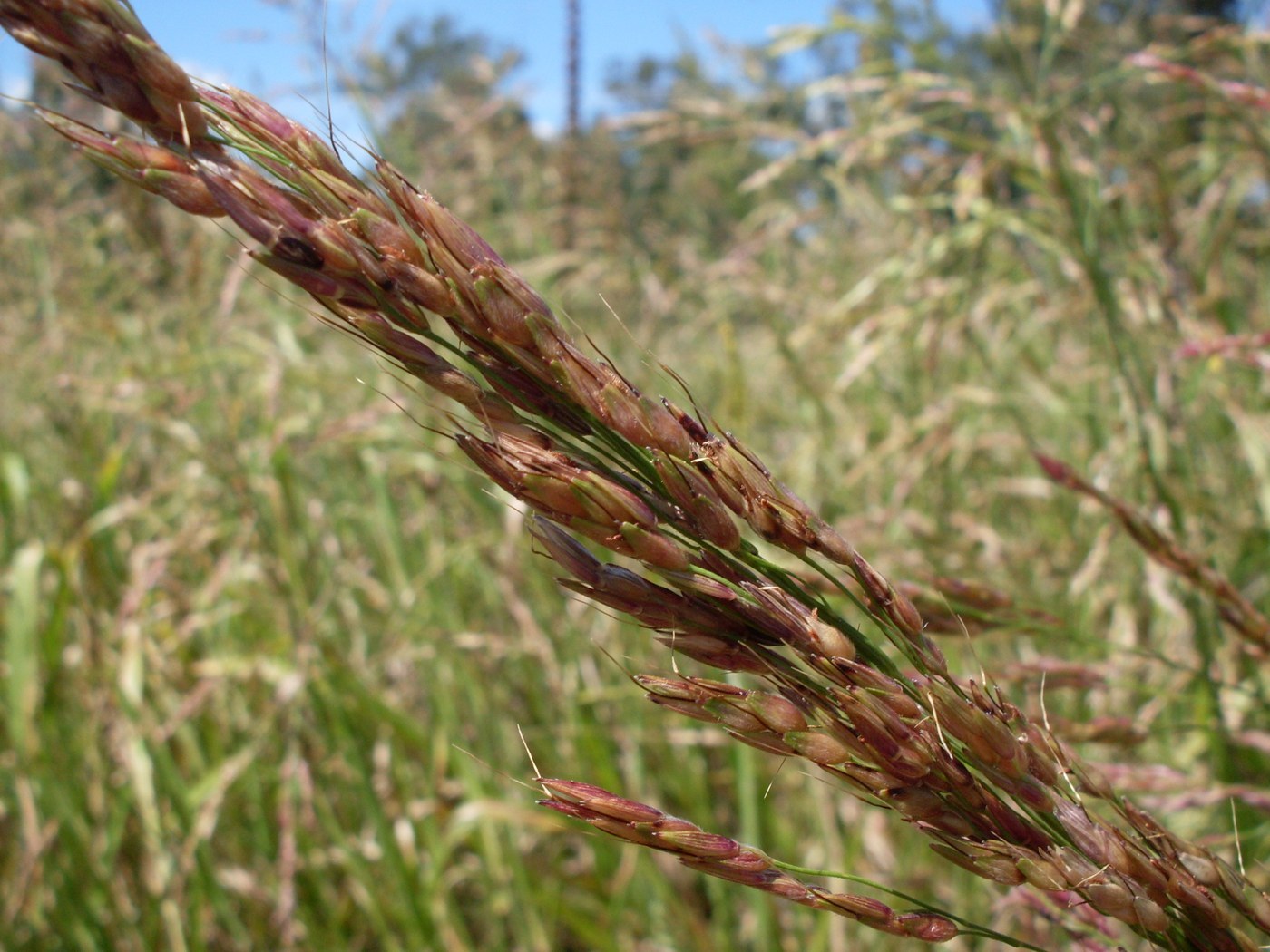
Johnsongrass (Sorghum halepense) is a tall, fast-spreading warm-season perennial grass that forms dense clumps and travels by thick underground rhizomes. It is extremely vigorous and low-maintenance, valued in some settings for erosion control and quick green cover, though its aggressive habit means it needs deliberate containment.
Light
Johnsongrass demands full sun for its best growth. Plant it in an open, unshaded position where it receives at least six to eight hours of direct sunlight daily. In shade it grows thin, weak, and pale, and produces far fewer of its characteristic seed heads. The more sun it gets, the taller and denser the stand becomes.
Water
Water needs are moderate. Young plants and fresh rhizome divisions benefit from regular moisture while they establish their root systems. Once established, Johnsongrass is markedly drought-tolerant, drawing on its deep rhizomes to survive dry spells. During prolonged drought it may go semi-dormant and brown, greening up again after rain. Avoid waterlogged ground, which the rhizomes dislike.
Soil & Potting
This grass is unfussy about soil and tolerates a wide range from sandy loams to heavier clays. It prefers fertile, well-drained ground with a near-neutral to slightly alkaline pH but will grow in poor soils too. Good drainage encourages the deepest, most vigorous rhizome development. It is rarely grown in pots given its size and spreading habit, but if contained, use a large, deep container to accommodate the rhizomes and a coarse, free-draining mix.
Humidity & Temperature
Johnsongrass is a heat-loving warm-season grass that flourishes in hot summers and warm, humid climates. It grows actively once soil temperatures climb in late spring and peaks through summer. Top growth is killed by hard frost, but the rhizomes survive underground in milder winters and resprout when warmth returns. It does not require any particular humidity and tolerates dry air well.
Feeding
Generally Johnsongrass needs no feeding and thrives on native soil fertility. On very poor ground, a light application of a balanced nitrogen-containing fertilizer in late spring will boost lushness and height, but feeding is rarely necessary and heavy nitrogen simply accelerates its already rapid spread.
Propagation
Johnsongrass propagates readily both by seed and by rhizome. Seed germinates in warm soil once temperatures are reliably high. Rhizome fragments will each sprout new shoots, so division of an established clump is the fastest way to start new stands. Take a section of rhizome with a few nodes, lay it a couple of inches deep in warm, moist soil, and it will establish quickly.
Repotting / Pruning
Because of its spreading rhizomes, Johnsongrass benefits from mowing or cutting back to keep it tidy and contained. Cutting the stand back several times through the growing season keeps it lower and denser and reduces seed set. To limit its spread, install deep root barriers or grow it in a sunken, bottomless container, and dig out wandering rhizomes at the edges of the planting.
Common Problems & Pests
Johnsongrass is remarkably tough and largely untroubled by pests. Aphids can occasionally cluster on new shoots, and various fungal leaf spots or rusts may appear in humid conditions but rarely cause serious harm. The main management challenge is not disease but the plant's own vigor: it can crowd out neighboring plants, so its chief "problem" is containment. Regular edge cultivation and cutting keep it in check.
Seasonal Care Tips
In spring, cut away last year's dead top growth to make room for fresh shoots as the soil warms. Through summer, mow or shear periodically to control height and spread and to prevent extensive seeding. In autumn, growth slows and the plant begins to brown with the first cold. In winter the top dies back; simply leave the crown alone, as the rhizomes overwinter and resprout when warm weather returns.
Frequently asked questions
Why does my Johnsongrass keep spreading beyond where I planted it?
It spreads by thick underground rhizomes as well as seed. To contain it, install deep root barriers, mow before seed heads mature, and dig out wandering rhizomes at the edges of the stand.
How much sun does Johnsongrass need?
Full sun, at least six to eight hours daily. In shade it grows thin, weak, and pale with far fewer seed heads.
Does Johnsongrass need much watering?
Only moderate water while establishing. Once its deep rhizomes are set, it is strongly drought-tolerant and may only brown temporarily during severe dry spells, greening up after rain.
Will Johnsongrass survive winter?
The top growth is killed by hard frost, but the rhizomes survive underground in milder climates and resprout when warm weather returns in spring.