
Johnsongrass Identification Guide
Identify Johnsongrass (Sorghum halepense), a tall, aggressive perennial grass with thick rhizomes, a white-ribbed leaf, and a large open purplish seedhead. Includes how to separate it from corn and shattercane.
Read the full Johnsongrass encyclopedia entry →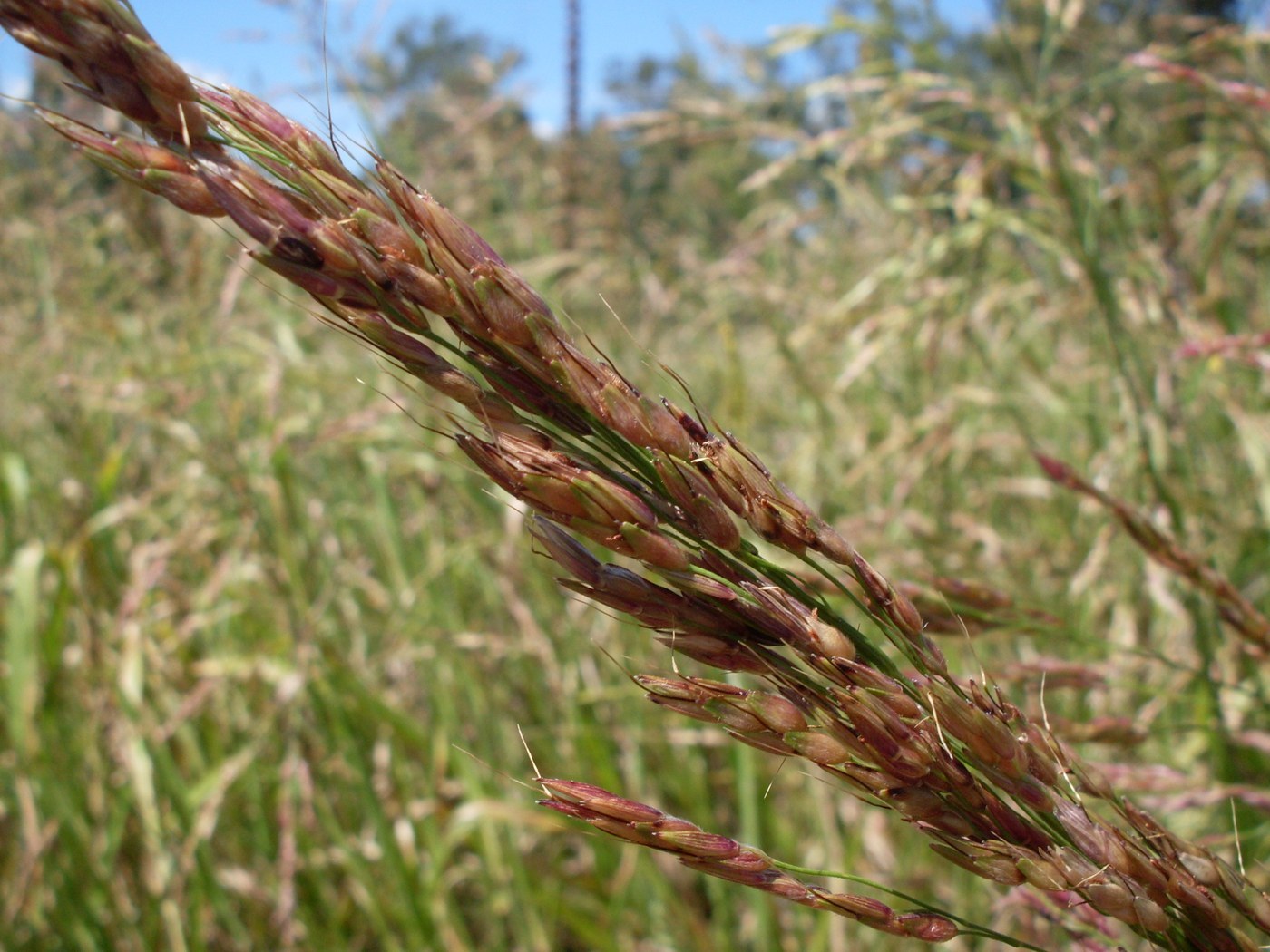
Key Identifying Features
Johnsongrass (Sorghum halepense) is a tall, coarse, warm-season perennial grass spread by stout underground rhizomes. It is one of the most aggressive agricultural weeds in temperate regions. Recognize it by its great height, broad leaves with a conspicuous white midrib, and a large, open, branched seedhead that often takes on a reddish-purple cast.
- Tall, 5 to 8 feet (sometimes taller)
- Broad leaves with a prominent white central midrib
- Thick, scaly, creeping rhizomes with reddish spots
- Large, open, pyramidal panicle, often purplish
- Membranous ligule; lower sheaths usually hairless
Leaves & Stems
Leaf blades are long (up to 2 feet), flat, and an inch or more wide, smooth on the surface with a thick, waxy white midrib down the center, a hallmark of the species. The leaf margins are slightly rough to the touch. At the collar is a membranous, often torn ligule. Stems are stout and upright. The defining vegetative feature lies underground: thick, pinkish-white rhizomes covered in purple-brown scales, which let a single plant form large colonies. Snapping a rhizome reveals it is fleshy and segmented.
Flowers & Fruit
The inflorescence is a large, loose, much-branched panicle 6 to 20 inches long, pyramidal in outline and frequently flushed reddish-purple. Spikelets are paired, with shiny reddish-brown to blackish seeds at maturity; some bear a short bent awn. The open, airy form distinguishes it from the dense, club-shaped heads of cultivated sorghum. Flowering runs from early summer into fall.
How to Tell It Apart from Look-Alikes
- Shattercane (Sorghum bicolor): Annual with no rhizomes; if you dig and find no creeping underground stems, it is shattercane, not Johnsongrass.
- Corn seedlings: Lack rhizomes and have a different leaf base; Johnsongrass seedlings can mimic young corn but emerge from rhizomes.
- Barnyardgrass: Much shorter, annual, no ligule, no white midrib.
- Big bluestem or other natives: Lack the broad white-ribbed leaf and aggressive rhizome network.
The surest confirmation is to dig at the base: stout, scaly, spreading rhizomes plus a white-ribbed broad leaf confirm Johnsongrass.
Where You'll Find It
Johnsongrass thrives in warm, fertile, disturbed ground: crop fields, field margins, fencerows, ditch banks, roadsides, and riverbanks. It prefers full sun and moist, rich soils but tolerates a wide range. It is a serious weed in row crops across the southern and central United States and warm regions worldwide.
Quick ID Checklist
- Tall perennial grass, 5 to 8 ft
- Broad leaves with a white waxy midrib
- Thick, scaly, spreading rhizomes (dig to confirm)
- Large, open, purplish branched panicle
- Paired spikelets, shiny reddish-brown seeds
- Disturbed, fertile, sunny ground
Frequently asked questions
How can I be sure it's Johnsongrass and not shattercane?
Dig at the base. Johnsongrass is a perennial with thick, scaly, creeping rhizomes, while shattercane is an annual with only fibrous roots and no rhizomes.
What does the white line down the leaf mean?
That prominent white, waxy midrib is a key field mark of Johnsongrass and helps separate it from finer-leaved grasses and from barnyardgrass.
How tall does Johnsongrass get?
Commonly 5 to 8 feet tall, occasionally more, towering over most other field weeds, with a large open purplish seedhead at the top.