Joseph's Coat Identification Guide
Recognize Joseph's coat (Amaranthus tricolor) by its upright stems and brilliantly multicolored upper leaves in red, gold, green, and bronze.
Read the full Joseph's Coat encyclopedia entry →
Key Identifying Features
Joseph's coat (Amaranthus tricolor) is a striking annual in the amaranth family grown for its vividly multicolored foliage rather than its flowers. The upper leaves blaze in combinations of scarlet, crimson, gold, bronze, and green, often concentrated near the growing tips like a flaming topknot. The plant is upright, 2–4 feet tall, and the more sun and heat it gets, the more intense the leaf color becomes.
- Erect, branching annual, 2–4 feet tall
- Brilliantly multicolored upper leaves (red, gold, bronze, green)
- Tiny, inconspicuous flower clusters in leaf axils
- Color intensifies in heat and full sun
Leaves & Stems
Leaves are alternate, oval to lance- or diamond-shaped, with pointed tips, wavy or smooth margins, and prominent veins, on long stalks. Lower leaves may stay plain green, while the upper leaves turn the dazzling reds and golds that give the plant its name. Stems are stout, upright, ridged, and often flushed with the same hot colors. (Note: some plants sold as 'Joseph's coat' are the unrelated Alternanthera; true Amaranthus tricolor has the tall upright form described here.)
Flowers & Fruit
Flowers are tiny, greenish or reddish, and chaffy, clustered tightly in the leaf axils rather than in showy plumes. They are easy to overlook beneath the brilliant foliage. Fruit is a small capsule with a single shiny black seed, typical of amaranths.
How to Tell It Apart from Look-Alikes
- Coleus also has colorful leaves but has square stems, opposite leaves, and the scalloped form of the mint family; Joseph's coat has round-ish stems and alternate leaves.
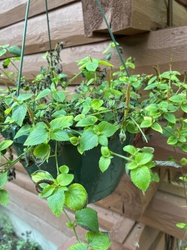
- Alternanthera (also called Joseph's coat) is a low, small-leaved bedding plant, not the tall upright amaranth.
- Other amaranths are mostly green; the concentrated multicolored leafy crown sets A. tricolor apart.
Where You'll Find It
Joseph's coat is grown as a warm-season foliage accent in sunny beds and containers. It thrives in heat and full sun and is found in ornamental gardens worldwide. It is frost-sensitive and grown fresh each year.
Quick ID Checklist
- Upright annual, 2–4 ft, branching
- Multicolored upper leaves in red, gold, bronze, green
- Alternate, oval to diamond-shaped pointed leaves
- Tiny chaffy flowers tucked in leaf axils
- Color deepens in heat and sun
A tall annual crowned with flaming red-and-gold leaves and tiny axil flowers is Joseph's coat amaranth.
Frequently asked questions
Is Joseph's coat grown for flowers or leaves?
For its leaves. The tiny flowers are inconspicuous; the display comes from the brilliantly multicolored upper foliage in red, gold, bronze, and green.
How do I tell Joseph's coat from coleus?
Coleus has square stems and opposite, scalloped leaves of the mint family, while Joseph's coat (Amaranthus tricolor) has rounder stems and alternate, oval to diamond-shaped leaves.
Why are some plants called Joseph's coat shorter?
The name is also applied to Alternanthera, a low, small-leaved bedding plant; true Amaranthus tricolor is a tall upright annual 2–4 feet high.
Joseph's Coat identified by the community
Recent Joseph's Coat specimens identified with Plant Identifier.