
How to Care for Joshua Tree
Grow the iconic Joshua Tree (Yucca brevifolia) with blazing full sun, sharp-draining gritty soil, and very sparing water.
Read the full Joshua Tree encyclopedia entry →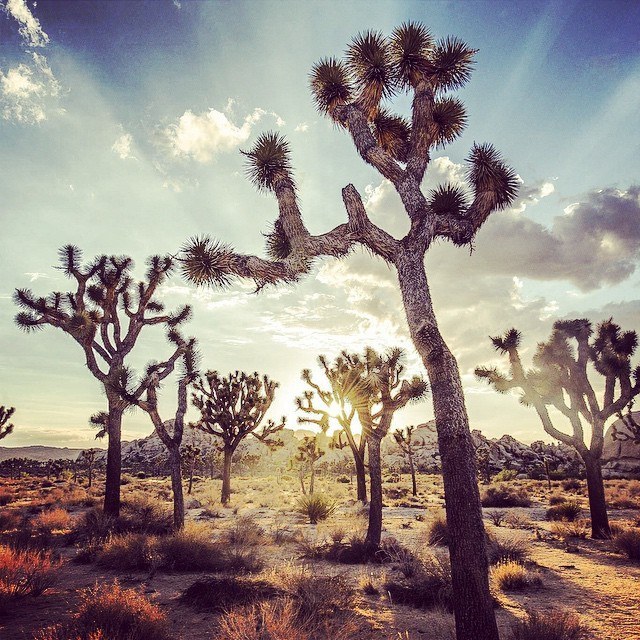
The Joshua Tree (Yucca brevifolia) is the emblematic giant yucca of the Mojave Desert, forming a picturesque branched silhouette topped with dense clusters of stiff, dagger-like leaves. It is a slow-growing, drought-tolerant specimen that demands intense sun and impeccable drainage, making it a moderate-difficulty plant outside true desert climates.
Light
Joshua Tree needs unfiltered full sun all day. It evolved under the fierce Mojave sky and will stretch, weaken, and rot in shade or low light. Site it in the hottest, brightest, most open spot available; indoor cultivation is rarely successful without extremely strong supplemental lighting.
Water
Water very sparingly. This is an intensely drought-tolerant plant that stores water in its trunk and roots. During active growth in spring and fall, water deeply but only when the soil is bone dry, then let it dry completely again. In summer dormancy and winter cold, water almost never. Overwatering is the single most common cause of death, leading to root and trunk rot.
Soil & Potting
Drainage is everything. Use a fast-draining, gritty mineral mix such as a cactus/succulent blend heavily amended with coarse sand, pumice, or crushed gravel. In the ground it requires sandy or rocky soil that never stays wet. If containerized, use an unglazed terracotta pot with generous drainage holes to wick away moisture.
Humidity & Temperature
Joshua Tree loves hot, arid, low-humidity conditions and blistering daytime heat. It is surprisingly cold-hardy, tolerating freezing desert nights and light frost (roughly zones 6-10), but it despises damp, humid air and prolonged wet cold, which invite rot. Excellent air circulation is essential.
Feeding
Feeding is largely unnecessary and can do more harm than good. At most, apply a very dilute, low-nitrogen cactus fertilizer once in spring during active growth. In lean desert soil the plant is fully adapted to minimal nutrients, and overfeeding produces weak, rot-prone growth.
Propagation
Joshua Trees propagate from seed and, less commonly, from rhizome offsets or cuttings of branch tips. Seed needs warmth and patience; germination and growth are slow. Rooting a cutting requires letting the cut end callus for a week or more, then setting it in dry, gritty mix and watering only sparingly until roots form.
Repotting / Pruning
Repot rarely, only when a container plant is clearly root-bound, and always into a similarly gritty mix; disturb the roots as little as possible and withhold water for a week afterward to let any damage heal. Pruning is seldom needed beyond removing dead lower leaves; the plant develops its branching architecture naturally over many years.
Common Problems & Pests
The overwhelming threat is rot from excess moisture or poor drainage, showing as soft, browning tissue at the base or trunk. Watch also for scale, mealybugs, and agave snout weevil, which bores into the crown. Prevent problems with lean soil, sparing water, full sun, and strong airflow; a mushy trunk usually signals irreversible root rot.
Seasonal Care Tips
Water only during the mild growth windows of spring and fall, and keep the plant nearly dry through hot summer dormancy and cold winter. Protect container specimens from prolonged winter wet by moving them under an overhang. Never let the plant sit in standing water at any season.
Frequently asked questions
How often should I water a Joshua Tree?
Very rarely. Water deeply only when the soil is completely dry during spring and fall growth, and withhold water almost entirely in summer dormancy and winter. Overwatering causes fatal rot.
Can I grow a Joshua Tree indoors?
It is very difficult. The plant needs intense all-day direct sun that windows rarely provide, plus arid air and sharp drainage. Success indoors usually requires strong grow lights and great restraint with water.
Why is my Joshua Tree turning soft and brown at the base?
Soft, browning tissue signals rot from too much water or poor drainage. Move it to gritty fast-draining soil, stop watering, and improve airflow; severe basal rot is often unrecoverable.
How cold-hardy is a Joshua Tree?
Quite hardy for a succulent, tolerating freezing desert nights and light frost in roughly zones 6-10. Its enemy is damp, humid cold rather than dry cold.