
Jostaberry Identification Guide
Identifying the jostaberry, a thornless gooseberry-blackcurrant hybrid, by its maple-shaped leaves, currant-like flowers, and large dark berries.
Read the full Jostaberry encyclopedia entry →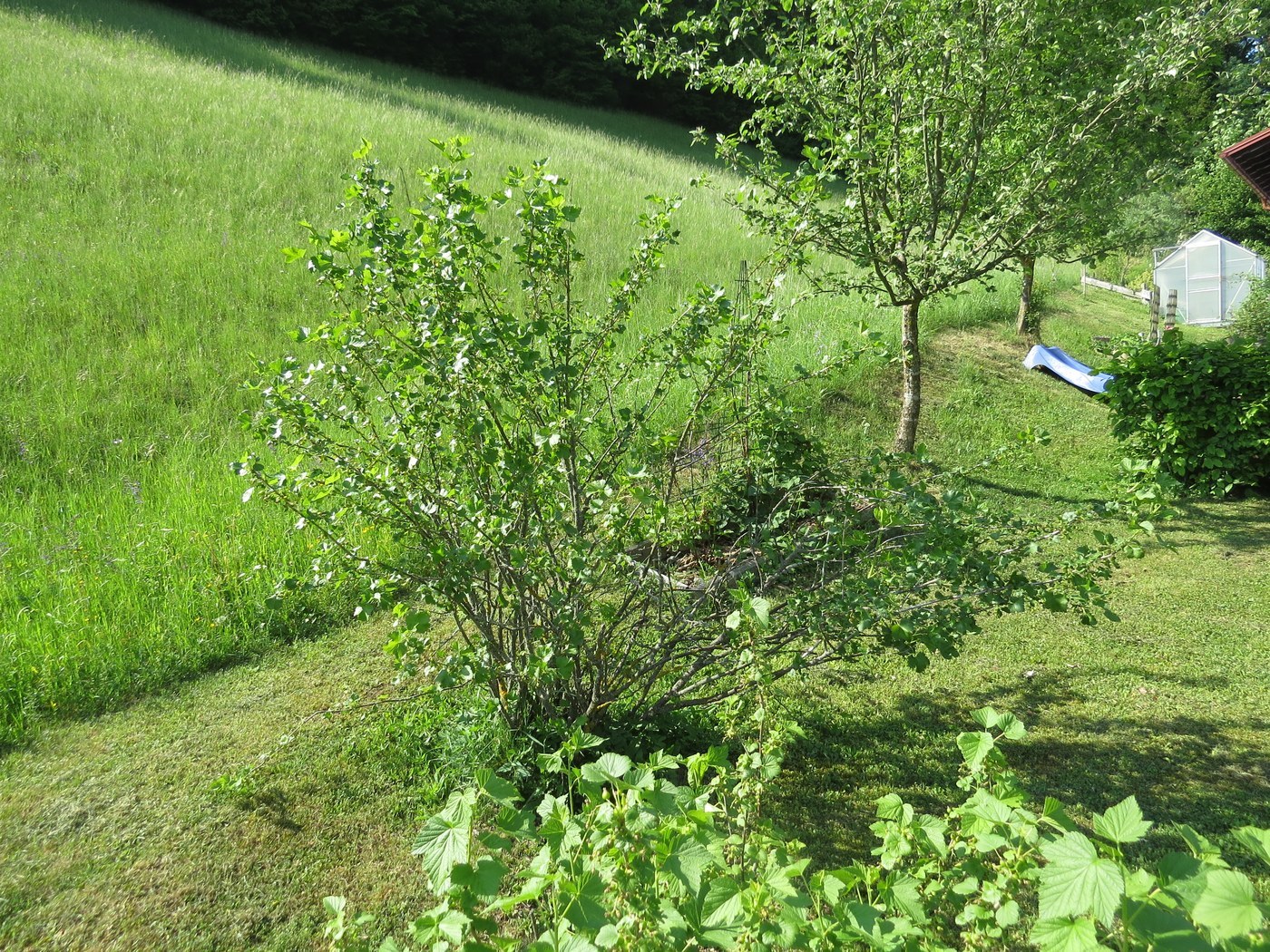
Key Identifying Features
The jostaberry (Ribes × nidigrolaria) is a man-made hybrid between black currant and gooseberry, grown as a vigorous garden fruit bush. Identify it by its thornless stems (unlike gooseberry), maple-shaped (lobed) leaves, drooping clusters of small currant-like flowers, and large, smooth, dark purple-black berries intermediate between its two parents.
- Vigorous deciduous shrub, 1.5–2 m tall and wide
- Thornless canes (key difference from gooseberry)
- Berries larger than a currant, smaller than a gooseberry, dark and smooth
Leaves & Stems
Leaves are alternate, palmately 3–5 lobed, resembling a gooseberry or currant leaf — broadly maple-shaped with toothed margins, medium to dark green. Importantly, the stems lack the spines that arm true gooseberries, and the foliage lacks the strong black-currant odor when crushed (or has only a faint scent). The bush is robust, upright-arching, and forms a dense clump.
Flowers & Fruit
Flowers are small, greenish to pale pink, borne in short drooping clusters (racemes) along the stems in spring, typical of Ribes. The fruit is the defining feature: round, smooth-skinned, dark reddish-purple to near-black berries about 1–2 cm across — clearly bigger than a black currant but smaller than a dessert gooseberry — borne in small clusters. The flavor blends gooseberry tartness with currant richness.
How to Tell It Apart from Look-Alikes
- Gooseberry (Ribes uva-crispa): has spiny stems and usually green/red translucent striped berries borne mostly singly; jostaberry is thornless with dark berries in clusters.
- Black currant (Ribes nigrum): smaller black berries in longer clusters, and leaves emit a strong pungent currant smell when crushed; jostaberry's scent is weak.
- Worcesterberry (Ribes divaricatum): thorny, with small dark berries — distinguished by its spines.
- The thornless stems + lobed leaves + large dark clustered berries + faint scent combo points to jostaberry.
Where You'll Find It
A cultivated plant only — you'll find it in home gardens, allotments, and small fruit plots, mainly in cool-temperate Europe and North America. It is hardy, disease-resistant, and self-fertile, popular as an easy backyard fruit bush. It does not occur in the wild.
Quick ID Checklist
- Vigorous thornless Ribes bush, 1.5–2 m
- Maple-shaped (3–5 lobed) leaves, weak or no currant smell
- Small greenish-pink flowers in drooping clusters
- Large dark purple-black smooth berries in small clusters
- Found in cultivation/gardens, not the wild
Frequently asked questions
What is a jostaberry?
It is a deliberate hybrid between black currant and gooseberry (Ribes × nidigrolaria), combining the size and flavor of both into a thornless, vigorous garden fruit bush.
How do I tell it from a gooseberry?
Jostaberry stems are thornless and bear dark purple-black berries in small clusters, whereas gooseberries have spiny stems and usually larger, often striped, single berries.
Does it smell like black currant?
Only faintly. Unlike true black currant, whose crushed leaves are strongly pungent, jostaberry foliage has a weak scent, which helps separate the two.
Will I find jostaberry growing wild?
No. It is a cultivated hybrid that does not occur naturally, so you'll only encounter it in gardens, allotments, and small fruit plantings.