
Jujube Tree Identification Guide
Recognizing the Chinese jujube by its zigzag thorny twigs, three-veined glossy leaves, and date-like fruit that ripens from green to brown.
Read the full Jujube Tree encyclopedia entry →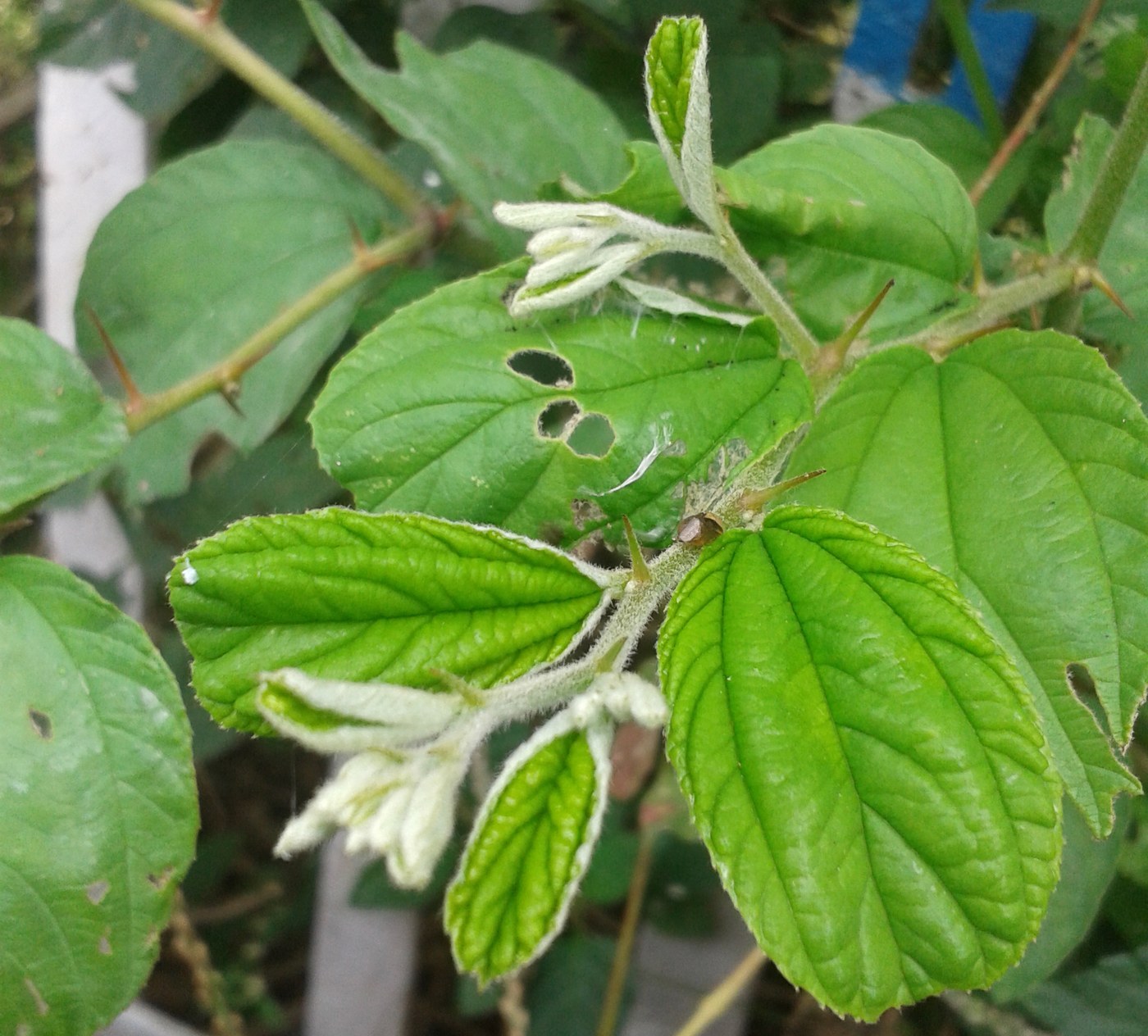
Key Identifying Features
The jujube or Chinese date (Ziziphus jujuba) is a small deciduous tree in the buckthorn family, grown for its sweet, crunchy fruit. Its most distinctive traits are the zigzag growth of the twigs, the paired spines at the leaf bases, and the shiny leaves with three prominent veins running from the base.
- Small tree, usually 3–10 m, with a spreading, somewhat gnarled crown
- Zigzagging green twigs, often with two spines (one straight, one hooked) at each node
- Fruit a date-like drupe ripening green → yellow-brown → wrinkled mahogany
Leaves & Stems
Leaves are alternate, oval to lance-shaped, 2–7 cm long, glossy bright green above, with finely toothed margins and a distinctive set of three veins arching from the leaf base. They are arranged in two ranks along the slender twigs, giving sprigs a feather-like look. Bark is gray-brown, rough and furrowed on older trunks. Many cultivated forms are nearly thornless, but wild and seedling trees bear sharp paired spines.
Flowers & Fruit
Flowers are tiny, star-shaped, greenish-yellow, about 5 mm across, borne in small clusters in the leaf axils in late spring to summer; they are inconspicuous but lightly fragrant. The fruit is an oval drupe 1.5–4 cm long with a single hard, pointed stone. Immature fruit is smooth and green like a small apple, turning reddish-brown when ripe, then drying and wrinkling on the tree to resemble a small date. The crisp, sweet flesh tastes apple-like when fresh.
How to Tell It Apart from Look-Alikes
- Common date palm: completely different — a palm, not a branching tree; jujube fruit only resembles dates after it dries.
- Indian jujube (Ziziphus mauritiana): an evergreen tropical relative with larger, hairier leaves and rounder fruit; Chinese jujube is deciduous and cold-hardy.
- Buckthorns (Rhamnus/Frangula): lack the strong three-veined leaf and date-like fruit; their fruit is a small black berry.
- The zigzag twig + paired spines + three-veined glossy leaf + date-like drupe combination is unmistakable.
Where You'll Find It
Native to China and cultivated for over 4,000 years; now grown across southern Europe, the Middle East, India, and the warmer United States (zones 6–10). Very drought- and heat-tolerant, it thrives in hot, dry sites where other fruit trees struggle, and it can naturalize in arid regions.
Quick ID Checklist
- Small deciduous tree with zigzag green twigs
- Paired spines at leaf nodes (straight + hooked)
- Glossy oval leaves with three veins from the base
- Tiny greenish-yellow star flowers
- Date-like fruit, green ripening to wrinkled brown
- Thrives in hot, dry climates
Frequently asked questions
Why is the jujube called Chinese date?
Because the ripe fruit dries and wrinkles on the tree into a sweet, chewy form that closely resembles a date, even though jujube is a broadleaf tree, not a palm.
What's the easiest field mark for a jujube?
The combination of zigzagging twigs, paired spines at each leaf base, and glossy leaves with three veins arching from the base is diagnostic and easy to spot.
When can I eat the fruit?
Eat it crisp and apple-like when it turns yellow-green to reddish-brown, or let it wrinkle and dry on the tree for a sweeter, chewier date-like texture.
Do all jujube trees have thorns?
Wild and seedling trees usually bear sharp paired spines, but many named fruiting cultivars have been selected to be nearly or completely thornless.