
Juniper Identification Guide
How to identify junipers by their needle-and-scale foliage, fleshy blue 'berry' cones, and resinous gin-like scent.
Read the full Juniper encyclopedia entry →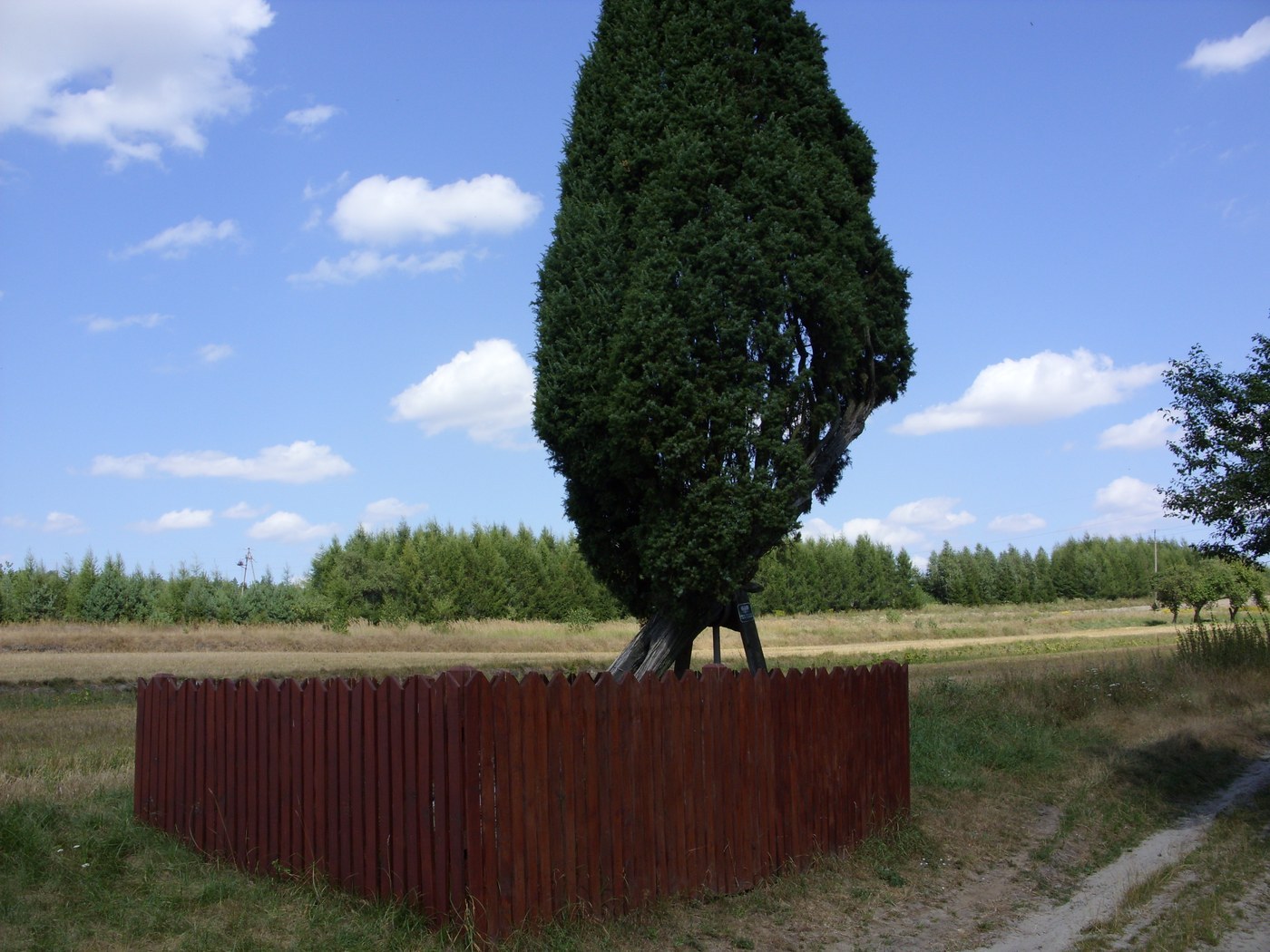
Key Identifying Features
Junipers (Juniperus spp.) are evergreen conifers ranging from ground-hugging mats and spreading shrubs to upright columnar trees. The defining traits are two foliage types—sharp juvenile needles and soft adult scales—often on the same plant, plus fleshy, berry-like blue cones. Crushed foliage releases a distinctive resinous, gin-like aroma.
- Evergreen, scale-like and/or needle-like foliage
- Round, fleshy, blue to blackish 'berries' (modified cones) with a waxy bloom
- Reddish-brown, fibrous, peeling bark
- Aromatic when crushed
Leaves & Stems
Juniper foliage comes in two forms. Juvenile leaves are needle-like, sharp, and spreading, arranged in whorls of three, often with a whitish band on top. Adult leaves are tiny, scale-like, and pressed flat against the twig in opposite pairs, giving stems a braided, cord-like look. Many junipers (especially young plants or vigorous shoots) show both. The combination of scale foliage with some prickly needles is a strong juniper signal. Bark is thin, gray-brown to reddish, and shreds in long fibrous strips.
Flowers & Fruit
Junipers are conifers, so they have cones, not flowers. The female cones are unusual: the scales become fleshy and fuse into a rounded, berry-like structure about 1/4-1/2 inch wide, ripening from green to glaucous blue, purple, or black over one to three years. Inside are 1-3 hard seeds. Male cones are tiny, yellowish, and shed pollen in spring. These fleshy 'berries' are the easiest fruit-stage clue to separate junipers from most other conifers.
How to Tell It Apart from Look-Alikes
- Arborvitae (Thuja): scale foliage in flat fan-like sprays and dry, woody, papery cones—not round blue berries.
- Cypress / Chamaecyparis: also scale foliage but with dry, small woody cones.
- Eastern redcedar (Juniperus virginiana): is itself a juniper—columnar tree form with blue berries.
- Yews: flat soft needles and red fleshy 'arils', not scale foliage.
The fleshy blue berry-like cones plus mixed needle/scale foliage and gin scent distinguish junipers from all of these.
Where You'll Find It
Junipers grow worldwide in the Northern Hemisphere on dry, rocky, sunny sites, from prairies and old fields to mountain slopes and coastal dunes. They are extremely drought-tolerant and among the most widely planted landscape evergreens, used as groundcovers, foundation shrubs, and screens.
Quick ID Checklist
- Evergreen conifer (mat, shrub, or columnar tree)
- Scale-like foliage and/or sharp juvenile needles in threes
- Round blue/black fleshy 'berries' with waxy bloom
- Gin-like resinous smell when crushed
- Reddish, shreddy bark
Frequently asked questions
Why does my juniper have both soft and prickly foliage?
Junipers naturally carry two leaf forms: prickly needle-like juvenile foliage and soft pressed scale foliage. Young plants and vigorous shoots tend to show more needles, while mature growth turns to scales. Both on one plant is normal and a good ID clue.
How do I tell a juniper from an arborvitae?
Look at the cones and foliage arrangement. Arborvitae has flat, fan-like sprays of scale foliage and small dry woody cones, while junipers have rounder twigs and fleshy blue berry-like cones.
Is eastern redcedar a juniper?
Yes. Despite the name 'cedar,' eastern redcedar is Juniperus virginiana, a true juniper with blue berry-like cones and aromatic reddish wood.