
Kentia Palm Identification Guide
Identify the Kentia Palm (Howea forsteriana) by its arching feather fronds, slender green canes, and elegant, gently drooping leaflets.
Read the full Kentia Palm encyclopedia entry →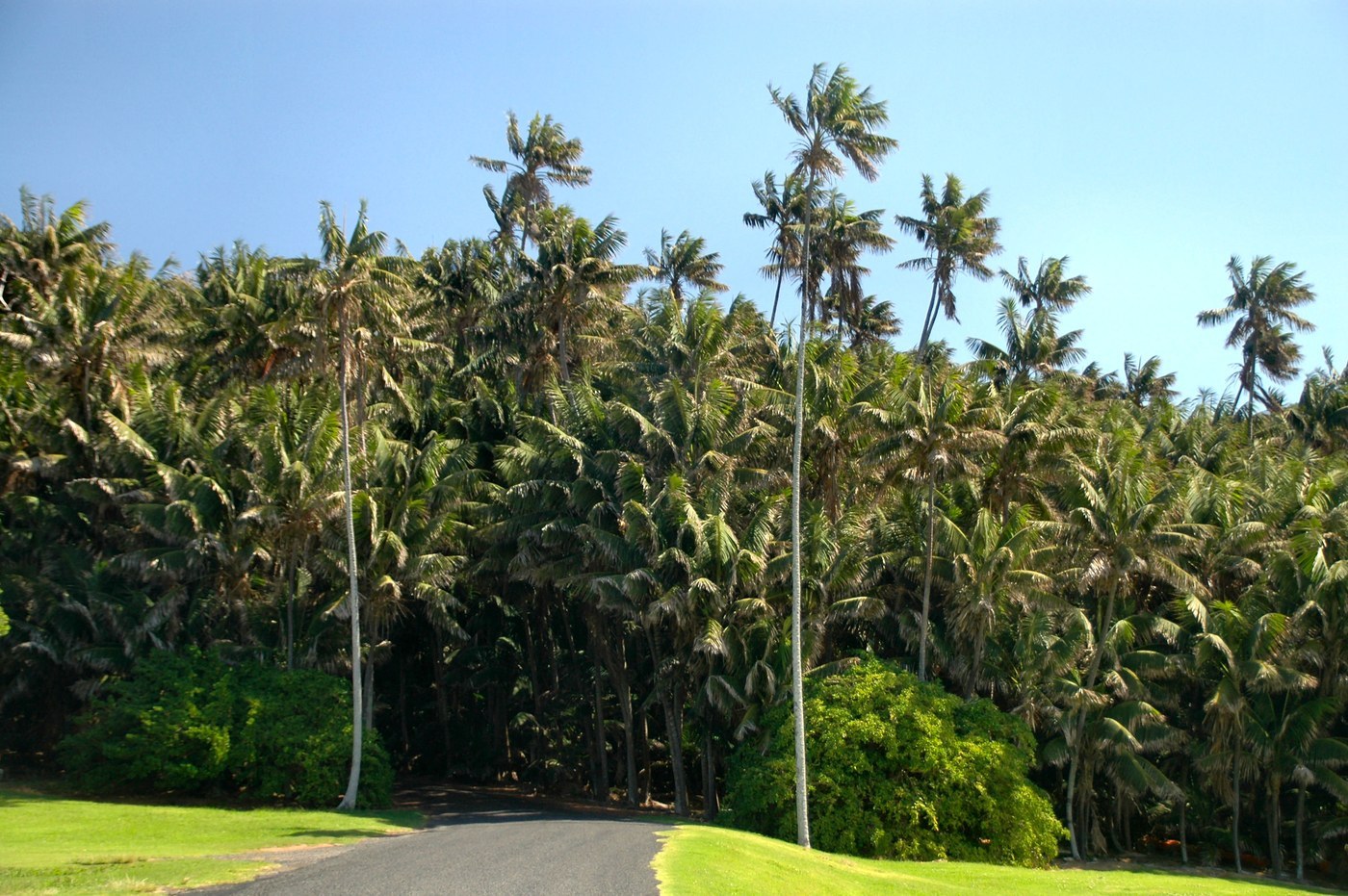
Key Identifying Features
The Kentia Palm (Howea forsteriana) is a classic parlor palm prized for its graceful, arching silhouette. You identify it by long, gently arching feather (pinnate) fronds held on slender green stalks, with broad, flat, dark-green leaflets that droop slightly from a central rib.
- Pinnate (feather-shaped) fronds, not fan-shaped
- Arching, elegant posture — fronds curve outward and down
- Smooth, green, cane-like leaf bases with no spines
- Clumping appearance because several stems are usually potted together
Leaves & Stems
Each frond can reach 1.5–3 m with numerous leaflets 30–60 cm long spaced evenly along the rachis, all roughly in one plane so the frond looks flat. Leaflets are dark green, leathery, with a prominent midrib and slightly pendulous tips. The leaf stalk (petiole) is smooth and lacks the teeth or spines found on date palms. The trunk is slender, ringed with old leaf scars, and green when young, browning with age. Plants sold indoors are typically multi-stemmed clumps that give a full, bushy look.
Flowers & Fruit
Rarely seen indoors. Mature outdoor palms produce long, pendant spikes of small cream flowers emerging below the crown, followed by oval fruits that ripen dull red to brick-red, about 3–4 cm long. Flowering is not a practical ID feature for houseplants.
How to Tell It Apart from Look-Alikes
- vs. Areca/Butterfly Palm (Dypsis lutescens): areca has yellow-green, upright, V-shaped fronds and bamboo-like yellow canes; kentia is darker, flatter and more arching with green canes
- vs. Parlor Palm (Chamaedorea elegans): parlor palm is smaller, more delicate, with shorter fronds; kentia is larger and more robust
- vs. Date Palms (Phoenix): date palms have stiff, spiky fronds and sharp basal spines; kentia is spineless and soft-looking
- vs. Fan palms: any palm with circular, pleated fan leaves is not a kentia
Where You'll Find It
A premier indoor palm in homes, hotels and offices for its low-light tolerance and refined form. In the wild it is endemic only to Lord Howe Island, Australia, growing in subtropical forest.
Quick ID Checklist
- Feather-shaped fronds arching outward and down
- Flat plane of dark-green, slightly drooping leaflets
- Smooth green spineless leaf stalks
- Slender ringed trunk, usually clumped in the pot
- Overall tall, graceful, fountain-like form
Frequently asked questions
How is a Kentia Palm different from an Areca Palm?
Kentia fronds are darker green, flatter and gracefully arching with green canes, while Areca fronds are yellow-green, upright and V-shaped on bamboo-like yellow stems.
Does the Kentia Palm have spines?
No. Its leaf stalks are smooth and spineless, which distinguishes it from date palms (Phoenix), whose fronds carry sharp basal spines.
Why does my Kentia look like several palms in one pot?
Kentias are usually grown as multi-stem clumps for a fuller look. Each green cane is a separate stem sharing the pot.
Where does the Kentia Palm come from?
It is endemic to Lord Howe Island off the coast of Australia and is grown worldwide as an ornamental indoor palm.