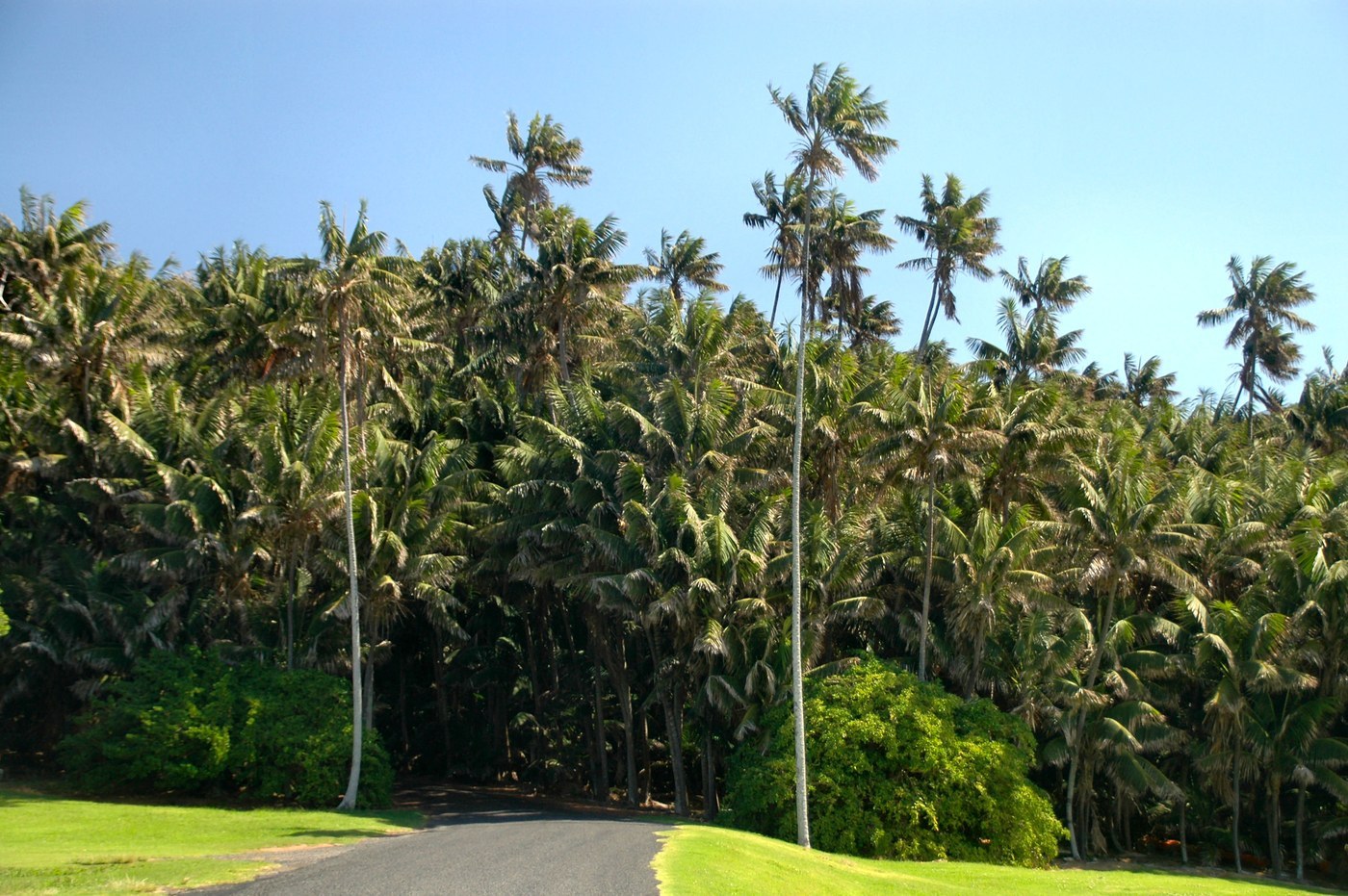
Kentia Palm
Howea forsteriana
The kentia palm is an elegant, slow-growing feather palm from Australia's Lord Howe Island, famed since Victorian times as one of the most durable and graceful indoor palms.
- Light
- Bright indirect to medium light
- Water
- When top inch of soil dries
- Difficulty
- Easy
Got a plant like this?
Identify any plant from a photo, free.
Overview
The kentia palm is a true palm long celebrated as the quintessential parlor palm of grand interiors. Its arching, feathery fronds give a lush, tropical feel while tolerating the low light and dry air of indoor spaces.
Native only to Lord Howe Island off the coast of Australia, Howea forsteriana is slow-growing but very long-lived, and is one of the most forgiving large palms for the home.
How to identify it
Identify the kentia palm by:
- Fronds: long, gracefully arching pinnate (feather-shaped) leaves with dark green, drooping leaflets
- Habit: single slender trunk per stem, often grown several to a pot for a fuller look
- Size: typically 6-10 ft indoors over many years; up to 30+ ft in the wild
- Leaflets: held flat or slightly drooping, not stiffly upright
- Crownshaft: smooth green stems with neat leaf scars
Care & growing
Light: Bright indirect light is ideal, but it tolerates medium and even fairly low light better than most palms.
Water: Keep evenly moist in summer; water when the top inch dries. Reduce in winter. Avoid waterlogging.
Soil: Rich, well-draining potting mix.
Temperature: 65-80F; protect from cold drafts below 55F.
Feeding: Light feeding in spring and summer; palms are sensitive to over-fertilizing.
Propagation: Grown from seed only, which is slow; clumps cannot be reliably divided.
Habitat & origin
Howea forsteriana is endemic to Lord Howe Island, a small subtropical island in the Tasman Sea between Australia and New Zealand, where it grows in lowland forests and on sandy soils.
Seed exported from the island supplies a global ornamental trade, and the palm is grown indoors worldwide as well as outdoors in mild, frost-free climates.
Frequently asked questions
Is the kentia palm hard to grow indoors?
No. It is one of the most tolerant palms, handling lower light, dry air, and infrequent care, though it grows slowly.
Why do the frond tips turn brown?
Usually low humidity, dry soil, or fluoride/salts in tap water. Keep soil evenly moist and consider filtered water.
How fast does it grow?
Very slowly, often producing only one or two new fronds per year, so buy a plant near the size you want.
How do I recognize a kentia palm?
Look for long, gracefully arching feather-shaped fronds with dark green drooping leaflets on slender single trunks, often several grouped in one pot.
Kentia Palm guides
In-depth guides for identifying, growing, and caring for Kentia Palm.
How to Care for Kentia Palm
The elegant, easygoing Kentia Palm tolerates low light and neglect, bringing graceful arching fronds to any room.
Kentia Palm Identification Guide
Identify the Kentia Palm (Howea forsteriana) by its arching feather fronds, slender green canes, and elegant, gently drooping leaflets.