
How to Care for Kerria
A cheerful shade shrub with arching green stems and golden spring flowers. Easy and adaptable in part to full shade with evenly moist soil.
Read the full Kerria encyclopedia entry →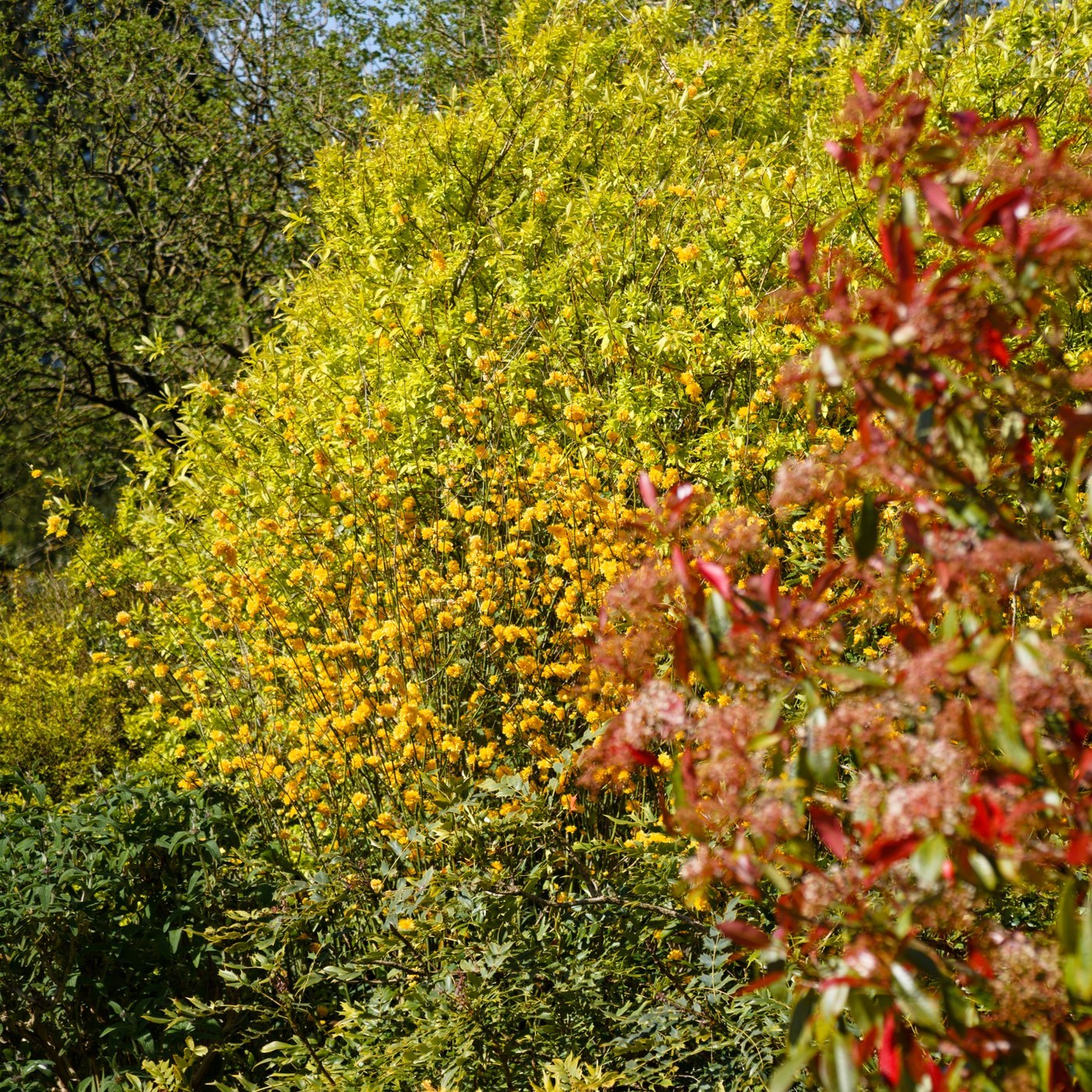
Kerria (Kerria japonica), often called Japanese kerria or Japanese rose, is a graceful deciduous shrub grown for its bright yellow spring flowers and slender, arching, vivid green stems that add winter interest after the leaves drop. It is an easy, adaptable, and forgiving shrub that positively prefers shade, making it valuable for brightening difficult, low-light corners of the garden.
Light
Kerria grows best in part shade to full shade. Unusually among flowering shrubs, it flowers well in shade, and in fact its blooms and foliage fade or scorch in strong, hot direct sun. Dappled woodland light or the shaded side of a building is ideal, giving the richest flower color and greenest stems.
Water
Water needs are moderate; keep the soil evenly moist, especially while the shrub is establishing and during dry spells. Once established it tolerates some dryness but performs best with steady moisture. Avoid both drought stress and constantly waterlogged soil, aiming for consistently damp but not soggy ground.
Soil & Potting
Kerria is undemanding about soil, thriving in average, loamy, well-drained ground and tolerating a range of conditions including clay. It prefers soil that holds moisture yet drains freely. A layer of organic mulch over the root zone conserves moisture, moderates soil temperature, and suits its woodland nature.
Humidity & Temperature
This is a hardy, cool-climate shrub that withstands cold winters well and needs no special humidity. It appreciates the cooler, more sheltered conditions of a shaded site and generally shrugs off typical seasonal temperature swings in temperate gardens.
Feeding
Feeding needs are modest. An application of balanced granular fertilizer or a top-dressing of compost in early spring supports healthy growth and flowering. Avoid heavy feeding, which promotes excessive leafy suckering at the expense of flowers.
Propagation
Kerria propagates very easily. It naturally suckers and can be divided by lifting rooted suckers from the clump's edge and replanting them. Softwood cuttings in early summer and hardwood cuttings in the dormant season both root readily, giving several simple ways to make new plants.
Repotting / Pruning
Prune immediately after flowering, since kerria blooms on the previous year's wood; cutting back right after bloom preserves next year's flowers. Remove old, weak, or dead stems to the base to renew the clump and encourage vigorous new green canes, and thin out spreading suckers to keep the shrub within bounds, as it can form colonies over time.
Common Problems & Pests
Kerria is notably trouble-free and rarely bothered by serious pests. Its main issues are twig and stem dieback or canker, which appear as discolored, dying stems and are handled by pruning out affected wood, and leaf or blossom blight in wet seasons. Its vigorous suckering habit can make it spread further than intended, so periodic thinning keeps it tidy.
Seasonal Care Tips
In spring, enjoy the golden bloom and feed lightly, then prune right after flowering finishes. Through summer, keep the soil evenly moist and remove errant suckers. In fall, mulch the root zone, and in winter appreciate the bright green bare stems, which provide welcome color; delay hard renewal pruning until after the next spring's flowering.
Frequently asked questions
Does kerria really flower in shade?
Yes. Kerria is one of the few flowering shrubs that blooms well in part to full shade, and its flowers and foliage actually last better out of hot direct sun, making it excellent for shady spots.
When should I prune kerria?
Prune right after it finishes flowering in spring. Kerria blooms on the previous year's wood, so pruning immediately after bloom removes old stems without sacrificing next year's flowers.
Why is my kerria spreading so much?
Kerria naturally suckers and can form spreading colonies. Thin out unwanted suckers by digging or cutting them at the base periodically to keep the shrub within its allotted space.
Some of my kerria stems are dying back. What causes this?
Scattered stem dieback or canker is the most common kerria problem, showing as discolored, dying canes. Prune the affected stems back to healthy wood or the base to keep the shrub vigorous.
How do I propagate kerria?
It is very easy to propagate. Lift and replant rooted suckers from the edge of the clump, or take softwood cuttings in early summer or hardwood cuttings when dormant, all of which root readily.