
Key Lime Pie Plant Identification Guide
Recognize the Key Lime Pie Plant (Adromischus cristatus) by its plump, wedge-shaped crinkle-edged leaves and rust-colored aerial roots on the stem.
Read the full Key Lime Pie Plant encyclopedia entry →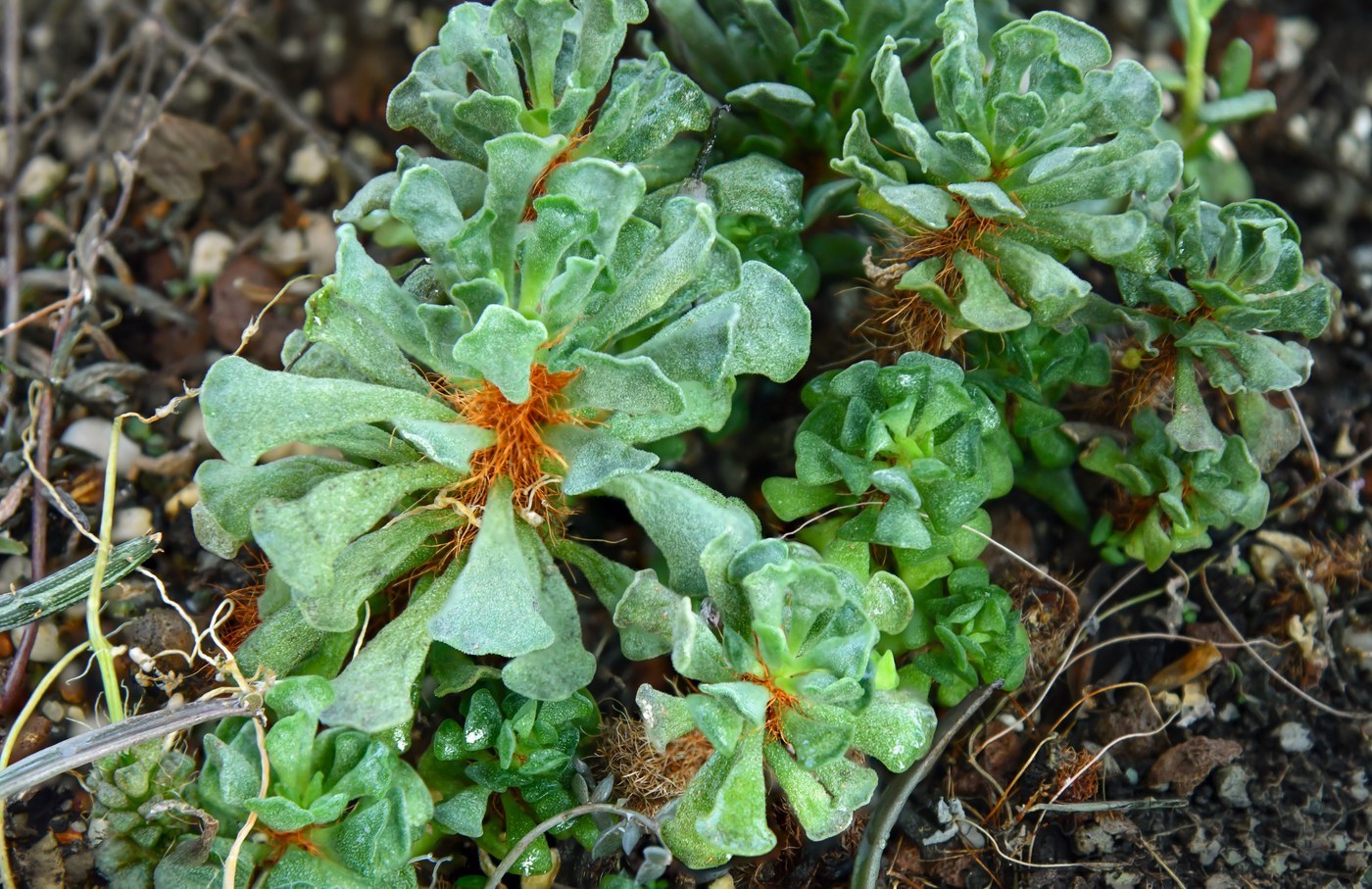
Key Identifying Features
Key Lime Pie Plant (Adromischus cristatus, also called Crinkle-Leaf Plant) is a small clustering succulent with distinctively ruffled leaf tips. Look for:
- Plump, wedge- or fan-shaped leaves with a wavy, crinkled outer edge.
- A fuzzy, fine-textured surface on light green to gray-green leaves.
- Reddish-brown, hairy aerial roots coating the short stems.
Leaves & Stems
The leaves are thick and fleshy, broadest and crimped at the tip, narrowing toward the base — like a little green paddle or pie wedge. The outer margin is distinctly wavy/crinkled (cristate), the feature behind both its scientific and common names. Leaf color is pale to medium green, sometimes with a fine velvety fuzz, and the surface can look slightly powdery. Leaves grow in loose rosettes or spirals on short stems.
A strong confirming clue is the stem: mature plants develop dense, rust-red to brown fibrous aerial roots clothing the stem, giving it a fuzzy reddish 'sleeve.' The whole plant stays small, usually under 6 in (15 cm) tall, and clusters into clumps.
Flowers & Fruit
It sends up a slender flower spike bearing small tubular flowers, white to pale pink with reddish or greenish tips. The blooms are modest; the foliage is the main attraction.
How to Tell It Apart from Look-Alikes
- Adromischus maculatus (Calico Hearts): flatter leaves with purple-brown spots and smooth (not crinkled) edges.
- Adromischus cooperi: plump leaves with wavy tips but spotted and more cylindrical, and lacks the dense red stem roots.
- Crassula and Echeveria: form flatter, more symmetrical rosettes without the crimped leaf tips and reddish stem roots.
- Cotyledon tomentosa (Bear Paw): fuzzy plump leaves but with red 'claw' teeth at the tips, not a wavy crinkled edge.
Where You'll Find It
Native to South Africa's Eastern Cape, it is a favorite windowsill, dish-garden, and collector succulent. Hardy in USDA 9-11; elsewhere grown as a potted plant in bright light with very sharp drainage, kept on the dry side. It propagates readily from single dropped leaves.
Quick ID Checklist
- Wedge-shaped leaves with a wavy crinkled tip
- Light green, fine fuzzy/velvety surface
- Stems coated in rusty-red aerial roots
- Small clustering plant, under ~6 in tall
- Slender spike of small white-pink tubular flowers
Frequently asked questions
Why is it called Key Lime Pie Plant?
Its plump pale-green leaves with crimped, ruffled edges resemble the crinkled crust edge and color of a key lime pie. It is also widely sold as Crinkle-Leaf Plant.
What are the reddish fuzzy fibers on the stem?
Those are aerial roots. Adromischus cristatus naturally grows dense rust-colored fibrous roots along its stems, which is a reliable identification feature.
Why are the leaf edges so wavy?
The crinkled (cristate) outer margin is a natural trait of the species and the source of its scientific name. Each leaf tip is broadened and crimped.
How do I propagate it?
It roots easily from a single fallen leaf laid on gritty soil. Adromischus leaves are well known for sprouting new plantlets readily.