Key Lime Pie Plant
Adromischus cristatus
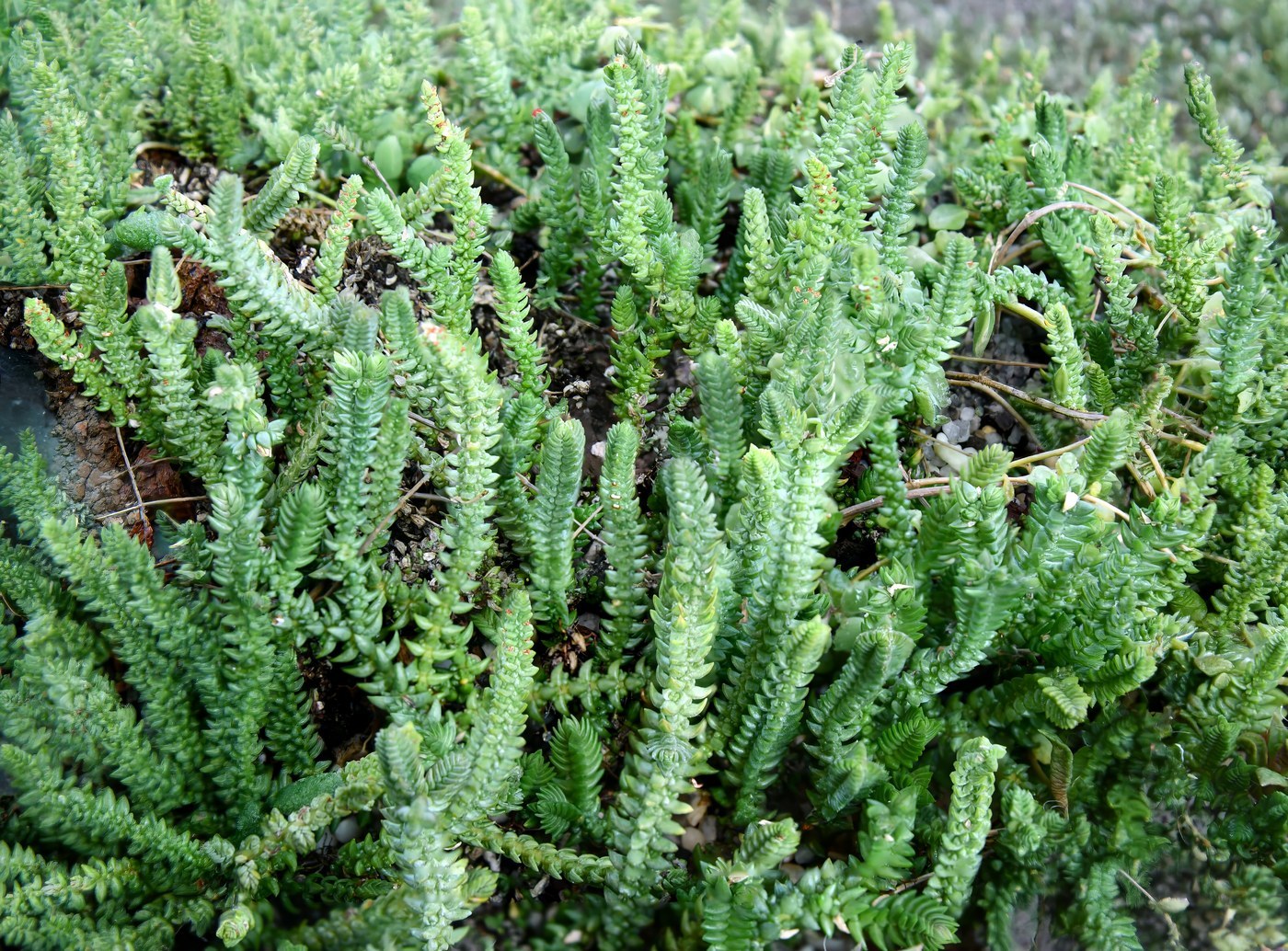
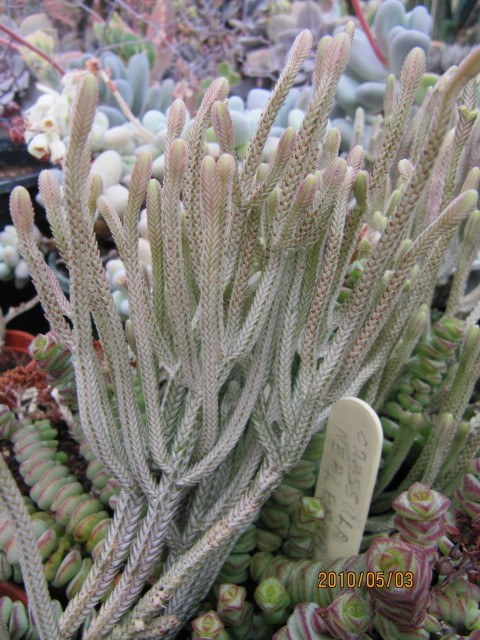
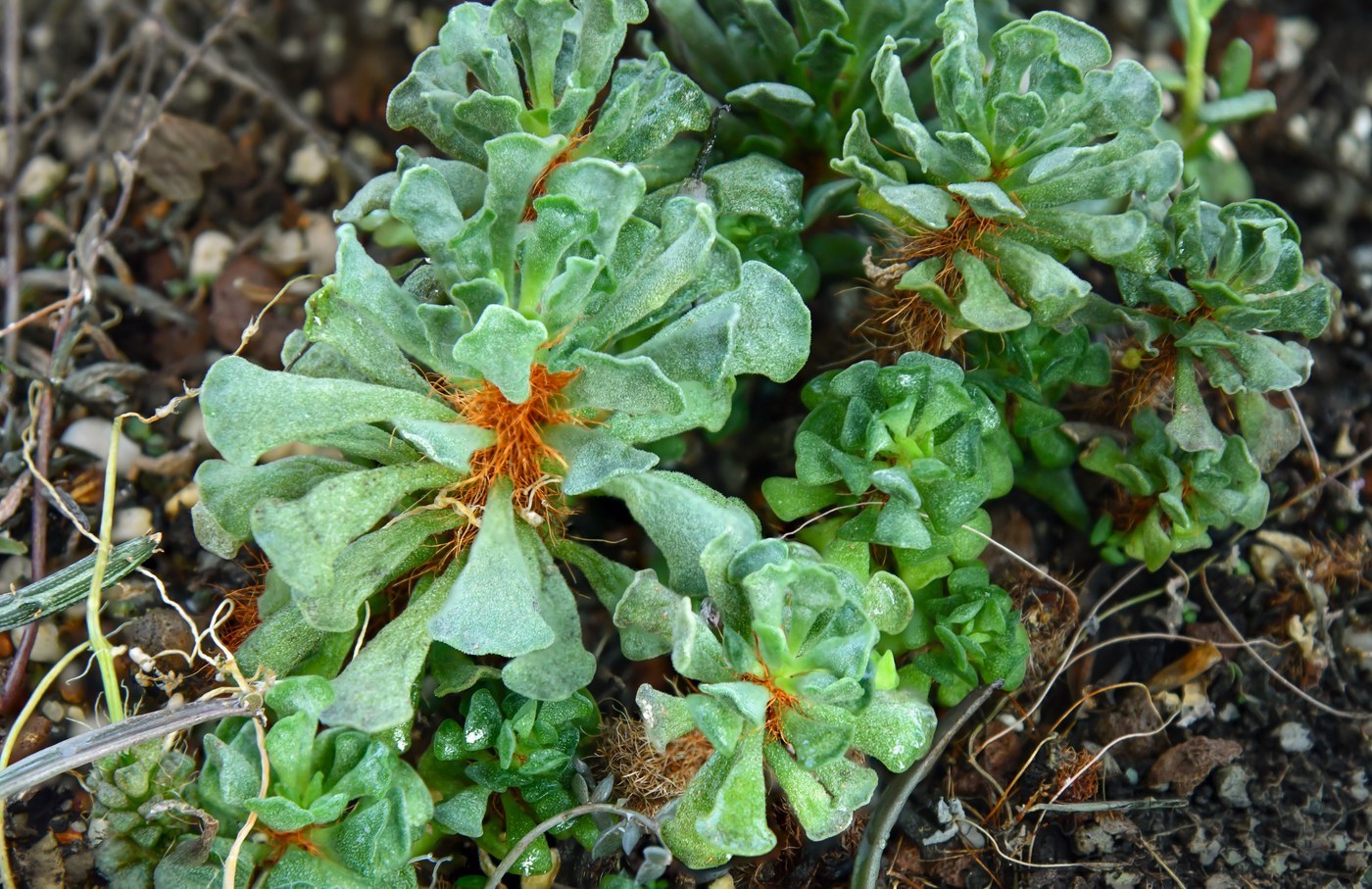
A small clumping succulent with plump, wedge-shaped green leaves whose ruffled, crinkled tips look like pie crust. Reddish aerial roots fuzz the stem like cinnamon.
- Light
- Bright indirect to some direct sun
- Water
- Sparingly; let soil dry fully
- Difficulty
- Easy
Got a plant like this?
Identify any plant from a photo, free.
Overview
Key Lime Pie Plant is a charming dwarf succulent grown for its fat, fan-shaped green leaves edged with a distinctive wavy, crinkled crust along the tip — the feature that earns it both the "key lime pie" and "crinkle-leaf" names.
It forms low, dense clumps, with short stems often covered in fine rusty-red aerial roots that add to the dessert-like charm. The whole plant rarely exceeds a few inches tall.
Slow but tough and forgiving, it is an excellent small-space and beginner succulent that handles a bit of neglect well.
How to identify it
- Small, plump wedge- or fan-shaped green leaves with a ruffled, crinkled top edge
- Leaf surface is often slightly fuzzy or velvety
- Short stems clad in fine, rust-red aerial roots resembling cinnamon dusting
- Low, clumping habit, usually under 4-6 in (10-15 cm) tall
- Slender flower spikes bearing small tubular white-to-pinkish flowers
Care & growing
Light: Bright indirect light with some gentle direct sun; good light keeps it compact and colorful.
Water: Water sparingly and let the soil dry out fully; it is very drought-tolerant and rots if kept wet.
Soil: Gritty, fast-draining succulent mix.
Temperature: Warm, dry conditions; protect from frost.
Feeding: Minimal — a dilute feeding once or twice a year is plenty.
Propagation: Easy from leaves; a single plucked leaf laid on dry mix sprouts a new plantlet.
Habitat & origin
Native to the Eastern Cape of South Africa, where it grows in rocky, arid sites, tucked into crevices and lean, well-drained ground.
Its compact form and drought tolerance suit this dry, rocky habitat. It is grown worldwide as a small container and windowsill succulent.
Frequently asked questions
Why does it look like it has cinnamon on the stems?
Those rusty-red fuzzy patches are harmless aerial roots that naturally form along the stems — part of the plant's pie-like charm.
How do I propagate the Key Lime Pie Plant?
Gently remove a healthy leaf, let the end callus for a day or two, and set it on dry, well-draining mix. A new plantlet forms at the base.
Why are the crinkled leaf edges fading?
Too little light or overwatering can soften its look. Brighter conditions and a strict dry-out routine keep the leaves plump and crisp-edged.
Is it slow growing?
Yes, it's a slow grower, but it's tough and long-lived, gradually forming a dense little clump.
Key Lime Pie Plant guides
In-depth guides for identifying, growing, and caring for Key Lime Pie Plant.
How to Care for Key Lime Pie Plant
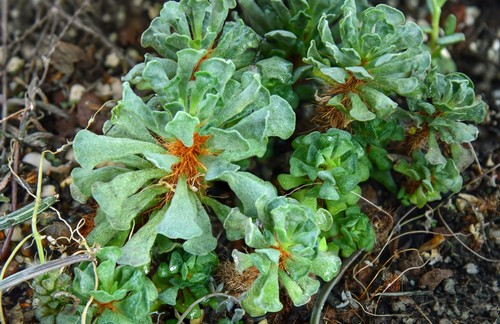
Adromischus cristatus, the Key Lime Pie plant, is a compact succulent with fan-shaped crinkled leaves; give it bright light and sparse watering.
Key Lime Pie Plant Identification Guide
Recognize the Key Lime Pie Plant (Adromischus cristatus) by its plump, wedge-shaped crinkle-edged leaves and rust-colored aerial roots on the stem.