
How to Care for Korean Fir
Korean fir is a slow, elegant evergreen conifer famous for its striking violet-blue cones and silvery-backed needles in cool, moist gardens.
Read the full Korean Fir encyclopedia entry →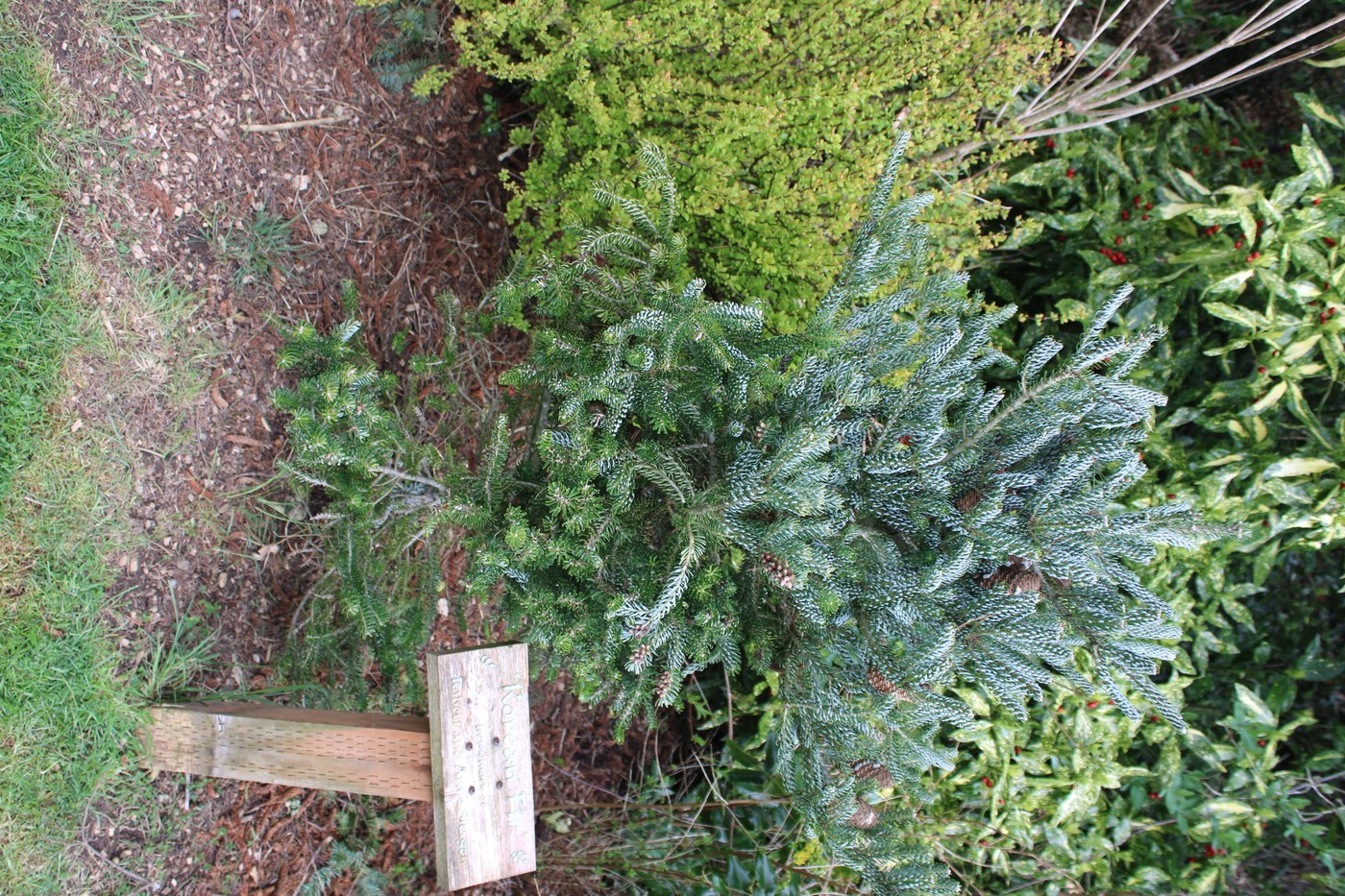
Korean fir (Abies koreana) is a compact, slow-growing evergreen conifer treasured for its dense, symmetrical form, needles that show silvery-white undersides, and remarkable upright violet-blue cones that appear even on young trees. It is a refined specimen for cooler gardens with reliable moisture and good drainage.
Light
Grow Korean fir in full sun to light shade. Full sun gives the densest, most compact habit and the best cone display, while light afternoon shade is welcome in hotter regions. Avoid deep shade, which thins the canopy and weakens the tree's classic pyramidal shape.
Water
Keep the soil evenly moist but never waterlogged, especially while the tree is young and establishing. Korean fir dislikes both drought and standing water, so aim for consistent moisture in a well-drained site. Water deeply during dry spells and hot summers, and mulch to conserve soil moisture and keep the roots cool. Established trees tolerate short dry periods but perform best with steady moisture.
Soil & Potting
Plant in deep, fertile, well-drained soil that stays moist, ideally slightly acidic. It resents heavy, wet clay and alkaline, chalky soils. Amend heavy ground with organic matter to improve both drainage and moisture retention. A cool root run is important for long-term health.
Humidity & Temperature
Korean fir is very cold hardy and thrives in cool-summer, temperate climates. It struggles in hot, humid, or arid conditions, where it grows poorly and becomes stressed. It appreciates a sheltered spot protected from harsh, drying winds, particularly in winter.
Feeding
Feeding needs are modest. Apply a slow-release conifer or balanced fertilizer in early spring if growth is weak or foliage pale. A yearly mulch of compost or leaf mold usually supplies enough nutrition. Avoid heavy nitrogen, which forces soft, weak growth.
Propagation
Species plants are usually grown from seed, which needs a period of cold stratification to germinate. Named dwarf and blue-coned cultivars are propagated by grafting onto seedling rootstock, as they do not come true from seed and are difficult to root from cuttings.
Repotting / Pruning
Korean fir needs little pruning; its naturally tidy, symmetrical shape is part of its appeal. Simply remove any dead, damaged, or crossing branches, ideally in late winter. Avoid hard pruning into old bare wood, since firs do not regenerate well from it. Container-grown specimens should be potted into a fresh, well-drained conifer mix as they outgrow their pots.
Common Problems & Pests
Korean fir is generally healthy in the right climate. In hot or poorly drained sites it can suffer root rot and general decline. Adelgids (woolly aphid-like insects), spider mites in hot dry weather, and needle cast fungi are the main pests and diseases; ensure good airflow and treat infestations promptly. Browning needles often trace back to drought stress, waterlogging, or heat.
Seasonal Care Tips
Plant in autumn or early spring while the soil is moist and cool. Water attentively through the first few summers and keep a mulch layer topped up. Shelter young trees from cold, drying winter winds. Enjoy the ornamental cones that stud the upper branches in summer, and do any minor pruning in late winter before growth resumes.
Frequently asked questions
Why does my Korean fir have blue cones?
The striking upright violet-blue cones are a hallmark of Abies koreana and appear even on relatively young trees. They stud the upper branches in summer before maturing and are one of the main reasons gardeners prize this conifer.
Does Korean fir tolerate hot climates?
Not well. It is adapted to cool, moist, temperate conditions and struggles in hot, humid, or arid regions. In warmer areas, give it light afternoon shade, steady moisture, and a cool, mulched root run to reduce stress.
How much should I water a Korean fir?
Keep the soil evenly moist, especially for young trees, but never waterlogged. Water deeply during dry spells and mulch to hold moisture. It dislikes both drought and standing water, so a well-drained but consistently moist site is ideal.
Does Korean fir need pruning?
Very little. Its naturally symmetrical, compact form is part of the appeal. Just remove dead, damaged, or crossing branches in late winter. Avoid cutting into old bare wood, as firs do not resprout well from it.