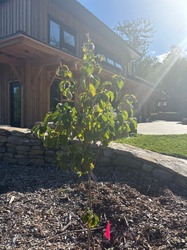
Kousa Dogwood Identification Guide
Identify Cornus kousa by its pointed creamy-white bracts in late spring, raspberry-like pink fruit, mottled exfoliating bark, and tiered horizontal branching.
Read the full Kousa Dogwood encyclopedia entry →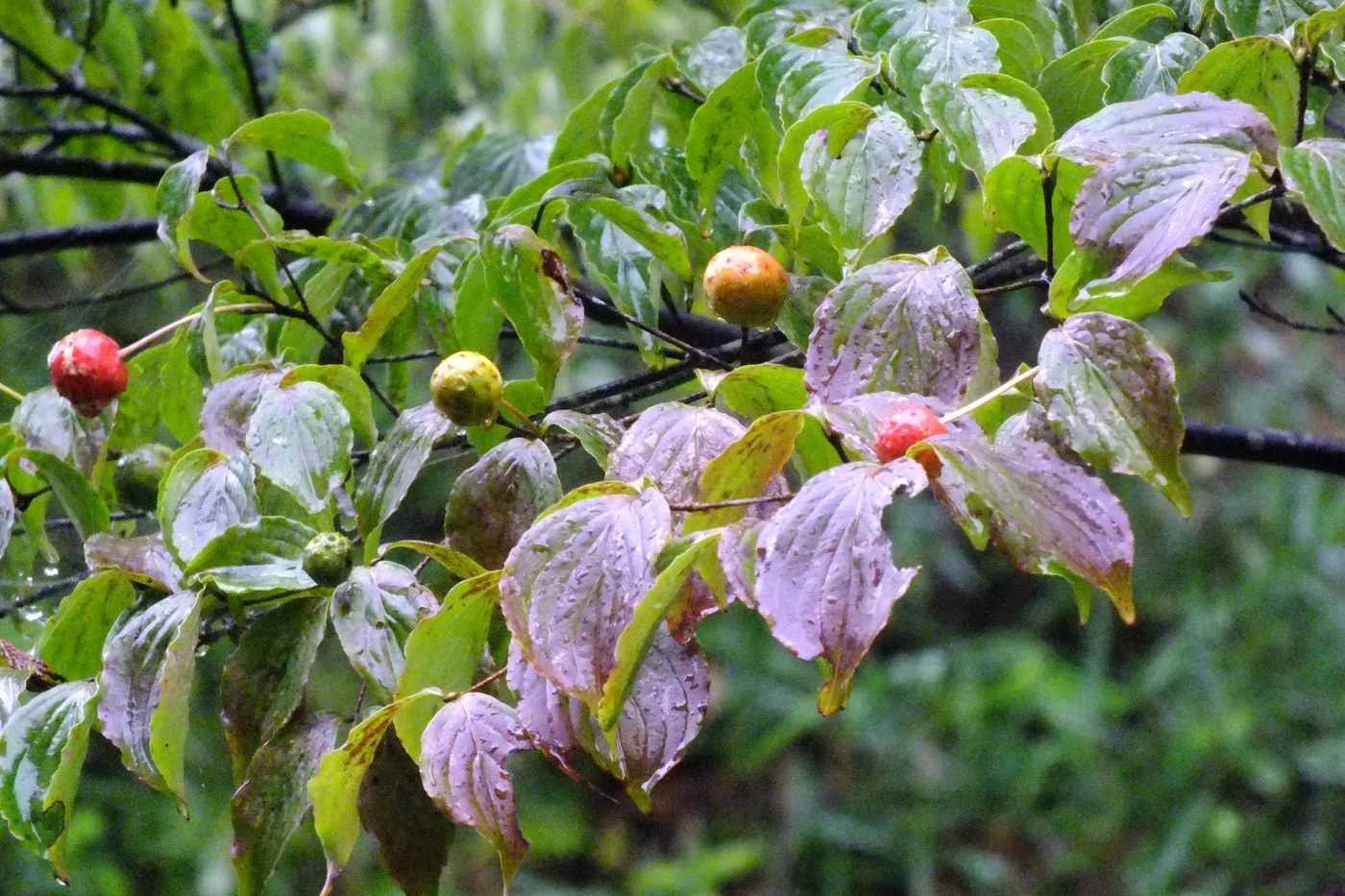
Key Identifying Features
Kousa dogwood (Cornus kousa), the Asian or Chinese dogwood, is a small ornamental tree prized for a long season of interest. Distinguish it by:
- Four pointed, creamy-white bracts (often mistaken for petals) surrounding a tight green flower button, blooming after the leaves emerge in late spring/early summer
- Round, raspberry- or strawberry-like pink-red fruit in late summer
- Mottled, exfoliating bark in patches of tan, gray, and brown on mature trunks
- A layered, horizontal-tiered branching habit
It blooms several weeks later than the native flowering dogwood, with leaves already present.
Leaves & Stems
Leaves are opposite, simple, ovate to elliptical, 2-4 inches long, with smooth or slightly wavy margins and arcuate veins that curve to follow the leaf edge — a classic dogwood trait. The upper surface is dark green, often with a slightly wavy edge; fall color ranges from reddish-purple to scarlet. Leaf undersides may show tufts of hair in the vein axils.
Twigs are slender; on older trees the bark flakes off in irregular puzzle-piece patches, exposing a beautiful tan-gray-brown camouflage pattern that is highly diagnostic in winter. The form is vase-shaped when young, becoming broad and tiered with horizontal layers with age.
Flowers & Fruit
The true flowers are a small, knobby greenish cluster in the center; the showy parts are four white bracts that taper to a distinct point (the native dogwood's bracts are notched, not pointed). Bloom comes in late May to June.
By late summer the central flower head ripens into a single, round, knobby pink-to-red fruit about ¾-1 inch wide, resembling a raspberry or small lychee. This single warty fruit is a sure identification confirmation — the native dogwood has clustered red berry-like fruits, not a single warty ball.
How to Tell It Apart from Look-Alikes
- Flowering dogwood (Cornus florida): blooms earlier on bare branches; bracts are notched at the tip, not pointed; fruit is a cluster of small smooth red berries.
- Pacific dogwood (C. nuttallii): larger bracts (4-6), western range.
- Other Cornus species: lack the single raspberry-like fruit.
The pointed white bracts + single warty pink fruit + flaking mottled bark trio is unmistakable for kousa.
Where You'll Find It
Native to Japan, Korea, and China, kousa dogwood is widely planted in USDA zones 5-8 as a specimen and patio tree across North America and Europe. It tolerates more sun and is more disease-resistant (notably to dogwood anthracnose) than the native species. Look for it in gardens, parks, and campuses; it is not naturalized in the wild.
Quick ID Checklist
- Small tree with tiered, horizontal branching
- Four pointed creamy-white bracts, blooming after leaf-out (late spring)
- Opposite leaves with curving arcuate veins
- Single round raspberry-like pink-red fruit in late summer
- Mottled, exfoliating tan-gray bark on mature trunks
- Reddish-purple to scarlet fall color
A layered small tree wearing pointed white "flowers" in early summer, later hung with raspberry-like balls and showing patchwork bark, is kousa dogwood.
Frequently asked questions
How do I tell kousa dogwood from native flowering dogwood?
Kousa blooms later, after its leaves are out, with bracts that taper to a sharp point and produces single raspberry-like fruit. Flowering dogwood blooms earlier on bare branches with notched bract tips and clustered smooth red berries.
What are the showy white parts of the flower?
They are modified leaves called bracts, not true petals. The actual flowers are the small greenish cluster in the center; the four white pointed bracts surround and advertise it to pollinators.
Why does the bark look patchy?
Mature kousa dogwoods shed bark in irregular flakes, revealing a mottled camouflage of tan, gray, and brown. This exfoliating bark gives strong winter interest and is a helpful ID clue when the tree is bare.
Kousa Dogwood identified by the community
Recent Kousa Dogwood specimens identified with Plant Identifier.