Kousa Dogwood
Cornus kousa
Kousa dogwood is an elegant small tree with pointed white bracts in late spring, raspberry-like fruit, and striking exfoliating bark. It is more disease-resistant than the native flowering dogwood.
- Light
- Full sun to part shade
- Water
- Weekly; consistent moisture
- Difficulty
- Easy
Got a plant like this?
Identify any plant from a photo, free.
Overview
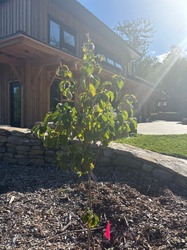
Kousa dogwood (Cornus kousa) is a deciduous small tree native to East Asia, grown for its four-season interest: showy late-spring 'flowers,' ornamental pink-red fruit, fine fall color, and mottled exfoliating bark. The true flowers are tiny, surrounded by four pointed creamy-white (sometimes pink) bracts.
Blooming a few weeks later than the native flowering dogwood, it carries its bracts above the foliage on horizontal branches. It is widely favored because it resists the dogwood anthracnose and borers that trouble Cornus florida.
How to identify it
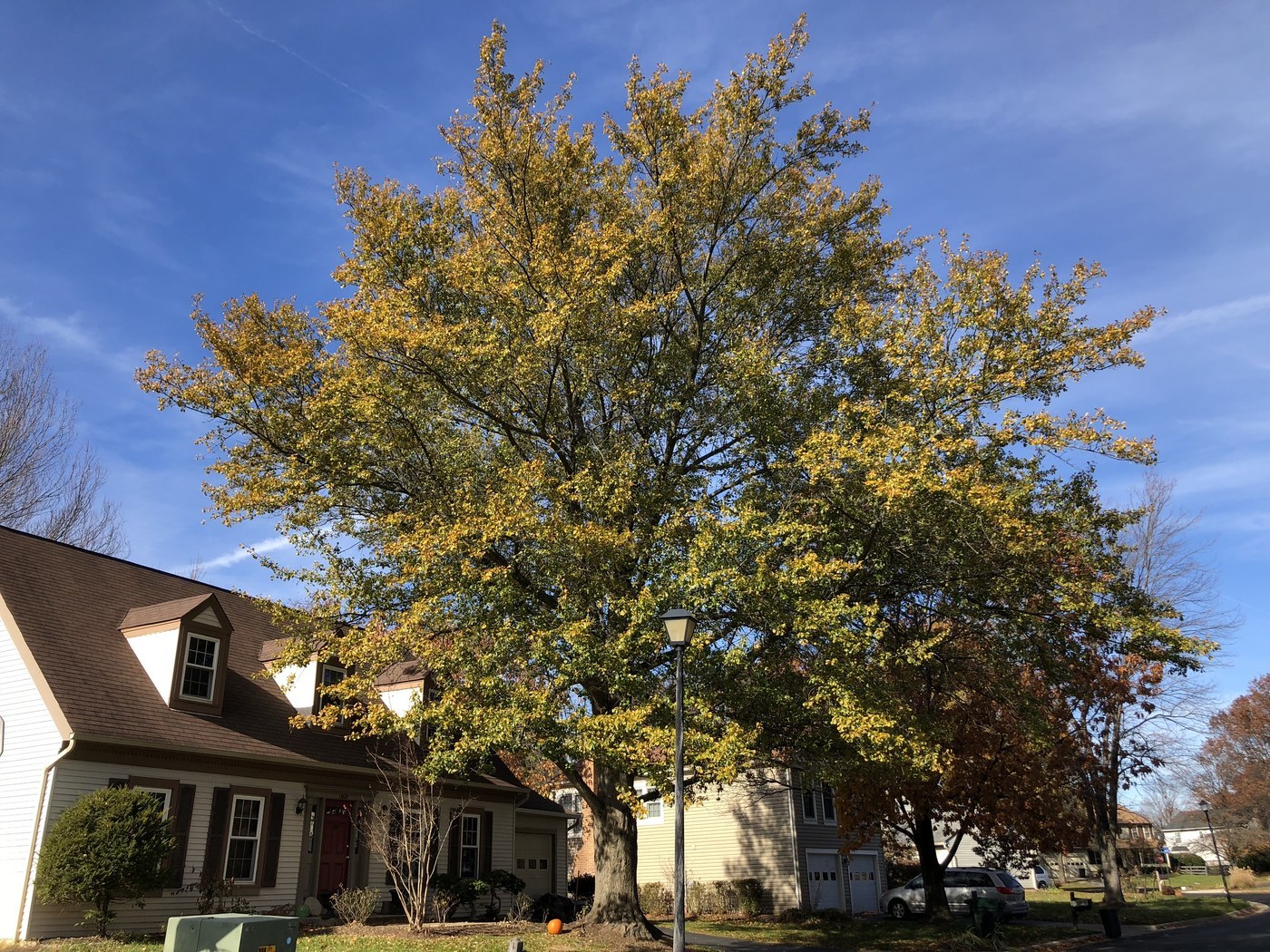
- Habit: Vase-shaped when young, maturing to a rounded horizontal canopy, 15-30 ft tall.
- Bracts: Four pointed (not notched) white-to-pink bracts in late spring, held above the leaves.
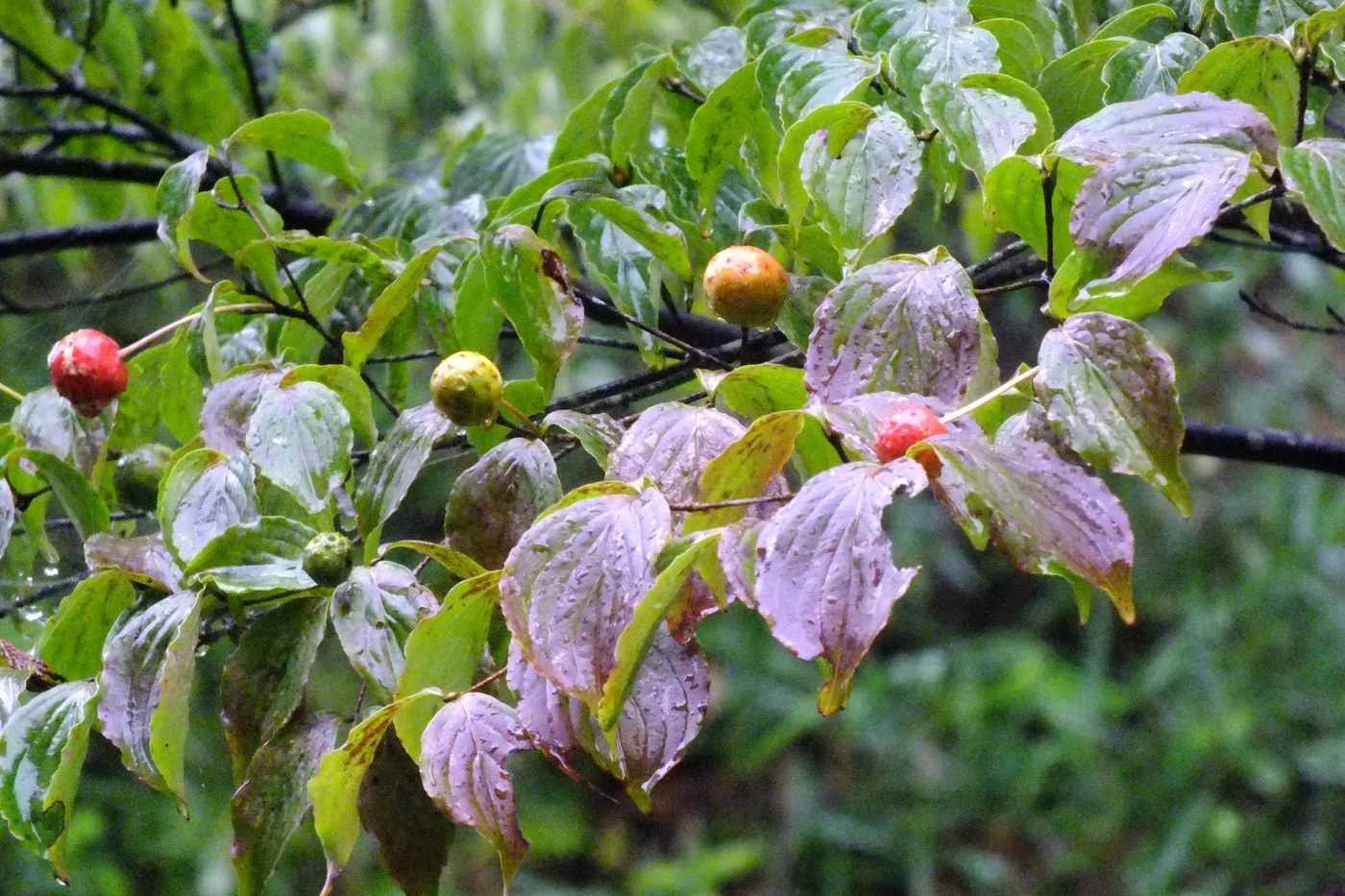
- Leaves: Opposite, oval, 2-4 in, with curving veins; rich red-purple fall color.
- Fruit: Round, raspberry-like pink to red aggregate fruit, 1 in, ripening late summer.
- Bark: Distinctive mottled, exfoliating tan-and-gray jigsaw pattern on older trunks.
Care & growing
Light: Full sun to partial shade; afternoon shade helps in hot regions.
Water: Keep consistently moist, about weekly; not drought-tolerant when young.
Soil: Rich, well-drained, slightly acidic soil high in organic matter.
Temperature: Hardy USDA zones 5-8.
Feeding: Light spring feeding; mulch to keep roots cool and moist.
Pruning/Propagation: Needs little pruning. Propagate from seed (stratified) or softwood cuttings.
Habitat & origin
Native to Japan, Korea and China, where it grows as an understory and woodland-edge tree in temperate forests and mountains.
Introduced to Western gardens in the 19th century, it is now a popular ornamental across temperate North America and Europe, often chosen as a disease-resistant alternative to native dogwoods.
Frequently asked questions
How is it different from flowering dogwood?
Kousa has pointed (not notched) bracts, blooms later, bears raspberry-like fruit, has exfoliating bark, and resists anthracnose better.
Why are my tree's leaves scorching?
Usually heat and dry soil. Provide afternoon shade, mulch, and consistent moisture in hot climates.
When does kousa dogwood bloom?
Its showy white-to-pink bracts appear in late spring, a few weeks later than the native flowering dogwood, held above the foliage on horizontal branches.
What does the bark look like?
Mature trunks develop a distinctive mottled, exfoliating tan-and-gray jigsaw pattern, giving year-round interest.
Kousa Dogwood guides
In-depth guides for identifying, growing, and caring for Kousa Dogwood.
How to Care for Kousa Dogwood
Grow Cornus kousa, the Kousa Dogwood, with sun to part shade, moist well-drained acidic soil, and consistent weekly watering.
Kousa Dogwood Identification Guide
Identify Cornus kousa by its pointed creamy-white bracts in late spring, raspberry-like pink fruit, mottled exfoliating bark, and tiered horizontal branching.
Kousa Dogwood identified by the community
Real specimens identified with Plant Identifier.