Lamb's Ear Identification Guide
How to identify Lamb's Ear (Stachys byzantina) by its unmistakable silvery, velvety-soft, fuzzy leaves and woolly upright flower stalks.
Read the full Lamb's Ear encyclopedia entry →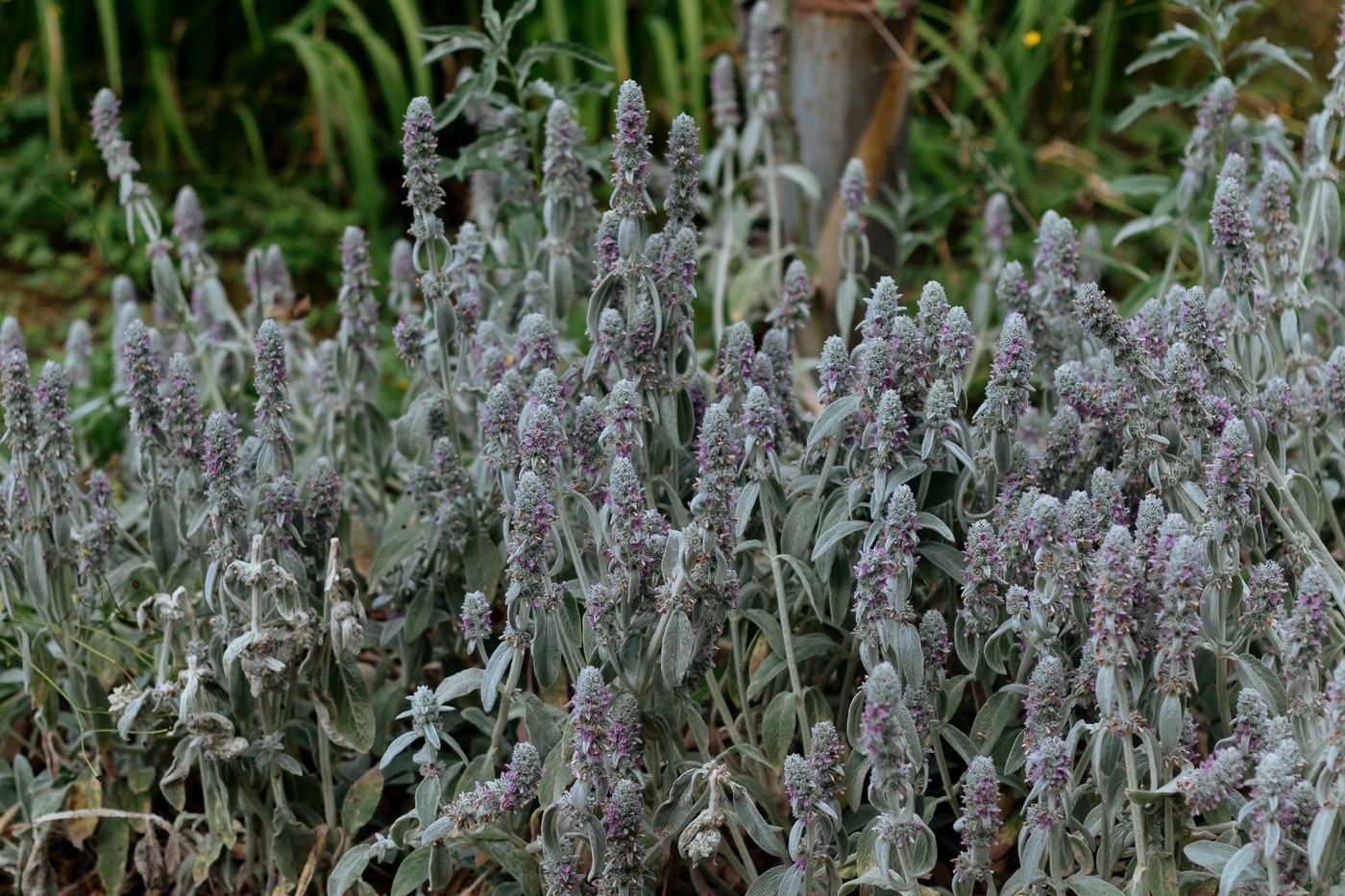
Key Identifying Features
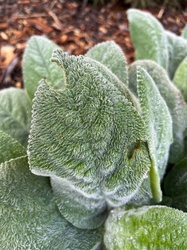
Lamb's Ear (Stachys byzantina) is instantly recognizable by touch and color: thick, soft leaves densely coated in silvery-white hairs that feel exactly like a lamb's ear. It is a low, spreading perennial in the mint family (Lamiaceae) grown mainly for its foliage.
- Silver-gray, fuzzy, velvety leaves in low rosettes
- Forms spreading foliage mats 6-12 inches tall
- Tall, woolly flower spikes to 12-18 inches in summer
- Square stems typical of the mint family
Leaves & Stems
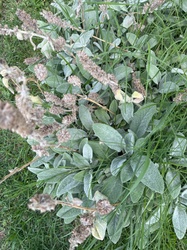
The leaves are the signature feature: oblong to lance-shaped (tongue-shaped), 3-6 inches long, thick and soft, and so densely covered in fine white woolly hairs that the whole plant looks silver-gray. Run your fingers over a leaf and it feels like felt or velvet. Margins are smooth or very faintly scalloped, never sharply toothed.
Stems are four-sided (square) and also wrapped in white wool. Leaves are arranged in opposite pairs, and the plant spreads outward by short rhizomes to form dense, weed-smothering mats.
Flowers & Fruit
In early to midsummer, erect woolly flower spikes rise well above the foliage. The spikes look like silvery candelabras. Tucked among the wool are small two-lipped flowers in pink to purple-magenta. Many gardeners grow the cultivar 'Silver Carpet', which rarely or never blooms and stays as a pure foliage mat. Fruit consists of tiny nutlets.
How to Tell It Apart from Look-Alikes
- Mullein (Verbascum): also has fuzzy gray leaves, but mullein forms a large flat first-year rosette and a single tall yellow-flowered spike; its hairs are coarser and its leaves much bigger.
- Dusty miller (Jacobaea/Senecio): silvery and felted too, but its leaves are deeply lobed or lacy, not the smooth tongue shape of lamb's ear.
- Other Stachys: relatives like betony have green, hairless-to-rough leaves, not the dense silver wool.
The soft, silvery, untoothed, tongue-shaped leaf in a low spreading mat is the giveaway no look-alike fully matches.
Where You'll Find It
Lamb's Ear is a garden plant for full sun and dry, well-drained soil. It's used as an edging, groundcover, and in children's "sensory" and silver-themed gardens. It tolerates drought and poor soil but rots in humidity and wet ground, so it's most vigorous in sunny, airy spots. It occasionally naturalizes near old gardens.
Quick ID Checklist
- Leaves silver-gray, thick, and velvety-fuzzy to the touch
- Tongue/oblong shape, smooth-edged, in low rosettes
- Square stems, opposite leaves (mint family)
- Spreading mat-forming habit in full sun
- Summer woolly spikes with small pink-purple flowers
If a plant looks frosted silver and feels like petting a lamb, it's Lamb's Ear.
Frequently asked questions
Why are lamb's ear leaves so soft and silver?
The leaves are covered in dense, fine white woolly hairs (trichomes) that reflect light, giving the silver color, and create the soft velvety feel while reducing water loss in sunny, dry sites.
Does lamb's ear flower?
Most forms send up woolly summer spikes with small pink-purple flowers, but the popular 'Silver Carpet' cultivar rarely blooms and is grown purely for its foliage mat.
How is lamb's ear different from dusty miller?
Both are silvery and felted, but dusty miller has deeply lobed, lacy leaves, while lamb's ear has smooth-edged, tongue-shaped leaves.
Is lamb's ear related to mint?
Yes, it is in the mint family (Lamiaceae), shown by its square stems and opposite leaves, though it is grown for foliage rather than fragrance.
Lamb's Ear identified by the community
Recent Lamb's Ear specimens identified with Plant Identifier.