Lambsquarters Identification Guide
How to identify lambsquarters (Chenopodium album) by its mealy white-coated diamond leaves, mealy gray new growth, and dense greenish seed clusters.
Read the full Lambsquarters encyclopedia entry →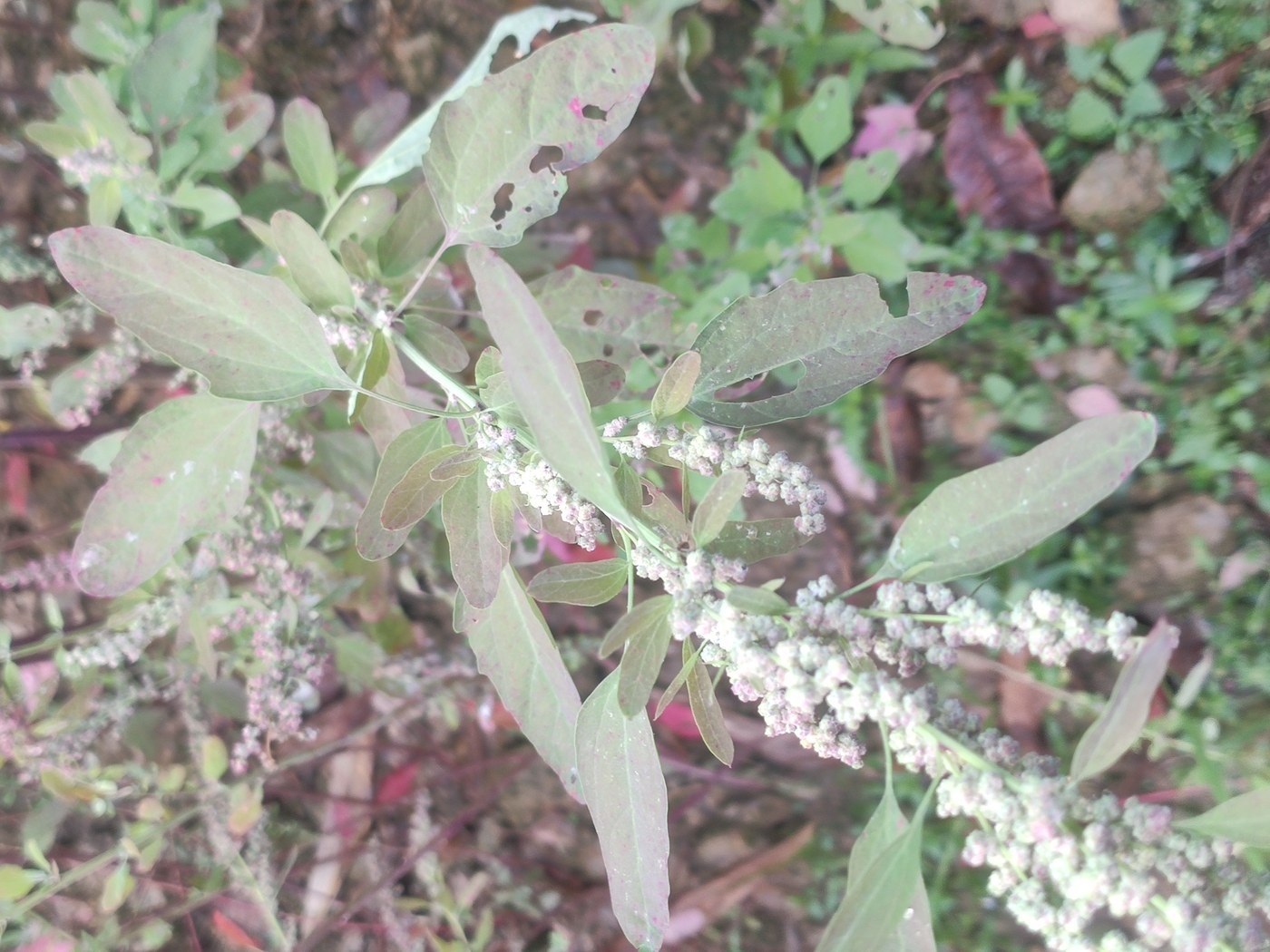
Key Identifying Features
Lambsquarters (Chenopodium album), also called white goosefoot, is a fast-growing annual broadleaf weed. Identify it by:
- Diamond- to triangular-shaped (goosefoot) leaves with toothed margins
- A white, mealy, powdery coating on new leaves and growing tips
- Upright, branching stems often with reddish or purple streaks
- Dense clusters of tiny, gray-green, mealy flowers without petals
It can reach 1-6 feet tall in a single season.
Leaves & Stems
Lower leaves are roughly diamond- or goose-foot-shaped with coarsely toothed edges, while upper leaves become narrower and more lance-shaped. The hallmark feature is the mealy white-gray bloom that coats the undersides and new growth — rub a young leaf and a fine powder comes off, leaving the surface looking like it was dusted with flour. Leaves are arranged alternately. Stems are grooved, ridged, and often striped with red, pink, or light green, becoming tough and woody as the plant matures.
Flowers & Fruit
The flowers are inconspicuous, tiny, and petal-less, grouped into dense, granular, gray-green clusters (spikes) at the stem tips and leaf axils. Each plant can produce tens of thousands of small, shiny black seeds, which is why it is such a prolific weed. The mealy texture extends to the flower clusters, which look dusty and beadlike.
How to Tell It Apart from Look-Alikes
- Pigweed (Amaranthus): Similar size and habit, but pigweed leaves are not mealy/powdery and have a more oval, sometimes notched-tip leaf; its seed spikes are often coarser and bristly. The mealy white coating is the key separator.
- Nettle: Has stinging hairs and opposite leaves; lambsquarters has alternate leaves and no sting.
- Orache (Atriplex): A close relative also with mealy leaves, but its leaves are often more arrowhead-shaped.
- Nightshade seedlings: Lack the mealy coating and diamond goosefoot leaf shape.
The flour-like white mealy coating on diamond-shaped, toothed leaves is diagnostic.
Where You'll Find It
Lambsquarters thrives in disturbed, fertile soils: vegetable gardens, crop fields, roadsides, compost piles, construction sites, and barnyards. It loves rich, nitrogen-heavy ground and full sun, and it is one of the most widespread weeds in the world. It germinates in spring and grows rapidly through summer.
Quick ID Checklist
- Diamond/goosefoot-shaped, toothed alternate leaves
- White mealy powder on new growth and leaf undersides
- Grooved stems often streaked red or purple
- Tiny petal-less gray-green flower clusters
- Upright annual, 1-6 feet tall
- No stinging hairs, no milky sap
If you brush a young leaf and a flour-like powder rubs off a diamond-shaped, toothed leaf, you have found lambsquarters.
Frequently asked questions
What is the white powder on lambsquarters leaves?
It is a natural mealy, waxy coating of fine particles concentrated on new growth and leaf undersides. This flour-like bloom is the single most reliable feature for identifying lambsquarters and distinguishing it from pigweed.
How do I tell lambsquarters from pigweed?
Both are tall summer broadleaf weeds, but lambsquarters has a distinctive white mealy coating on its diamond-shaped leaves, while pigweed leaves are smooth or hairy without that powdery bloom and tend to be more oval with a notched tip.
Why does lambsquarters spread so aggressively?
A single plant can produce tens of thousands of long-lived seeds, and it readily colonizes rich, disturbed soils like gardens and fields, allowing it to come back year after year.
Lambsquarters identified by the community
Recent Lambsquarters specimens identified with Plant Identifier.