Lambsquarters
Chenopodium album
Lambsquarters is a fast-growing annual weed with mealy, diamond-shaped (goosefoot) leaves and a whitish, mealy coating on new growth.
- Light
- Full sun
- Water
- Low to moderate; drought-tolerant
- Difficulty
- Easy
Got a plant like this?
Identify any plant from a photo, free.
Overview
Lambsquarters (Chenopodium album) is one of the most common and widespread agricultural weeds in the world, found in gardens, fields, and disturbed ground. It is a vigorous annual that can grow quickly and produce enormous numbers of seeds.
It is closely related to quinoa and is found across temperate regions worldwide, often appearing wherever soil has been disturbed.
How to identify it
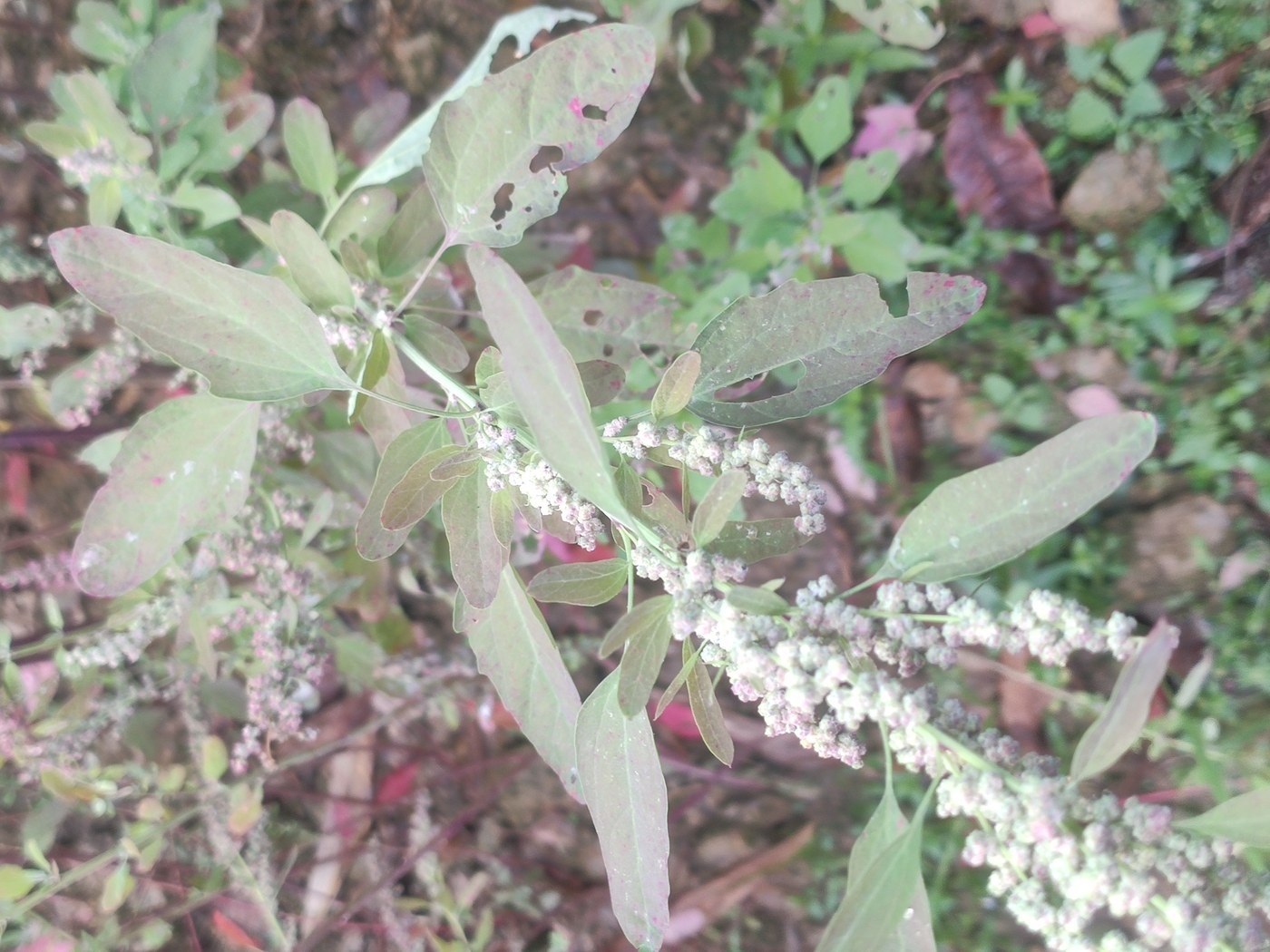
Identified by its mealy coating and goosefoot-shaped leaves.
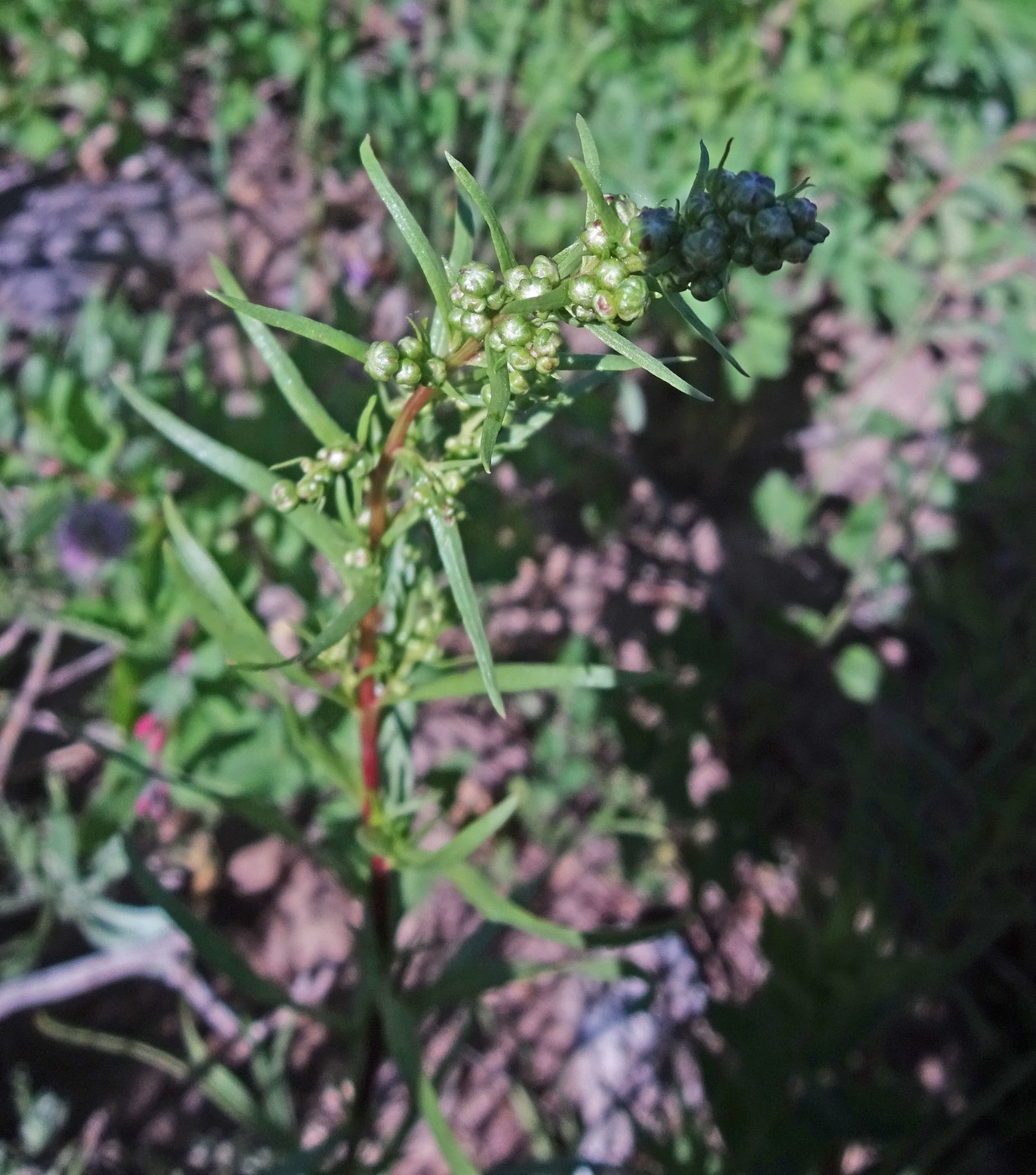
- Leaves: Diamond- to triangular (goosefoot) shaped, often with toothed margins, dull green with a whitish, mealy coating especially on new growth and undersides
- Stems: Erect, grooved, often with reddish or purplish streaks
- Flowers: Tiny, greenish, in dense clusters at stem tips and leaf axils
- Size: Commonly 1-5 feet tall, sometimes more
- Seeds: Produces thousands of small black seeds per plant
Care & growing
Grows readily in disturbed soil with little input.
- Light: Full sun preferred
- Water: Drought-tolerant once established; thrives in average moisture
- Soil: Favors rich, fertile, disturbed soil; an indicator of nitrogen-rich ground
- Temperature: Warm-season annual germinating in spring and summer
- Propagation: Self-seeds prolifically; seeds remain viable in soil for decades
- Control: Pull or hoe while young before it sets seed
Habitat & origin
Lambsquarters is native to Europe and Asia but has naturalized virtually worldwide. It is among the most common weeds of cultivated and disturbed ground across temperate regions.
It grows in gardens, farm fields, roadsides, waste areas, and anywhere soil has been turned, especially fertile, nitrogen-rich sites.
Frequently asked questions
Is lambsquarters the same as pigweed?
The name pigweed is used loosely for several weeds. Lambsquarters is sometimes called pigweed, but true pigweeds are usually in the genus Amaranthus, which is a related but different plant.
How do I control lambsquarters in my garden?
Pull or hoe the plants while young, before they flower and set their many long-lived seeds. Mulching also suppresses germination.
How do I identify lambsquarters?
Look for diamond- to triangular goosefoot-shaped leaves with a dull green color and a whitish, mealy coating, especially on new growth and leaf undersides, on grooved stems often streaked reddish-purple.
How big does lambsquarters get?
It commonly grows 1-5 feet tall, sometimes more, producing dense clusters of tiny greenish flowers and thousands of small black seeds per plant.
Lambsquarters guides
In-depth guides for identifying, growing, and caring for Lambsquarters.
How to Care for Lambsquarters
Lambsquarters is an easy, fast-growing annual that thrives in full sun and average soil with minimal fuss or watering.
Lambsquarters Identification Guide
How to identify lambsquarters (Chenopodium album) by its mealy white-coated diamond leaves, mealy gray new growth, and dense greenish seed clusters.
Lambsquarters identified by the community
Real specimens identified with Plant Identifier.