
Larkspur Identification Guide
Identify larkspur (Consolida and Delphinium) by its tall spikes of spurred flowers and deeply cut, ferny leaves, and learn how it differs from its close relatives.
Read the full Larkspur encyclopedia entry →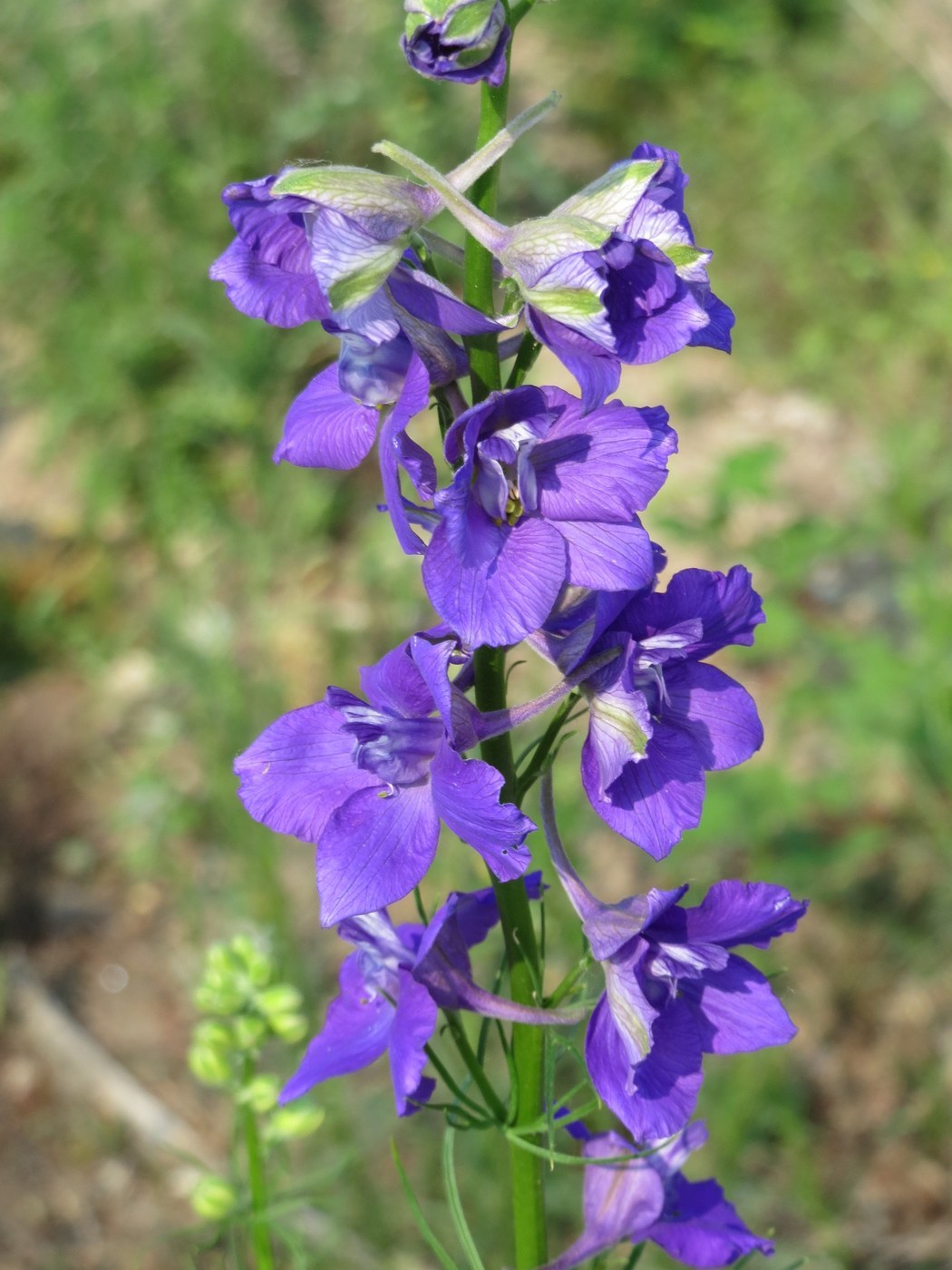
Key Identifying Features
Larkspur (annual Consolida species; the name is also used for perennial Delphinium) is recognized by its tall, upright flower spikes lined with spurred flowers and its finely divided, ferny foliage. Each flower has a backward-pointing spur that resembles a lark's claw or heel — the origin of the name.
- Vertical spikes of flowers in blue, purple, pink, white
- Each bloom bears a distinctive backward spur
- Deeply dissected, lacy, palmate leaves
- Upright plant typically 1–4 feet tall
Leaves & Stems
Leaves are palmately divided into many narrow, thread-like or finger-like segments, giving a soft, feathery look much like a delphinium or even a cosmos. They are bright to deep green and alternate up the stem. Stems are slender, upright, and unbranched to lightly branched, carrying the flowers in a long terminal raceme.
Flowers & Fruit
Each flower has five petal-like sepals, the upper one extended into a long hollow spur that points backward. Inside sit smaller true petals. Flowers are often ¾–1½ inches across and densely packed along the spike, opening from the bottom upward. Colors are most famously rich blues and violets, plus pinks and whites. After bloom, slender follicle pods form and split to release flat black seeds. Blooms in late spring to summer.
How to Tell It Apart from Look-Alikes
- Delphinium (perennial larkspur): Very similar, but perennial delphiniums are usually taller, stouter, and have flowers with a more complex 'bee' (clustered petals) in the center; annual larkspur (Consolida) is more delicate with finer leaves.
- Snapdragon: Has spikes too, but flowers are pouched (no backward spur) and leaves are simple, not dissected.
- The backward spur + ferny palmate leaves + tall spike combination identifies larkspur.
Where You'll Find It
Larkspur is a classic cottage-garden and cutting-garden annual, grown in borders for vertical color, and some species have naturalized along roadsides and in fields. It prefers full sun, cool weather, and rich, well-drained soil, and is often direct-sown in fall or early spring. It attracts bees, butterflies, and hummingbirds.
Quick ID Checklist
- Tall flower spike with many spurred blooms
- Each flower has a backward-pointing spur
- Ferny, finely divided palmate leaves
- Blue, purple, pink, or white flowers
- Slender pods splitting to drop black seeds
Frequently asked questions
What gives larkspur its name?
Each flower has a long backward-pointing spur that resembles the claw or hind toe of a lark, giving the plant its common name. The spur is the most reliable identifying feature of the flower.
Is larkspur the same as delphinium?
They are closely related and both called larkspur. Annual larkspur is usually Consolida, with finer foliage and more delicate flowers, while perennial delphiniums are stouter and taller. Both share the signature spurred flower.
How do I distinguish larkspur from a snapdragon?
Both grow on spikes, but larkspur flowers have a distinct backward spur and ferny dissected leaves, while snapdragons have pouched, lipped flowers and simple undivided leaves.
What do the leaves of larkspur look like?
They are palmately divided into many narrow, thread-like segments, giving a soft, ferny, lacy appearance arranged alternately up a slender upright stem.