Lavender Identification Guide
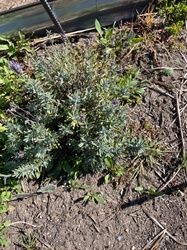
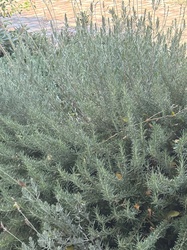
Identify lavender by its narrow gray-green aromatic leaves, square stems, and slender spikes of small purple tubular flowers.
Read the full Lavender encyclopedia entry →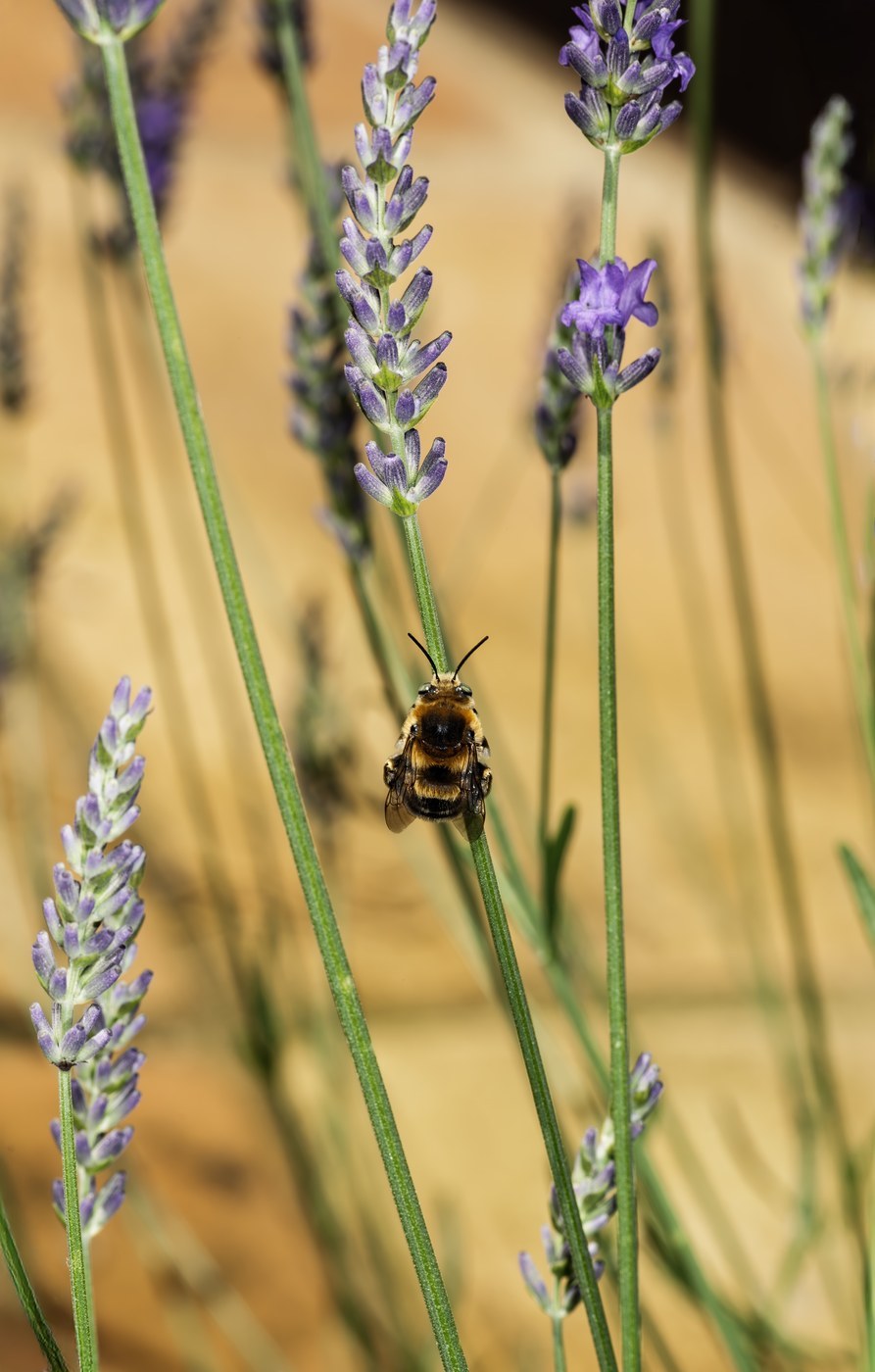
Key Identifying Features
Lavender (Lavandula species) is an aromatic woody subshrub in the mint family. Identify it by:
- Narrow, grayish-green leaves that are slightly fuzzy and intensely fragrant when rubbed
- Square (four-sided) stems, a hallmark of the mint family
- Slender flowering spikes of small purple to blue-violet tubular flowers
- A compact, mounded woody base with herbaceous flowering stalks rising above
- A strong, sweet-resinous lavender scent from glands on leaves and flowers
Leaves & Stems
Lavender leaves are linear to lance-shaped, typically 2-6 cm long, with smooth or slightly inrolled edges and a soft coat of fine hairs that give a silvery or gray-green cast. They sit opposite each other on the stem. Lower stems are woody and gnarled; the upper flowering stems are slender, square in cross-section, and often leafless toward the top. The whole plant forms a tidy rounded shrub usually 30-90 cm tall.
Flowers & Fruit
Flowers cluster in whorls along a narrow terminal spike held well above the foliage on a bare stalk. Each tiny flower is tubular and two-lipped (typical of mints), colored from pale lilac to deep violet-blue, occasionally pink or white. English lavender (L. angustifolia) has compact spikes; Spanish lavender (L. stoechas) is topped by showy sterile purple bracts like rabbit ears; French lavender (L. dentata) has toothed leaves. Bloom time is late spring through summer. Fruit consists of four tiny nutlets hidden in the persistent calyx.
How to Tell It Apart from Look-Alikes
- Russian sage (Perovskia) has similar gray foliage and purple flower spikes but its leaves are deeply cut/toothed and its scent is sage-like, not sweet lavender.
- Catmint (Nepeta) has greener, toothed leaves, a looser sprawling form, and a minty smell.
- Salvia/sage species share square stems and lipped flowers but have broader, more pungent leaves.
- The clincher for lavender is the silvery narrow entire leaves plus the unmistakable sweet lavender fragrance and slim purple flower wands.
Where You'll Find It
Lavender thrives in full sun and dry, well-drained, even gravelly soil, reflecting its Mediterranean origins. It is widely grown in herb gardens, borders, and commercial fields, and has naturalized on sunny dry slopes. It tolerates drought and poor soil but dislikes wet feet.
Quick ID Checklist
- Narrow gray-green aromatic leaves with smooth edges
- Square stems (mint family)
- Slim spikes of small purple tubular two-lipped flowers
- Woody mounded base, herbaceous flower stalks above
- Strong sweet lavender fragrance when crushed
- Loves full sun and dry soil
Silvery narrow fragrant leaves on square stems beneath wands of purple flowers identify lavender at a glance and a sniff.
Frequently asked questions
What's the quickest way to confirm a plant is lavender?
Rub a leaf and smell it: lavender has a distinctive sweet, clean fragrance. Combined with narrow silvery leaves, square stems, and purple flower spikes, the scent is the fastest confirmation.
How do I tell lavender from Russian sage?
Russian sage has finely cut or toothed gray leaves and a sage-like aroma, while lavender has smooth-edged narrow leaves and the classic sweet lavender scent.
What are the 'ears' on top of some lavender flowers?
Those are showy sterile bracts found on Spanish lavender (Lavandula stoechas), which sits like rabbit ears atop the dense flower head, a feature absent in English lavender.
Why are lavender leaves gray instead of green?
Fine silvery hairs cover the leaves to reduce water loss and reflect intense sun, an adaptation to its dry Mediterranean habitat.
Lavender identified by the community
Recent Lavender specimens identified with Plant Identifier.