
Lawson Cypress Identification Guide
Identify Lawson Cypress (Chamaecyparis lawsoniana) by its flat ferny foliage sprays with white X-marks beneath, small round pea-sized cones, and drooping leading shoot.
Read the full Lawson Cypress encyclopedia entry →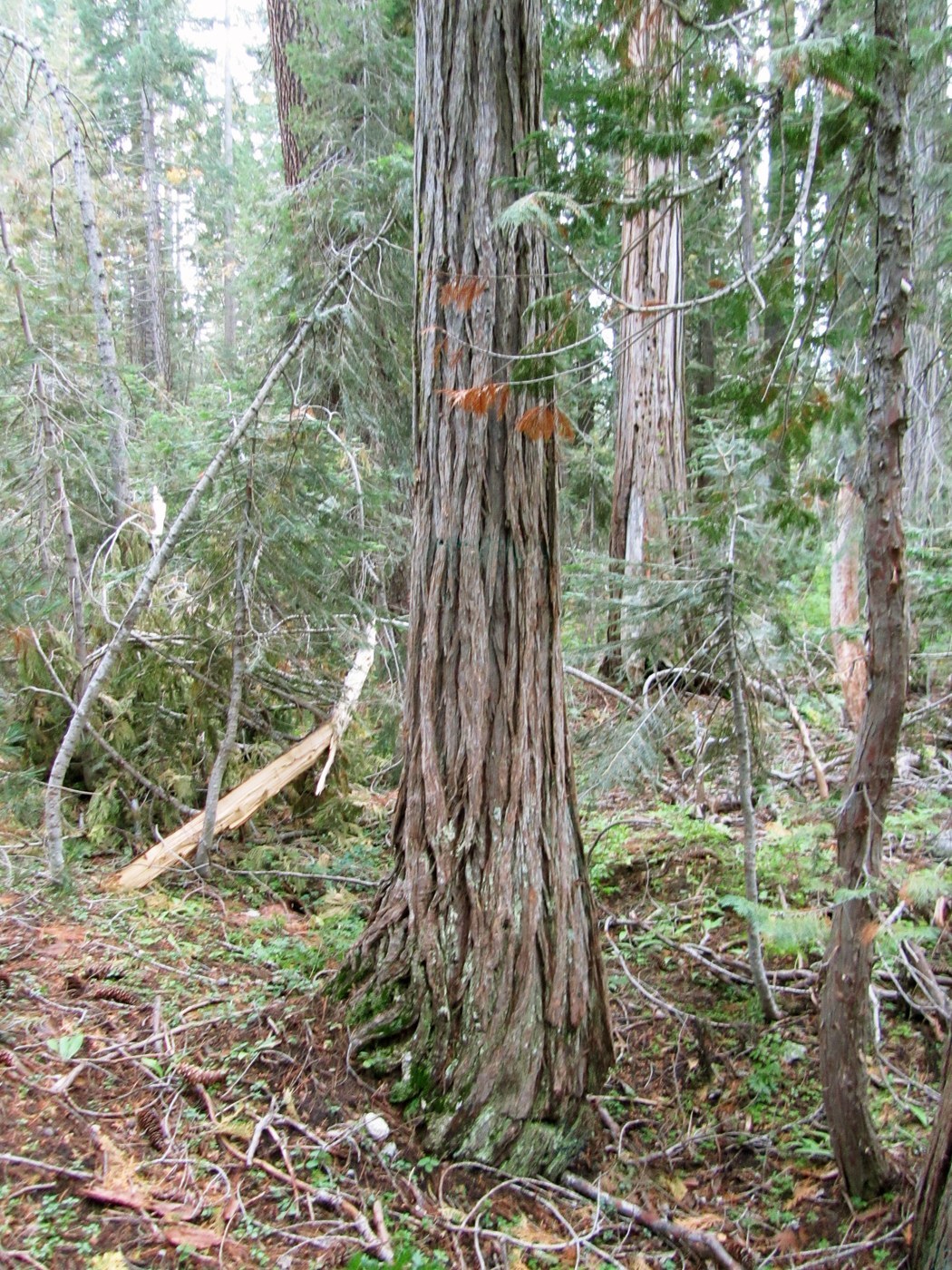
Key Identifying Features
Lawson Cypress (Chamaecyparis lawsoniana), also called Port Orford Cedar, is a tall, graceful conifer of the Pacific Northwest with hundreds of garden cultivars. Identify it by flat, ferny sprays of scale foliage marked with white X- or hourglass-shaped lines on the underside, small round pea-sized cones, and a softly drooping leading shoot at the top.
- Flattened, fern-like foliage sprays
- White X markings on the underside of the sprays
- Tiny round woody cones about 0.3 inch across
- Nodding top shoot; columnar to conical habit
- Foliage often smells of parsley or resin when crushed
Leaves & Stems
Leaves are small scale leaves pressed in opposite pairs and arranged in flat, frond-like sprays (unlike the cord-like rounded branchlets of true cypress, Cupressus). Turn a spray over: you should see bright white stomatal bands forming X or hourglass patterns between the scales — a key diagnostic. Foliage color varies from green to blue-gray and gold among cultivars. The crushed foliage gives a pungent, parsley-like or resinous scent.
Flowers & Fruit
Male cones are tiny and crimson-red at the shoot tips in late winter, giving the tree a reddish haze. The seed cones are small and round, about 7-9 mm (pea-sized), green and waxy-blue when young, ripening brown, with about 8 shield-shaped scales. The very small round cones distinguish Chamaecyparis from the larger round cones of Cupressus and the elongated cones of Thuja.
How to Tell It Apart from Look-Alikes
- Arborvitae (Thuja): flat sprays too, but cones are small and elongated (not round) and undersides lack bright white X-marks.
- True Cypress (Cupressus, e.g., Monterey, Arizona): rounded cord-like branchlets and large round cones.
- Leyland Cypress: flattish foliage but coarser, with rare small cones and no clear white X-marks.
- Hinoki/Sawara Cypress (other Chamaecyparis): Hinoki has Y-shaped white marks and blunter sprays; Lawson's marks are X-shaped.
Flat ferny sprays with white X undersides plus tiny round cones and a nodding leader confirm Lawson Cypress.
Where You'll Find It
Native to a limited area of southwestern Oregon and northwestern California, in moist coastal forests and along streams. It is planted worldwide as an ornamental and hedge, with countless cultivars ('Ellwoodii', 'Pembury Blue', 'Lutea'). It prefers moist, well-drained soil and cool humid conditions, and is susceptible to root-rot (Phytophthora).
Quick ID Checklist
- Flat, ferny foliage sprays
- White X / hourglass marks on spray undersides
- Tiny round pea-sized cones
- Drooping leading shoot at the top
- Tiny red male cones in late winter
Flat ferny foliage showing white X-marks beneath, with small round cones, identifies Lawson Cypress.
Frequently asked questions
What are the white markings on the leaves?
The undersides of Lawson Cypress sprays show bright white stomatal bands forming X or hourglass shapes between the scale leaves. This is one of the most reliable identification features.
How is Lawson Cypress different from arborvitae?
Both have flat foliage sprays, but Lawson Cypress has small round cones and white X-marks beneath, while arborvitae (Thuja) has small elongated cones and lacks the bright white X pattern.
Why is it also called Port Orford Cedar?
Port Orford Cedar is its common timber name, from Port Orford, Oregon, near its native range. It is not a true cedar but a Chamaecyparis (false cypress).
How can I tell it from true cypress?
Lawson Cypress has flat ferny foliage and tiny pea-sized round cones, while true cypresses (Cupressus) like Monterey have rounded cord-like branchlets and much larger round cones.