
Leek Identification Guide
How to identify the leek (Allium ampeloprasum / porrum) by its thick white shaft, flat folded blue-green leaves, and mild onion smell.
Read the full Leek encyclopedia entry →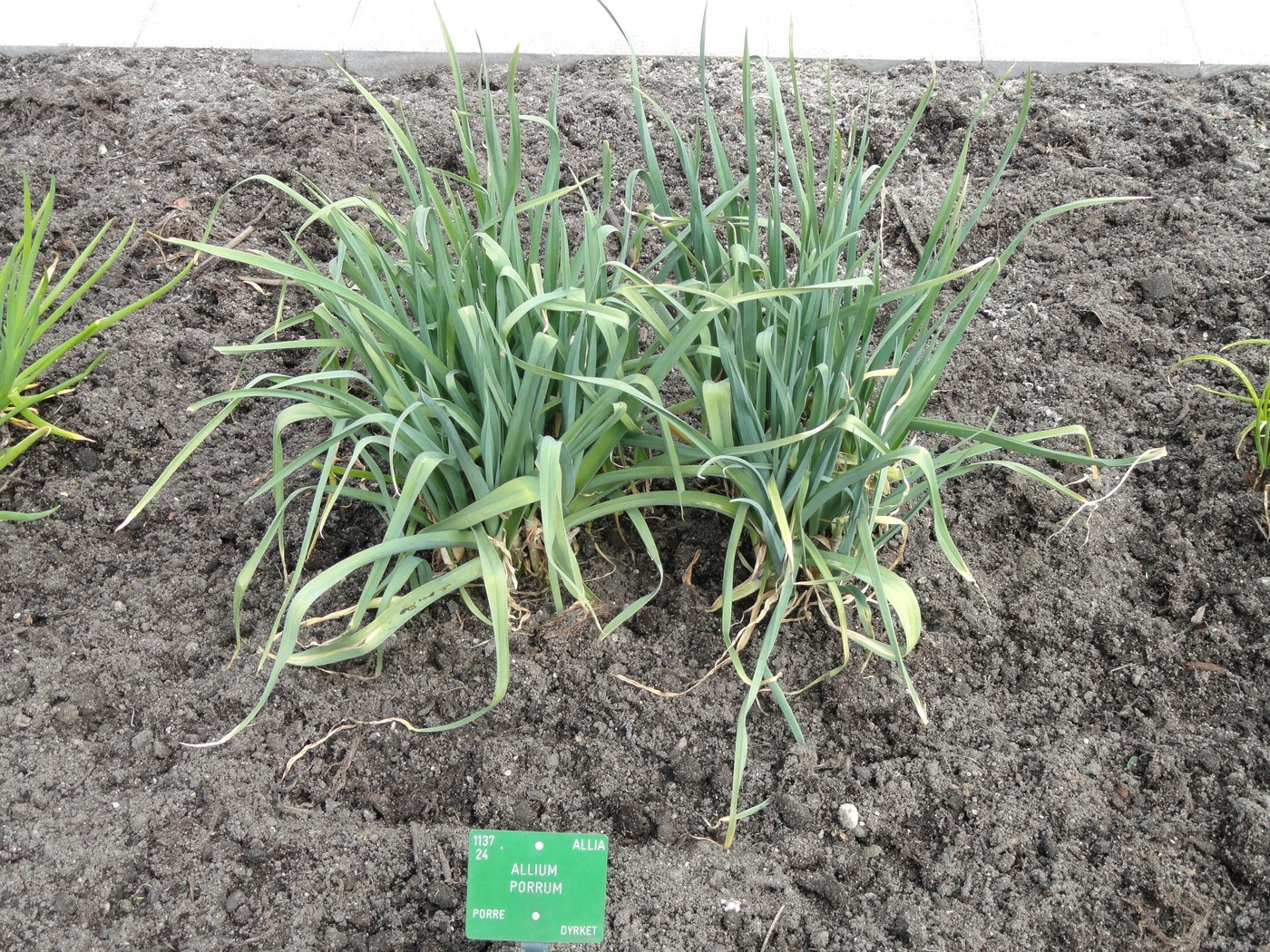
Key Identifying Features
The leek (Allium ampeloprasum, Porrum group) is a large biennial onion relative grown for its thick white stalk. Identify it by the long, cylindrical white-to-pale-green shaft topped by a fan of flat, folded, blue-green strap leaves, and a mild onion aroma.
- Stout plant with a thick, non-bulbing white cylinder at the base
- Flat, V-folded, strap-like blue-green leaves in a fan
- Leaves arranged in a flat plane (two ranks), not a round tube
- Mild onion/garlic smell when cut
Leaves & Stems
Leeks have broad, flat leaves that are folded lengthwise into a V or keel and arranged in two opposite ranks, giving the plant a flattened, fan-like profile rather than a round cluster. Leaf color is a distinctive waxy blue-green to gray-green. The leaf bases wrap tightly around one another to form a long, solid, cylindrical false stem (the white "shaft"), which is blanched white where soil is hilled up around it. Unlike onions, leeks do not form a swollen round bulb; the base stays slender and straight or only slightly thickened.
Flowers & Fruit
In its second year (or when bolting), a leek sends up a tall, solid flower stalk topped by a large, dense, globe-shaped umbel of many small star-shaped flowers, usually pale pink, lilac, or whitish, emerging from a papery beaked sheath. The flowers mature into small capsules with black seeds. The big spherical bloom on a stout stalk is a hallmark of this Allium.
How to Tell It Apart from Look-Alikes
- Green onions/scallions: much thinner, with hollow round tubular leaves; leeks have flat, solid, folded leaves and a far thicker shaft.
- Garlic: also flat-leaved and blue-green, but garlic forms a segmented bulb of cloves and has a stronger garlic odor; leeks have a single thick non-segmented shaft.
- Elephant garlic: the same species as leek (A. ampeloprasum) but grown for a large mild garlic-like bulb; the leek form does not bulb.
- Wild leek/ramps (Allium tricoccum): have broad flat oval leaves (not strap-folded) and grow wild in woodlands.
Where You'll Find It
Grown in vegetable gardens and farm fields, often with soil mounded around the base to lengthen the tender white shaft. Leeks are cool-season, frost-hardy crops common in temperate gardens and a staple of fall and winter markets in Europe and beyond.
Quick ID Checklist
- Thick, non-bulbing white-to-pale cylindrical shaft
- Flat, V-folded blue-green strap leaves in a flat fan
- Leaves solid (not hollow), arranged in two ranks
- Mild onion smell when cut
- If flowering: large globe umbel of pink-white flowers
Frequently asked questions
How do I tell a leek from a large green onion?
Check the leaves and shaft. Leeks have flat, solid, V-folded blue-green leaves and a thick non-bulbing white shaft, while green onions have thin, hollow, round tubular leaves and a much slimmer base.
Why is the bottom of a leek white and the top green?
Growers mound soil around the base as the leek grows, blocking light so the lower stalk stays tender and white (blanching), while the exposed upper leaves photosynthesize and turn green or blue-green.
Do leeks form a bulb like onions?
No. Leeks do not develop a swollen round bulb. The base stays as a long, solid, cylindrical shaft made of tightly wrapped leaf bases, which is the main part eaten.
How is a leek different from garlic?
Both have flat blue-green leaves, but garlic forms a bulb divided into cloves and smells strongly of garlic, while a leek forms a single undivided thick shaft with a milder onion aroma.