Leek
Allium ampeloprasum
The leek is a hardy allium grown for its long, blanched white shank of tightly wrapped leaf bases. Cold-tolerant and slow-growing, it is a classic autumn and winter garden vegetable.
- Light
- Full sun
- Water
- Regular; keep evenly moist
- Difficulty
- Moderate
Got a plant like this?
Identify any plant from a photo, free.
Overview
The leek (Allium ampeloprasum, Porrum group) is a cultivated allium related to onion and garlic, grown not for a bulb but for its thick, cylindrical stem of overlapping leaf sheaths.
The prized white-to-pale-green shank is produced by blanching, mounding soil or planting deep to exclude light from the lower stem.
Leeks are notably hardy, standing through cold weather and frost, which makes them a dependable crop when little else is growing in late autumn and winter.
How to identify it
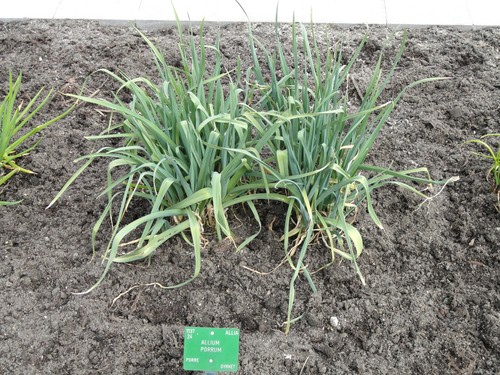
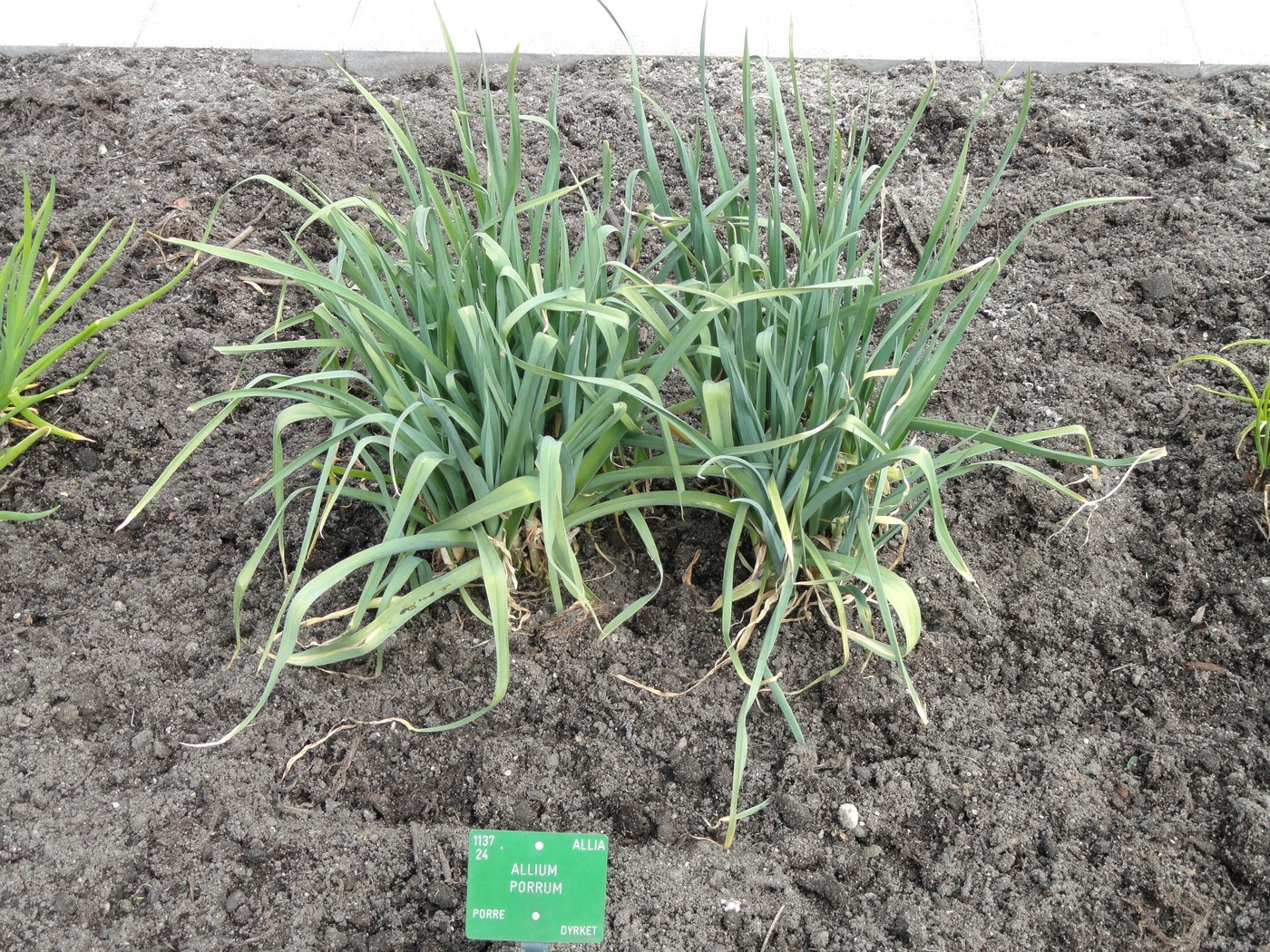
- Habit: Upright plant 30-90 cm (1-3 ft) tall with no distinct bulb
- Stem: Long, cylindrical "shank" of tightly rolled white-to-green leaf bases
- Leaves: Broad, flat, strap-shaped, blue-green, fanning out at the top
- Flowers (second year): Large, globe-shaped clusters of small purple-pink flowers on a tall stalk
- Aroma: Mild onion scent
Care & growing
Light: Full sun.
Water: Keep soil evenly moist throughout the long season for tender shanks.
Soil: Deep, rich, well-drained soil with ample organic matter; pH 6.0-7.0.
Temperature: Cool-season and very cold-hardy; tolerates frost and can overwinter in many climates.
Feeding: Moderate feeder; steady nitrogen supports leafy, vigorous growth.
Propagation: From seed started early; transplant young plants into deep holes or trenches and earth up gradually to lengthen the white shank.
Habitat & origin
Leeks descend from the wild Allium ampeloprasum of the Mediterranean and the Middle East and have been cultivated since ancient Egyptian, Greek and Roman times.
They are now grown across temperate regions worldwide, especially in Europe. The leek is a national emblem of Wales and a staple of cool-climate winter gardening.
Frequently asked questions
How do I get a long white shank on my leeks?
Plant seedlings in deep holes or trenches and gradually mound soil around the stems as they grow to blanch the lower portion.
Why is my leek gritty?
Soil washes between the leaf layers as you earth up. Slit the shank lengthwise and rinse thoroughly under running water.
Can leeks survive winter outdoors?
Yes, most varieties are very hardy and can be left in the ground through cold weather, even after frost and snow.
Leek guides
In-depth guides for identifying, growing, and caring for Leek.