
Lemon Verbena Identification Guide
How to identify lemon verbena (Aloysia citrodora) by its narrow whorled leaves, intense lemon scent, and slender spikes of tiny pale flowers.
Read the full Lemon Verbena encyclopedia entry →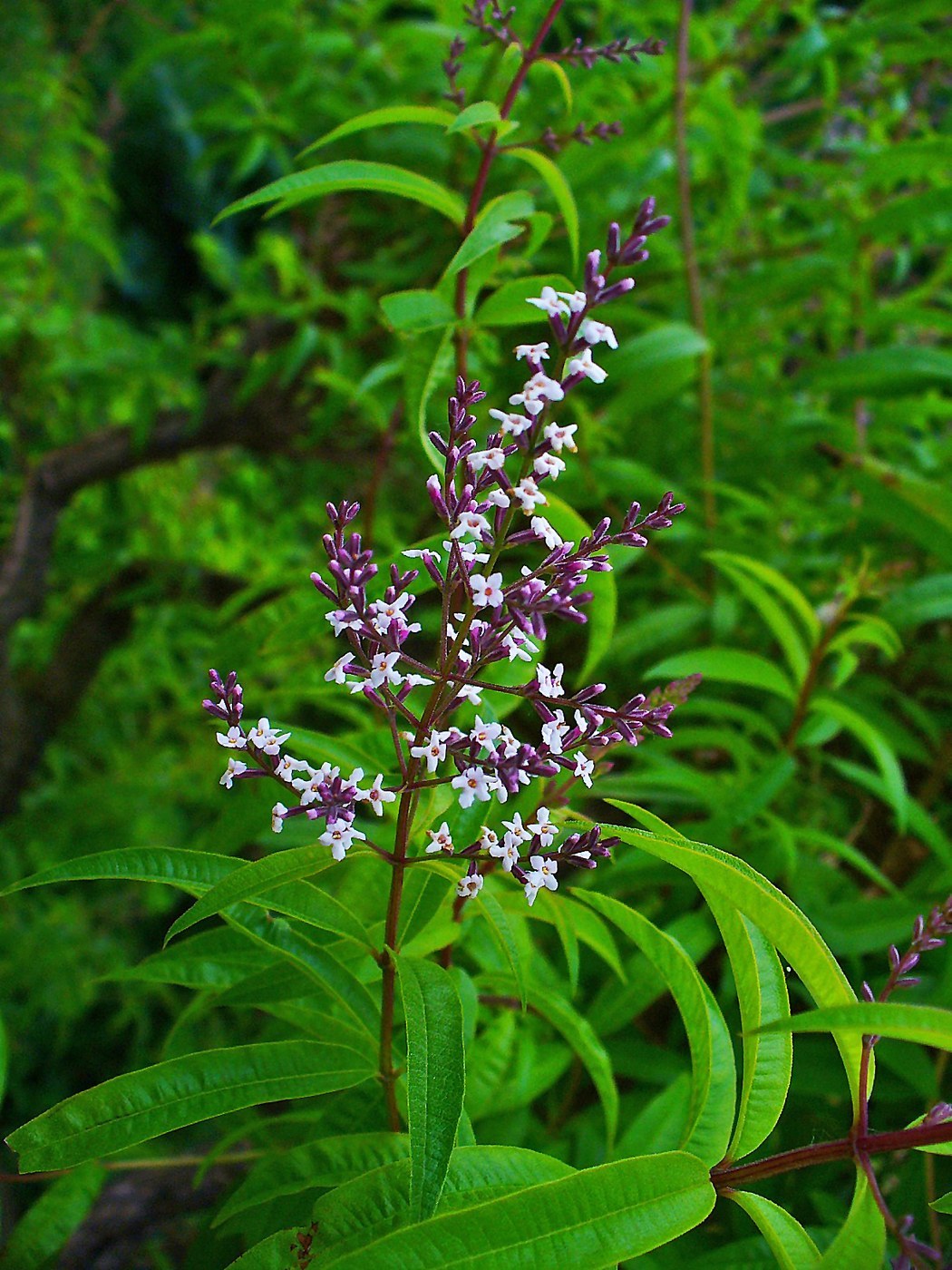
Key Identifying Features
Lemon verbena (Aloysia citrodora, syn. Lippia citriodora) is a deciduous shrub famed for the powerful lemon fragrance released when its leaves are touched. Identify it by:
- Strong, clean lemon scent from crushed or even brushed leaves — the single best clue.
- Narrow, lance-shaped leaves arranged in whorls of three to four.
- A woody, open and somewhat lanky shrub habit, 1–3 m tall.
- Slender sprays of tiny pale flowers in summer.
Leaves & Stems
Leaves are lance-shaped to narrowly elliptic, 5–10 cm long, pointed, with smooth or very faintly toothed margins. They are light to mid green, slightly rough, with prominent veins, and feel a bit sandpapery. A defining feature is their arrangement in whorls of 3 (sometimes 4) around the stem, rather than simple opposite pairs. Tiny glandular dots on the leaf surface hold the lemon-scented oils. Stems are woody at the base, greenish and ridged when young, and the shrub has an open, branching, rather sparse form.
Flowers & Fruit
In summer, lemon verbena produces slender, branched terminal spikes (panicles) of very small flowers, about 3–4 mm, that are white to pale lilac or pale mauve. Each flower is a tiny two-lipped tube. The overall effect is delicate and airy rather than showy. Fruit is a small dry capsule splitting into nutlets; it is inconspicuous and not the main ID feature.
How to Tell It Apart from Look-Alikes
- Lemongrass (Cymbopogon): also lemon-scented but is a grass with strappy blades — completely different from a woody shrub with whorled broad leaves.
- Lemon balm (Melissa): lemon-scented too, but a soft mint with square stems, opposite rounded toothed leaves, and a minty undertone, not the narrow whorled leaves of verbena.
- Lemon-scented gum or other Aloysia: other Aloysia species are similar; the whorls of 3–4 narrow leaves and intense pure lemon scent point to A. citrodora.
- The pairing of whorled narrow leaves + strong lemon scent + woody shrub is diagnostic.
Where You'll Find It
Native to South America (Argentina, Chile), lemon verbena is grown as a garden and herb-garden shrub in warm-temperate to Mediterranean climates, in full sun and well-drained soil. In cold regions it is often container-grown and overwintered indoors. It is rarely naturalized.
Quick ID Checklist
- Intense lemon scent when leaves are brushed or crushed
- Narrow, lance-shaped leaves in whorls of 3–4
- Slightly rough, gland-dotted leaf surface
- Open, woody shrub habit, 1–3 m
- Slender summer sprays of tiny white-to-pale-lilac flowers
Whorled narrow leaves plus a strong lemon scent confirm lemon verbena.
Frequently asked questions
What's the quickest way to identify lemon verbena?
Brush or crush a leaf: it releases an intense, clean lemon fragrance. Combined with narrow lance-shaped leaves arranged in whorls of three to four on a woody shrub, that's conclusive.
How is lemon verbena different from lemon balm?
Lemon balm is a soft mint with square stems and opposite, rounded, toothed leaves, while lemon verbena is a woody shrub with narrow leaves in whorls. Verbena's scent is a purer lemon, balm's is mintier.
What do lemon verbena flowers look like?
Tiny white-to-pale-lilac two-lipped flowers, only a few millimeters across, borne in slender branched sprays at the stem tips in summer.
Is lemon verbena hardy outdoors?
It's frost-tender and native to warm South America, so in cold climates it's usually grown in pots and overwintered indoors, while in mild regions it thrives outdoors in full sun.