
Lemongrass Identification Guide
Recognize lemongrass by its tall dense clumps of arching gray-green blades, thickened white-pink stem bases, and strong lemon scent. Includes how to separate it from ornamental grasses and citronella.
Read the full Lemongrass encyclopedia entry →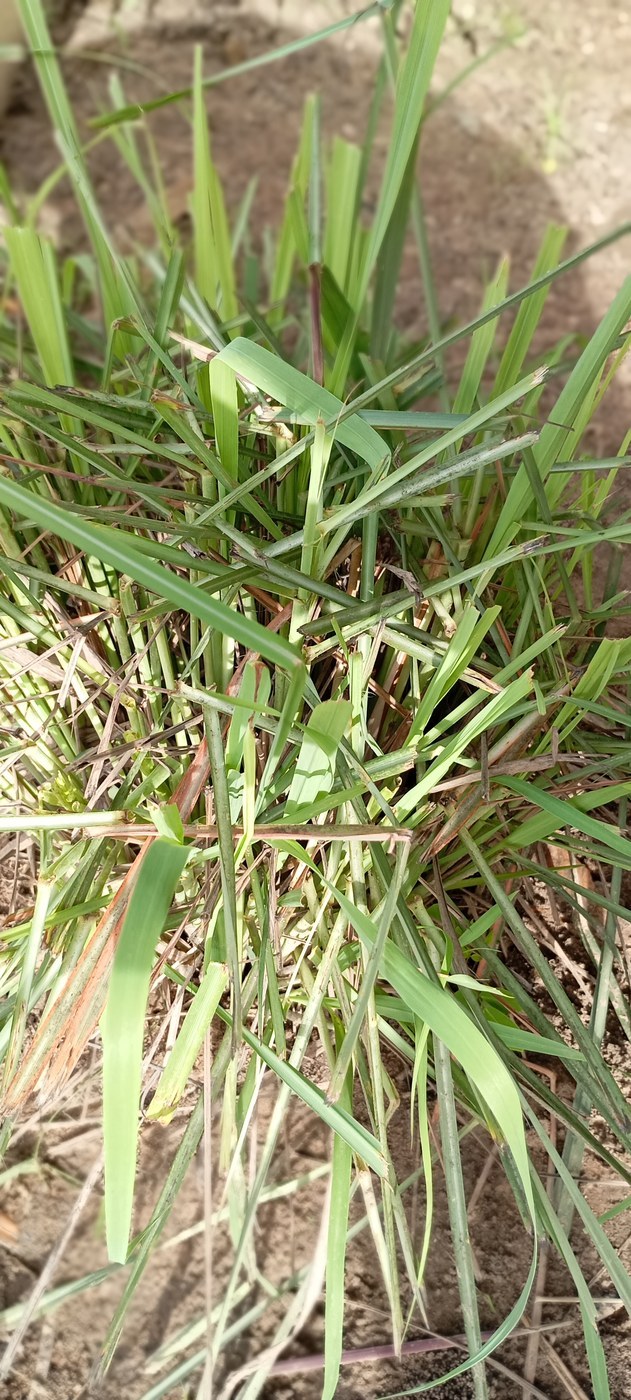
Key Identifying Features
Lemongrass (Cymbopogon citratus) is a tall tropical grass (family Poaceae). Its defining traits are dense fountain-like clumps of long, arching, gray-green blades, swollen white-to-pink bulbous stem bases, and an intense fresh lemon aroma when any part is crushed. Clumps reach 1-1.5 m tall.
Leaves & Stems
- Leaves are long, narrow, flat blades up to 90 cm, tapering to a fine point, with rough sawtooth edges that can cut skin.
- Foliage is gray-green to blue-green and arches outward in a dense fountain shape.
- The base forms tightly packed, swollen, whitish stalks tinged pink or purple.
- A prominent pale midrib runs along each blade.
- Crushing releases a powerful lemony, citral scent.
Flowers & Fruit
- In cultivation lemongrass very rarely flowers.
- When it does (mainly in the tropics), it produces large, nodding, branched plumes of small grass flowers.
- It spreads by clump division rather than seed.
How to Tell It Apart from Look-Alikes
- Ornamental fountain grasses (Pennisetum, Miscanthus) form similar clumps but have no lemon smell and bear showy seed plumes.
- Citronella grass (Cymbopogon nardus / winterianus) is a close relative with reddish-tinged pseudostems and a sharper citronella scent.
- Palmarosa (Cymbopogon martinii) smells more rose-like.
- The swollen white bases plus pure lemon aroma confirm true lemongrass.
Where You'll Find It
Lemongrass is grown in tropical and subtropical gardens and farms, and in pots brought indoors in cooler climates. It needs full sun, warmth, and rich, moist, well-drained soil. It is a cultivated clump-forming grass, not typically found truly wild outside Asia.
Quick ID Checklist
- Dense fountain clump of arching gray-green blades
- Swollen white-pink bulbous stem bases
- Strong lemon scent when crushed
- Rough, cutting blade edges
- Rarely flowers; spreads by clump division
Frequently asked questions
How do I tell lemongrass from ornamental grass?
Crush a blade: lemongrass smells strongly of lemon, while ornamental grasses have no citrus scent. Lemongrass also has thickened whitish stem bases at the base of the clump.
What is the difference between lemongrass and citronella?
Both are Cymbopogon species, but lemongrass has whitish, mildly pink bases and a pure lemon smell, while citronella grass has reddish pseudostems and a sharper scent.
Does lemongrass produce seeds?
It rarely flowers in cultivation, especially outside the tropics, so it is almost always propagated by dividing the clump rather than from seed.