
Liatris Identification Guide
How to identify liatris (blazing star / gayfeather) by its tall feathery purple flower spikes that bloom top-down, grassy leaves, and fuzzy rayless flower heads.
Read the full Liatris encyclopedia entry →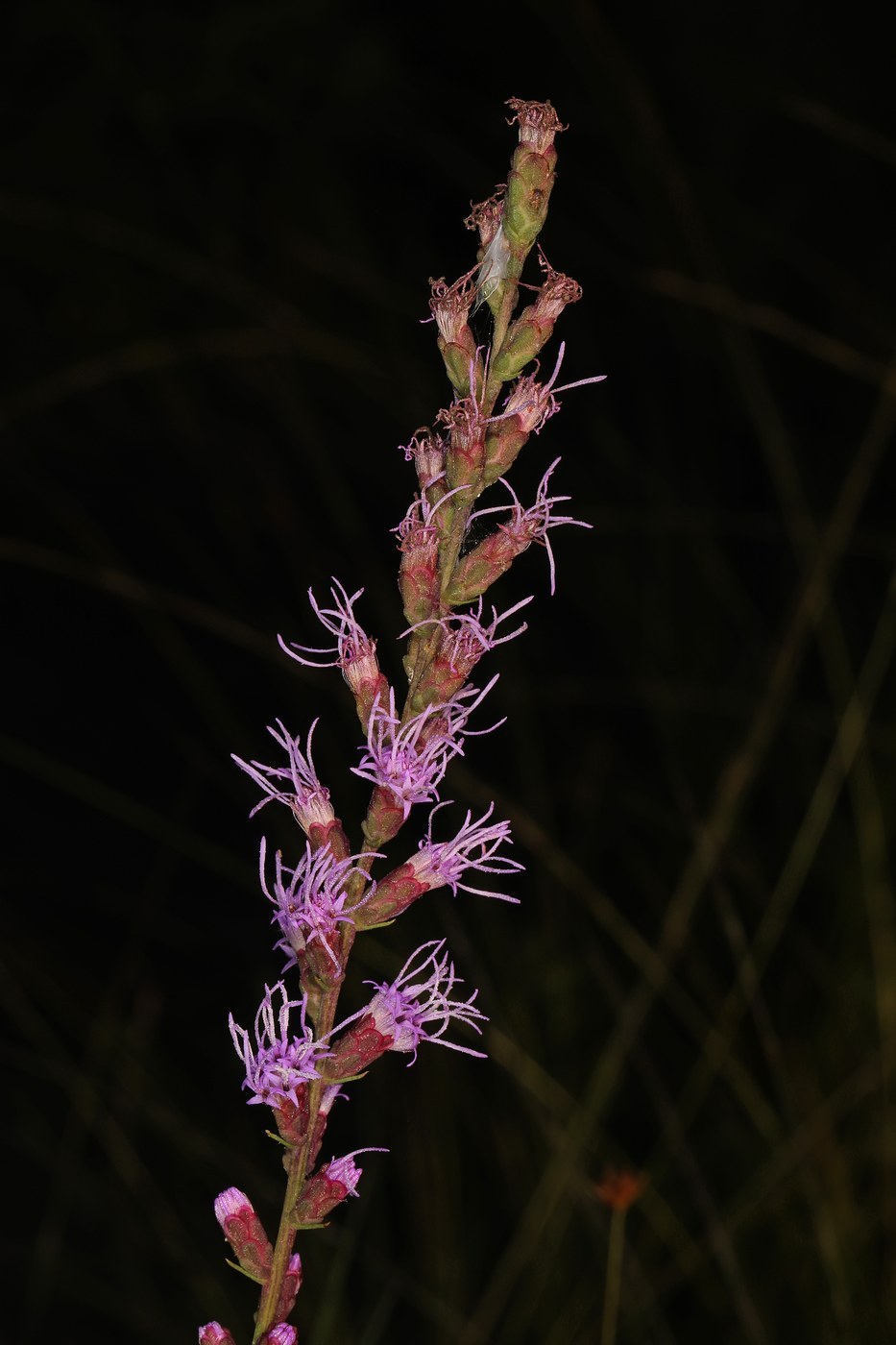
Key Identifying Features
Liatris (blazing star or gayfeather) is a North American prairie perennial in the daisy family (Asteraceae). It is recognized by its tall, narrow, bottlebrush-like spike of fluffy purple flower heads that — unusually — opens from the top of the spike downward, plus its grass-like leaves crowding the stem.
- Erect, feathery flower spike of fuzzy rose-purple heads
- Spike blooms top-down (opposite of most spiked flowers)
- Flower heads have no ray petals — just tufts of thread-like florets
- Narrow, grass-like leaves densely set along the stem
Leaves & Stems
Stems are stiff, erect, unbranched, and leafy, typically 0.5–1.5 m tall, rising from a rounded corm. Leaves are linear and grass-like, longest at the base and reducing up the stem, alternate and crowded. The whole plant has a slim, vertical, prairie-grass silhouette until the flower spike opens.
Flowers & Fruit
The flower spike is the signature: dozens of small rayless flower heads, each a tuft of slender purple (sometimes white) disc florets with protruding styles giving a feathery, fuzzy look, are packed along the upper stem. The famous quirk is acropetal-reverse blooming — flowers open at the top first and progress downward. Bloom time is mid- to late summer. Fruit are small feathery-plumed seeds (achenes with bristly pappus). Bees and butterflies, especially monarchs, swarm it.
How to Tell It Apart from Look-Alikes
- Most spiked flowers (lupines, veronica, salvia): bloom bottom-up; liatris is distinctive for opening top-down.
- Purple loosestrife (Lythrum): also a purple spike, but has 4–6 petaled flowers, opposite/whorled willow-like leaves, and grows in wet ground; liatris flowers are rayless tufts with grassy leaves.
- Thistles: purple fuzzy heads, but spiny leaves and solitary larger heads, not a slender leafy spike.
- Foxtail / grass plumes: grassy look, but no purple florets.
Where You'll Find It
Liatris is native to prairies, open meadows, and dry grasslands of central and eastern North America. It is widely grown in pollinator and cut-flower gardens and prefers full sun and well-drained soil, tolerating drought once established. It is also a popular long-lasting cut and dried flower.
Quick ID Checklist
- Tall feathery purple spike of fuzzy flower heads
- Spike opens top-down
- Flower heads rayless (tufts of thread-like florets)
- Grass-like, narrow leaves crowding the stem
- Sunny prairie/meadow habit; grows from a corm
Frequently asked questions
What is unusual about how liatris blooms?
Unlike most flower spikes, which open from the bottom up, liatris opens from the top of the spike downward. This top-down blooming is one of its most distinctive identification clues.
Why do the flowers look fuzzy rather than petal-like?
Liatris flower heads have no ray petals. Each head is a tuft of slender disc florets with protruding styles, which gives the spike its feathery, bottlebrush appearance, hence the name gayfeather.
How do I tell liatris from purple loosestrife?
Purple loosestrife has distinct petaled flowers, willow-like opposite leaves, and grows in wet ground, while liatris has rayless fuzzy flower tufts, grass-like leaves, and grows in dry sunny prairies.
Is liatris good for pollinators?
Yes, it is a major nectar source. The purple spikes attract many bees and butterflies, especially monarchs, making it a favorite in pollinator and prairie gardens.