
How to Care for Lifesaver Cactus
Grow the curious Huernia zebrina with bright indirect light, gritty fast-draining soil, and sparing water for its ring-shaped starry blooms.
Read the full Lifesaver Cactus encyclopedia entry →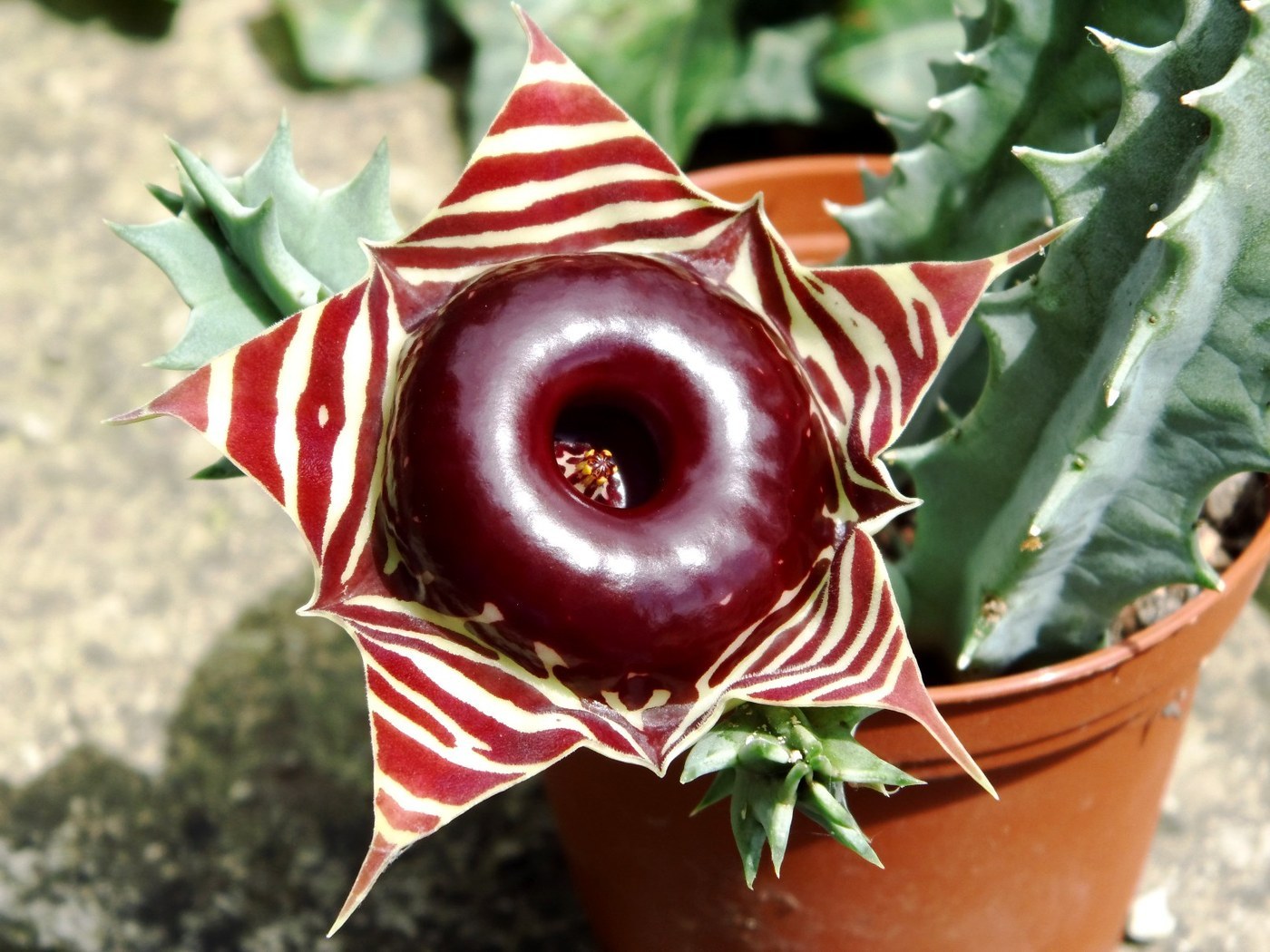
The lifesaver cactus (Huernia zebrina) is a small clustering succulent famous for its bizarre, glossy, ring-shaped flowers that look like candy set within a starry maroon-banded star. Despite the name it is not a true cactus but a stem succulent, and it makes an intriguing, moderately easy plant for a bright windowsill or succulent collection.
Light
Provide bright indirect light for the best growth and flowering. This succulent naturally grows in the shelter of rocks and shrubs, so it dislikes harsh, direct midday sun, which can scorch and yellow its soft stems. A spot near a bright window with filtered light or a little gentle morning sun is ideal. Too little light produces weak, etiolated stems and few of its remarkable flowers.
Water
Water sparingly and always let the soil dry out completely between waterings. As a succulent, Huernia stores water in its stems and is far more tolerant of drought than of excess moisture. In the growing season, give a thorough soak once the mix is fully dry, then wait; in winter, water only occasionally to prevent shriveling. Overwatering, especially in cool conditions, is the quickest way to cause fatal stem and root rot.
Soil & Potting
Use a very gritty, fast-draining mix formulated for cacti and succulents, or amend regular potting soil heavily with coarse sand, perlite, or pumice. Sharp drainage is essential, as this plant will rot in soil that stays wet. Choose a shallow pot with generous drainage holes, since the roots are fine and shallow. A snug container also helps the mix dry out quickly between waterings.
Humidity & Temperature
Lifesaver cactus prefers warm temperatures and average to low humidity, thriving in typical dry indoor air. Keep it above about 50 degrees F, as it is not frost-hardy and cold, damp conditions are dangerous. Protect it from cold drafts and unheated rooms in winter. It appreciates warmth during the growing season and a slightly cooler, drier rest period in winter, which can help encourage flowering.
Feeding
Feed sparingly during the growing season, from spring through early autumn, with a diluted low-nitrogen cactus and succulent fertilizer roughly once a month. This modest feeding supports flowering without forcing weak, soft growth. Do not feed in winter when the plant is resting. Excess fertilizer, particularly high nitrogen, produces floppy stems and fewer flowers, so keep feeding light.
Propagation
Huernia is very easy to propagate from stem cuttings. Break or cut off a segment, let the cut end dry and callus for a few days to prevent rot, then set it on or just into a gritty succulent mix. Kept warm and barely moist, cuttings root quickly. Because the plant naturally forms spreading clumps, division of an established clump is another simple way to make new plants.
Repotting / Pruning
Repot every couple of years in spring, or when the clump outgrows its pot, using fresh gritty mix and a shallow container. Handle the soft stems gently, as they bruise and snap easily. Little pruning is needed beyond removing any shriveled, damaged, or rotting segments promptly to keep the clump healthy. Removed healthy segments can be dried and rooted as new cuttings.
Common Problems & Pests
By far the most common problem is rot from overwatering or poor drainage, seen as soft, yellowing, or blackening stems; prevention through a gritty mix and sparing water is essential, and unaffected segments can be salvaged as cuttings. Stretched, pale stems indicate too little light. Watch for mealybugs, which hide in the crevices between stems, along with spider mites and root mealybugs, treating them with insecticidal soap or by isolating the plant.
Seasonal Care Tips
In spring and summer the plant grows actively and flowers, so provide bright indirect light, water thoroughly once the soil is fully dry, and feed lightly; this is the best time to repot and take cuttings. In autumn, begin reducing water as growth slows. In winter, give the plant a cool, dry rest with only occasional light watering to prevent shriveling, which also helps set the stage for the next flowering season.
Frequently asked questions
Is the lifesaver cactus really a cactus?
No. Despite its common name, Huernia zebrina is not a true cactus but a stem succulent in the milkweed family. It is grown much like other succulents, with bright indirect light, gritty fast-draining soil, and sparing water.
Why is my lifesaver cactus turning soft and yellow?
Soft, yellowing, or blackening stems almost always mean rot from overwatering or poor drainage. Let the soil dry out completely between waterings, use a very gritty mix, and salvage any firm, healthy segments as cuttings if rot has set in.
How often should I water a lifesaver cactus?
Water sparingly and only after the soil has dried out completely. In the growing season give a thorough soak then wait; in winter water just occasionally to stop the stems shriveling. When in doubt, wait longer, since it tolerates drought far better than wet soil.
Why won't my lifesaver cactus flower?
Poor flowering is usually from too little light or too much nitrogen. Give it bright indirect light, feed only lightly with a low-nitrogen succulent fertilizer during the growing season, and provide a cooler, drier winter rest to help trigger blooming.