Lifesaver Cactus
Huernia zebrina
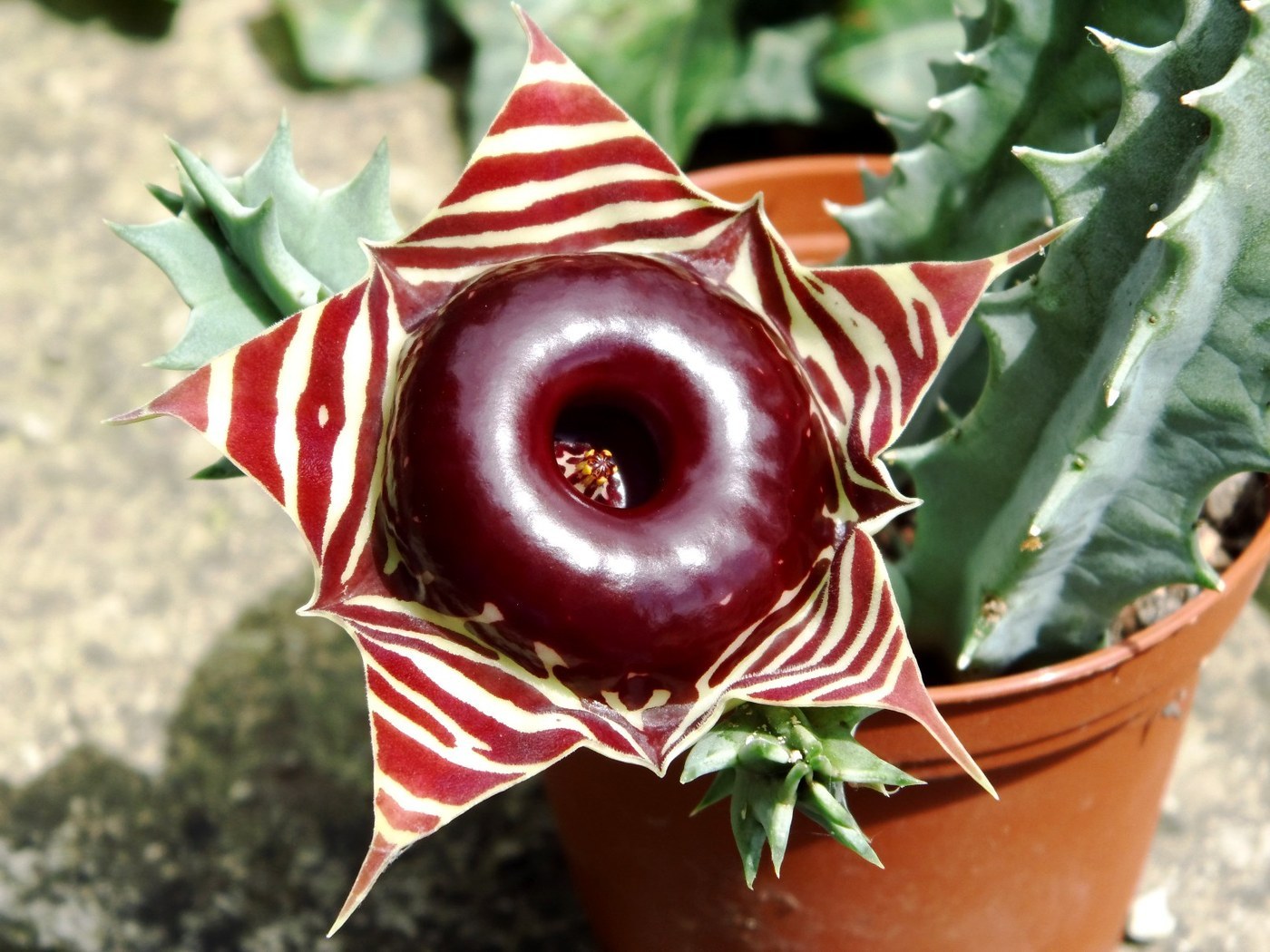
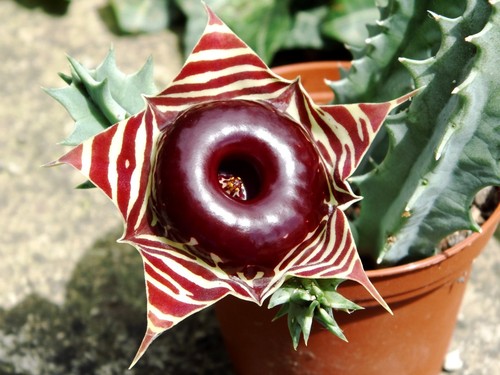
A low, clumping stem succulent famous for bizarre flowers with a thick, glossy red ring at the center that looks exactly like a candy lifesaver. The flowers are striped like a zebra.
- Light
- Bright indirect light
- Water
- Sparingly; dry out between waterings
- Difficulty
- Moderate
Got a plant like this?
Identify any plant from a photo, free.
Overview
Despite its name, Lifesaver Cactus is not a true cactus but a stem succulent in the milkweed family. It is grown above all for its astonishing flowers: pale yellow stars striped in maroon, with a thick, glossy, raised doughnut-shaped ring in the center that uncannily resembles a candy lifesaver.
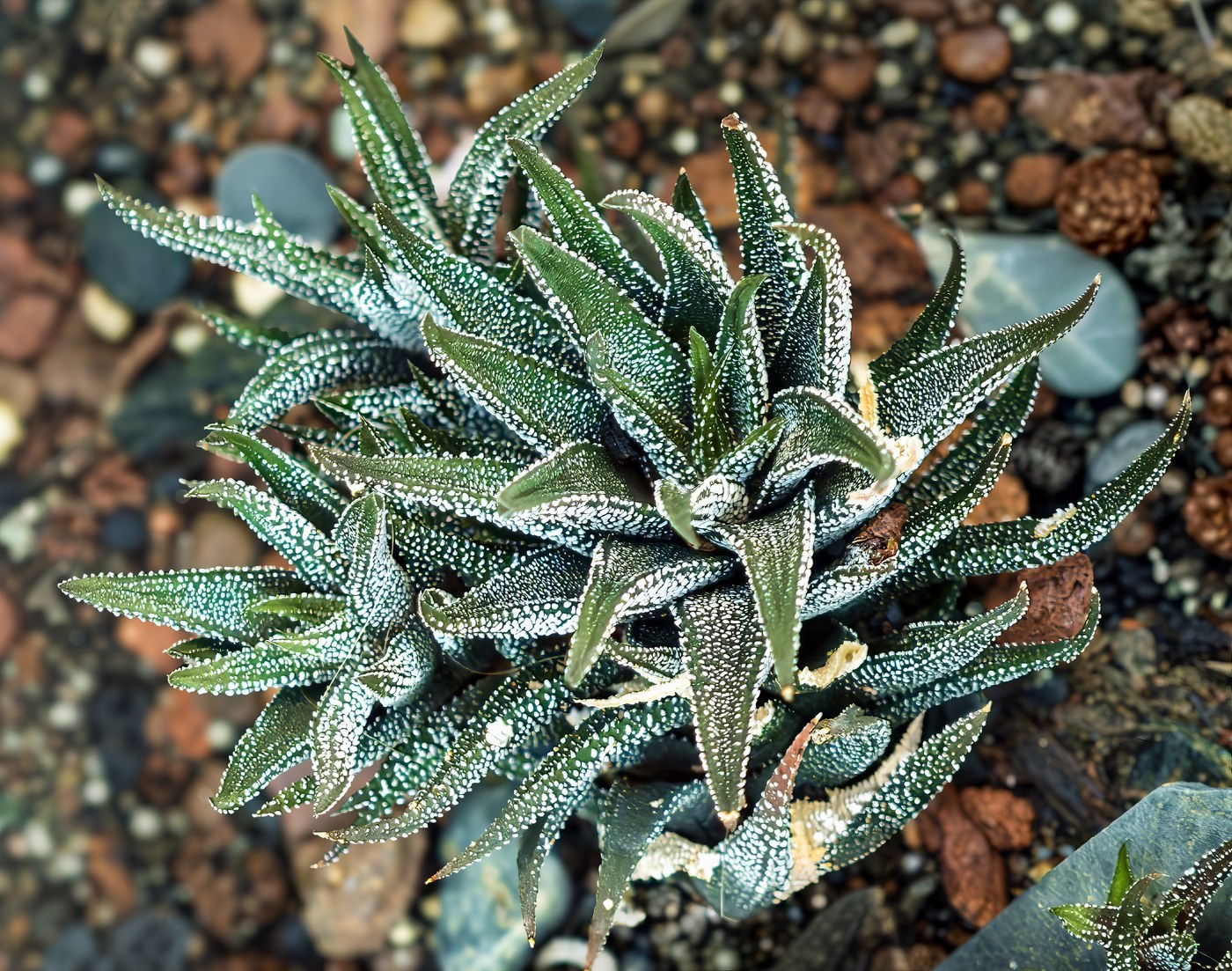
The plant itself is a low cluster of short, soft, toothed, five-angled green stems. It stays compact and spreads into a mat over time.
Like its carrion-flower relatives the blooms can carry a faint unpleasant scent to attract fly pollinators, but the flowers are so striking that it remains a collector favorite.
How to identify it
- Short, soft, five-angled green stems with soft tooth-like points along the ridges
- Low, clumping, spreading habit forming dense low mats
- Spectacular star-shaped flowers: cream-yellow with maroon zebra stripes
- A distinctive thick, shiny, dark-red raised ring (annulus) at the flower's center
- Flowers emerge near the base of the stems; may have a faint carrion odor
Care & growing
Light: Bright indirect light; some gentle direct sun is fine, but harsh midday sun can scorch the soft stems.
Water: Water sparingly and let the soil dry between waterings; keep nearly dry in winter to avoid rot.
Soil: Very fast-draining succulent or cactus mix.
Temperature: Warm conditions preferred; protect from cold and frost, to which it is sensitive.
Feeding: Light feeding occasionally during the growing season.
Propagation: Extremely easy — a detached stem segment laid on dry mix roots quickly.
Habitat & origin
Native to southern Africa (especially South Africa, Zimbabwe and Mozambique), where it grows in dry, rocky scrubland, often sheltered beneath shrubs or in rock crevices.
The shade-tolerant growth and fly-pollinated flowers suit its arid, sun-baked habitat. It is widely grown by succulent enthusiasts worldwide as an easy, rewarding houseplant.
Frequently asked questions
Why do the flowers smell bad?
Like other carrion-flower relatives, the blooms can emit a faint foul scent to lure flies for pollination. It's usually mild and the dramatic flowers more than make up for it.
Is it really a cactus?
No. Despite the common name it's a stem succulent in the milkweed family (Apocynaceae), not a true cactus.
Why are my stems turning yellow and mushy?
That's typically rot from overwatering or cold. Use very gritty mix, water sparingly, keep it warm, and let it dry out, especially in winter.
How do I propagate it?
Break off a stem segment, let it callus for a day, and lay it on dry, well-draining mix — it roots readily.
Lifesaver Cactus guides
In-depth guides for identifying, growing, and caring for Lifesaver Cactus.
How to Care for Lifesaver Cactus
Grow the curious Huernia zebrina with bright indirect light, gritty fast-draining soil, and sparing water for its ring-shaped starry blooms.
Lifesaver Cactus Identification Guide
Recognize the Lifesaver Cactus (Huernia zebrina) by its toothed green stems and striped star flowers with a glossy red, donut-shaped ring in the center.