Lilac Identification Guide
Recognize lilacs by their dense fragrant cone-shaped flower clusters, heart-shaped opposite leaves, and upright multi-stemmed shrub form.
Read the full Lilac encyclopedia entry →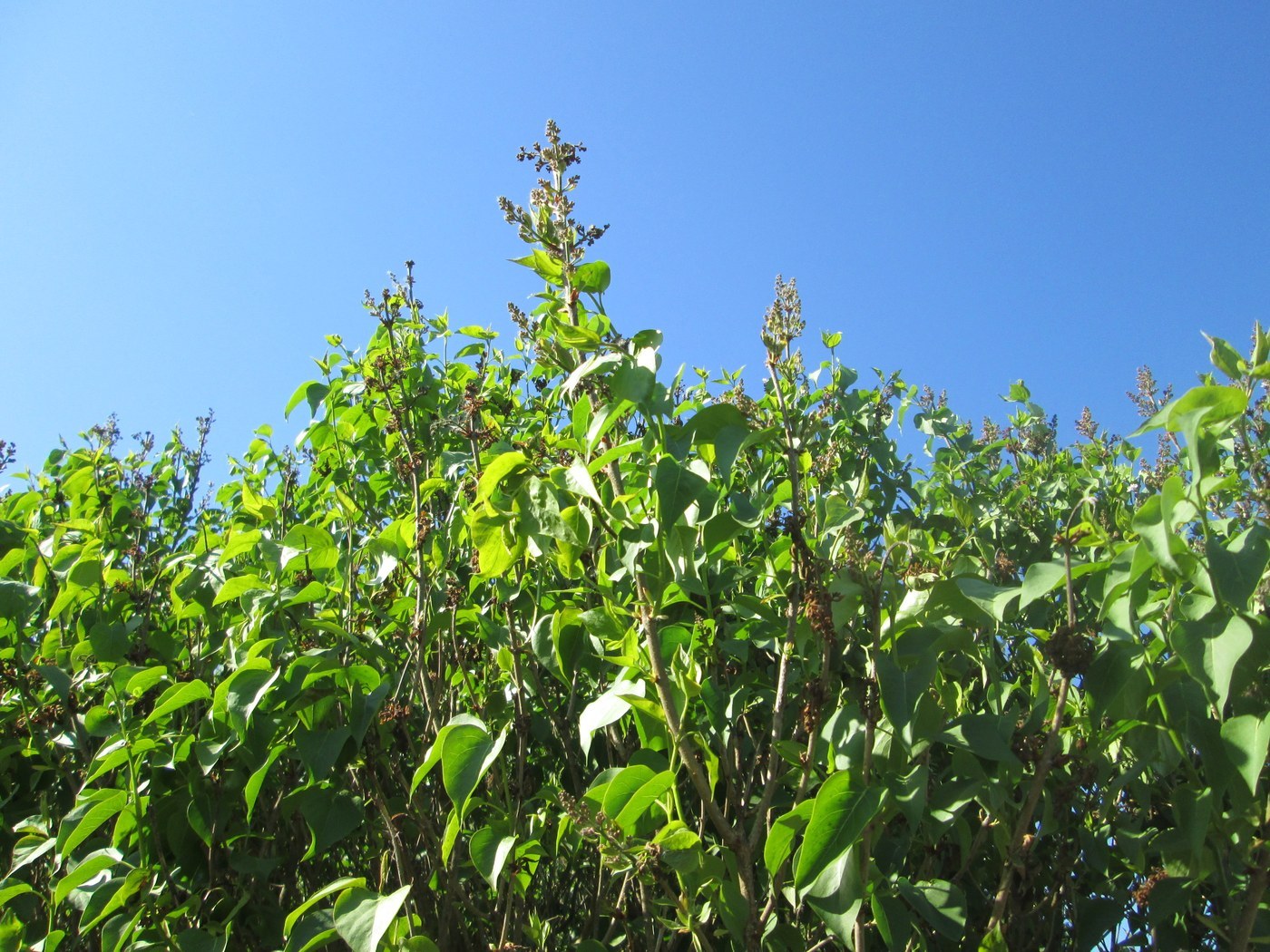
Key Identifying Features
Lilacs (Syringa species, especially common lilac S. vulgaris) are deciduous shrubs or small trees in the olive family (Oleaceae), famous for their fragrance. Identify them by:
- Dense, cone- or pyramid-shaped clusters (panicles) of small, intensely fragrant four-lobed flowers.
- Heart-shaped leaves arranged oppositely on the stems.
- An upright, multi-stemmed, suckering shrub form.
Leaves & Stems
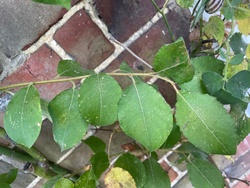
Common lilac leaves are heart-shaped to broadly oval (cordate) with a pointed tip and smooth margins, 2–5 inches long, mid- to gray-green, and arranged in opposite pairs along the twigs. The opposite arrangement and heart shape together are key. Stems are woody, gray-brown, and upright, forming a clump that spreads by root suckers into a thicket. Bark becomes furrowed with age. Twigs have prominent paired buds. Other Syringa species may have narrower or smaller leaves.
Flowers & Fruit
Flowers form showy terminal panicles 4–8 inches long, packed with hundreds of small florets. Each floret is a slender tube opening into four spreading lobes, and the scent is strong and sweet — the classic lilac perfume. Colors include the namesake lilac-purple, plus white, pink, magenta, blue, and pale yellow. Bloom is brief but spectacular in mid to late spring. After flowering, clusters of small brown two-parted seed capsules persist into fall and winter.
How to Tell It Apart from Look-Alikes
- Butterfly bush (Buddleja): Has long tapering flower spikes too, but leaves are lance-shaped and often opposite with felty undersides, and it blooms in summer, not spring.
- Privet (Ligustrum): Same family with opposite leaves and white panicles, but leaves are smaller and glossier and flowers bloom in summer with a heavier musky scent.
- Mock orange (Philadelphus): Fragrant white flowers but borne in small loose clusters with four broad separate petals, not dense panicles.
The fragrant spring panicle + opposite heart-shaped leaves + suckering shrub combo confirms lilac.
Where You'll Find It
Lilacs are classic cold-climate ornamental shrubs, planted as specimens, hedges, and screens, and often persisting around old homesteads long after houses are gone. They need full sun, well-drained soil, and winter cold to bloom well, thriving in temperate and northern gardens. Look for them along old foundations, fence lines, and in spring gardens.
Quick ID Checklist
- Dense cone-shaped panicles of tiny four-lobed flowers
- Strong sweet fragrance
- Heart-shaped, opposite leaves with smooth edges
- Upright multi-stemmed, suckering shrub
- Spring bloom in purple/white/pink/blue
- Brown two-parted seed capsules persisting after bloom
Frequently asked questions
How do I identify a lilac when it's not blooming?
Look for heart-shaped leaves arranged in opposite pairs on upright gray-brown woody stems that form a suckering clump. Old seed capsule clusters and prominent paired buds also help confirm it out of bloom.
Why isn't my lilac flowering?
Lilacs need full sun and a period of winter cold to set flower buds. Too much shade, very mild winters, or pruning at the wrong time (they bloom on old wood) commonly prevents blooming.
How can I tell a lilac from a butterfly bush?
Lilacs bloom in dense cone-shaped clusters in spring with heart-shaped leaves, while butterfly bush blooms on long tapering spikes in summer with narrow lance-shaped leaves.
Do lilacs spread on their own?
Yes. Common lilac sends up root suckers and can gradually form a thicket, which is why old plantings often persist for decades around abandoned homes.
Lilac identified by the community
Recent Lilac specimens identified with Plant Identifier.