
Lily of the Valley Identification Guide
Identify lily of the valley by its paired upright leaves, one-sided arching spray of fragrant white nodding bells, and spreading shady colonies.
Read the full Lily of the Valley encyclopedia entry →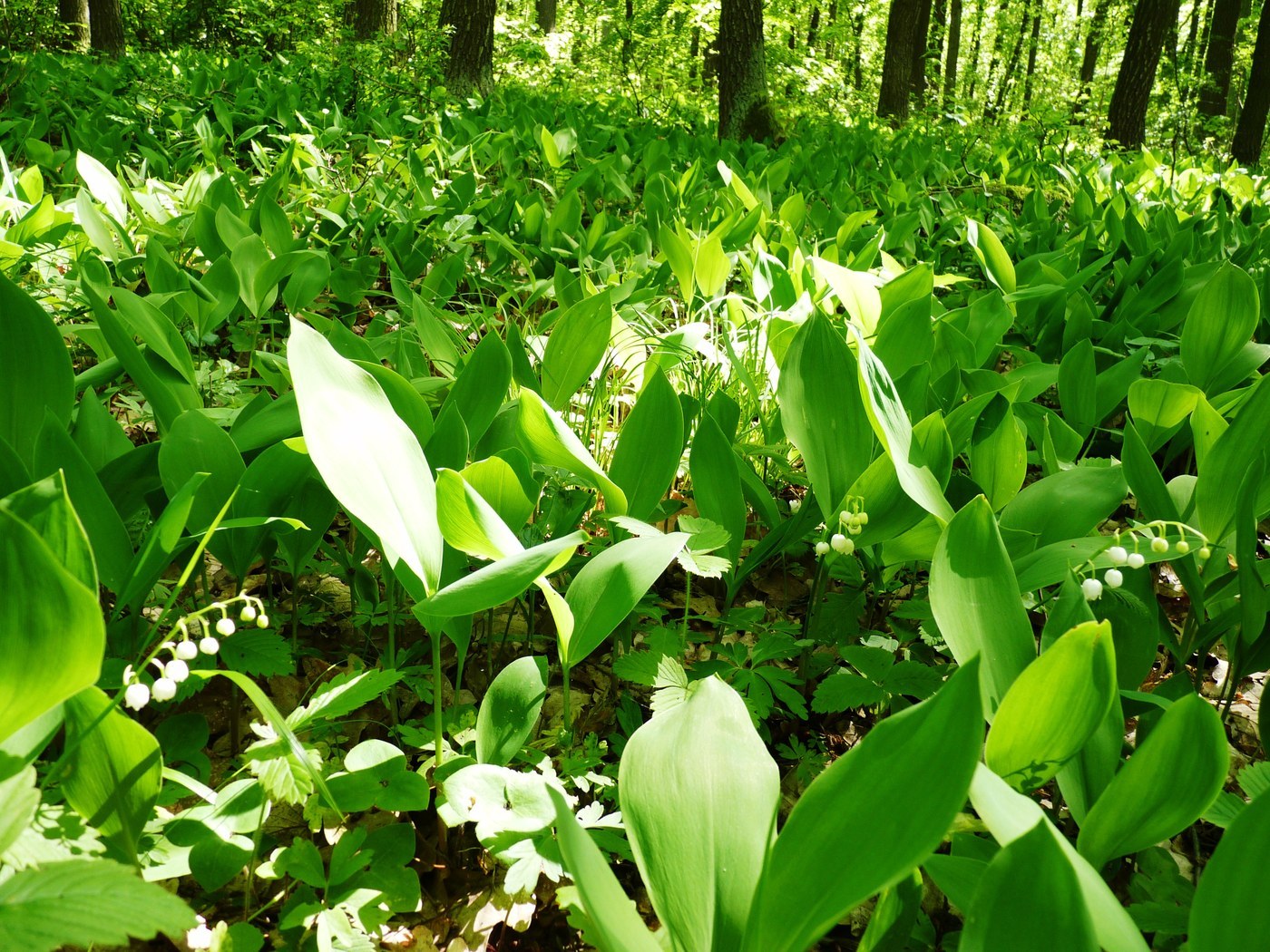
Key Identifying Features
Lily of the valley (Convallaria majalis) is a low, spreading woodland groundcover known for its dangling, intensely fragrant white bells held on a one-sided arching stalk between two or three broad upright leaves.
- Leaves: usually two (sometimes three) upright, broad, parallel-veined basal leaves
- Flowers: small white, nodding, bell-shaped with scalloped rims, on one side of an arching stem
- Scent: sweet, strong, unmistakable
- Habit: carpeting colonies in shade
Leaves & Stems
Each shoot produces a pair of large, elliptical, pointed leaves that stand upright and roll from a sheath at the base. They are smooth, glossy, deep green, with parallel arching veins. The flowers arise on a separate, slender, leafless scape that arches and bends to one side. The plant spreads aggressively by underground rhizomes (pips) to form dense mats.
Flowers & Fruit
In mid to late spring the scape carries 5-15 small white flowers, each a rounded bell with six recurved, scalloped lobes, all hanging downward along one side. Their powerful sweet fragrance is a key ID. By late summer pollinated flowers may form small orange-red berries. Pink-flowered and variegated cultivars exist but share the form and scent.
How to Tell It Apart from Look-Alikes
- Wild garlic / ramps: before flowering the broad leaves can resemble these, but lily of the valley has no onion or garlic smell when a leaf is crushed.
- Solomon's seal (Polygonatum): has one arching leafy stem with bells hanging beneath each leaf, not separate upright paired leaves and a leafless flower scape.
- Hosta: much larger leaves and lavender lily flowers on tall scapes.
- Star-of-Bethlehem: grassy leaves and star-shaped (not bell) white flowers.
The defining combo is a pair of upright broad leaves + a one-sided arching spray of fragrant white bells.
Where You'll Find It
A classic for shady gardens, woodland borders, and under shrubs, lily of the valley naturalizes in cool, moist, shaded ground and can escape into woods. It forms dense, weed-smothering colonies. Look for the spreading carpet of paired leaves in spring shade.
Quick ID Checklist
- Paired upright broad, parallel-veined leaves
- Leafless arching flower scape
- White nodding bells, scalloped rims, one-sided
- Strong sweet fragrance
- Spreads into dense shady colonies by rhizome
- Orange-red berries possible later
Frequently asked questions
How do I distinguish lily of the valley from Solomon's seal?
Solomon's seal has a single arching leafy stem with bells dangling beneath each leaf, while lily of the valley has separate paired upright leaves and a leafless arching flower scape of fragrant white bells.
Why does lily of the valley spread so aggressively?
It spreads by underground rhizomes called pips that form dense mats, allowing it to carpet shady ground and crowd out other plants. The spreading colony of paired leaves is itself an ID clue.
Can I identify it by smell?
Yes. The intensely sweet, far-carrying fragrance of the white bells is highly distinctive and a reliable confirmation once the plant is in bloom.
What do the leaves look like before it flowers?
Each shoot sends up a pair of broad, elliptical, pointed leaves with parallel arching veins that roll up from a basal sheath, forming spreading carpets in shade.