
Lima Bean Identification Guide
Identify lima beans by their trifoliate leaves, small pale flowers, and broad, flat, curved green pods containing large flat kidney-shaped seeds, available as bush or climbing pole types.
Read the full Lima Bean encyclopedia entry →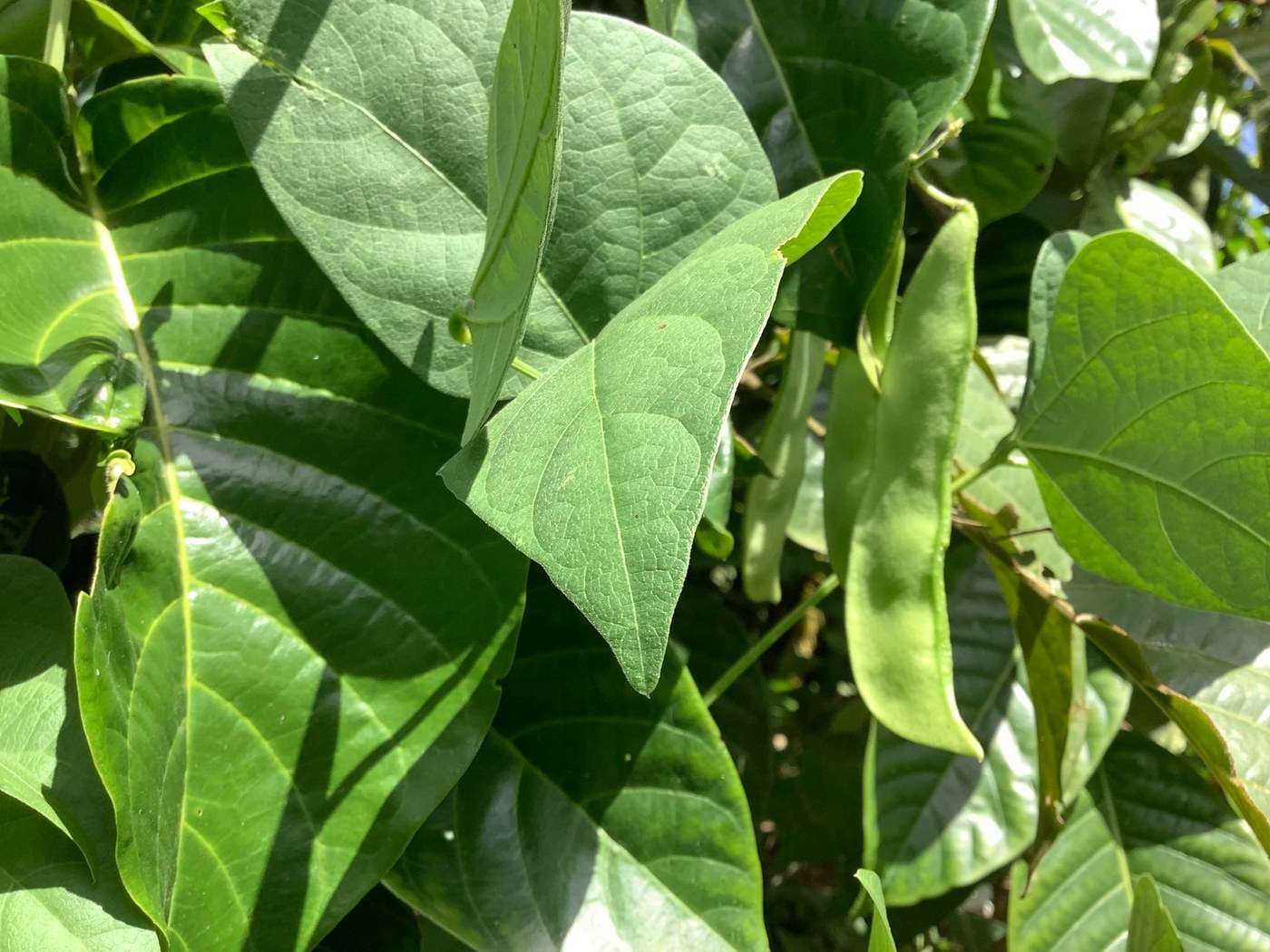
Key Identifying Features
The lima bean (Phaseolus lunatus), also called butter bean, is an annual legume in the pea family (Fabaceae). It is identified by its trifoliate leaves; small white to pale-violet pea flowers; and especially its broad, flat, often slightly curved (crescent/moon-shaped) green pods that contain a few large, flat, kidney- to disc-shaped seeds. The species name lunatus ('moon-shaped') refers to the curved pods and flat seeds.
- Growth habit: comes in bush forms (1–2 ft) and climbing pole forms (vines 6–12 ft)
- Key trait: wide, flat pods with large flat beans inside
Leaves & Stems
Leaves are alternate and trifoliate — three smooth, broadly oval to triangular leaflets that come to a point, typically 2–3 inches long, medium green and mostly smooth (less hairy than soybean). Pole types twine counterclockwise up supports; bush types branch into a low mound. Stems are slender, green, and may be lightly hairy.
Flowers & Fruit
Flowers are small pea-type blooms (banner, wings, keel), white to pale yellow-green or lavender, borne in loose clusters (racemes) from the leaf axils. The pods are the signature: broad, flat, oblong and slightly curved, 2–5 inches long, smooth and green (ripening to tan/straw when dry). Each pod usually holds 2–4 large, flat, kidney- or saucer-shaped seeds that may be pale green, cream, white, or speckled/mottled depending on variety. The flat broad pod and large flat seed are diagnostic.
How to Tell It Apart from Look-Alikes
- Common/snap bean (Phaseolus vulgaris): pods are narrow and round-to-oval in cross-section with small kidney beans; lima pods are distinctly flat and broad with big flat seeds.
- Soybean/edamame: short, fuzzy, clustered pods with round beans; limas are flat, smooth, and curved.
- Fava/broad bean (Vicia faba): has thick, upright, spongy pods and pinnate leaves (multiple leaflets), not trifoliate.
- Peas: tendrils and many leaflets, round pods.
The trifoliate smooth leaves + flat curved broad pods + large flat kidney/disc-shaped seeds confirm lima bean.
Where You'll Find It
Lima beans are grown in warm-season vegetable gardens and farms across the Americas and beyond; they need heat and a long growing season. Look for bush types in garden rows and pole types climbing trellises and poles, with their broad flat pods dangling in clusters.
Quick ID Checklist
- Trifoliate leaves with smooth, pointed oval leaflets
- Bush or pole (climbing) growth habit
- Small white-to-lavender pea flowers in clusters
- Broad, flat, slightly curved green pods
- Large, flat, kidney- or disc-shaped seeds (2–4 per pod)
Frequently asked questions
How do I tell lima beans from green (snap) beans?
Lima bean pods are broad, flat, and slightly curved with a few large flat seeds inside, while snap bean pods are narrow and rounded in cross-section with small kidney-shaped beans. Lima leaves and flowers look similar, but the pods are the giveaway.
Why are lima beans also called butter beans?
'Butter bean' is a common name for lima beans, especially the larger, paler, buttery-textured types. It's the same species, Phaseolus lunatus.
Do lima beans climb or grow as a bush?
Both. There are bush varieties that form a low compact plant and pole varieties that twine up supports to 6–12 feet. The leaves, flowers, and flat pods are the same in either form.
What shape are lima bean seeds?
They are large, flat, and kidney- to disc-shaped (the species name lunatus means 'moon-shaped'), in colors from pale green and cream to white or speckled depending on variety.