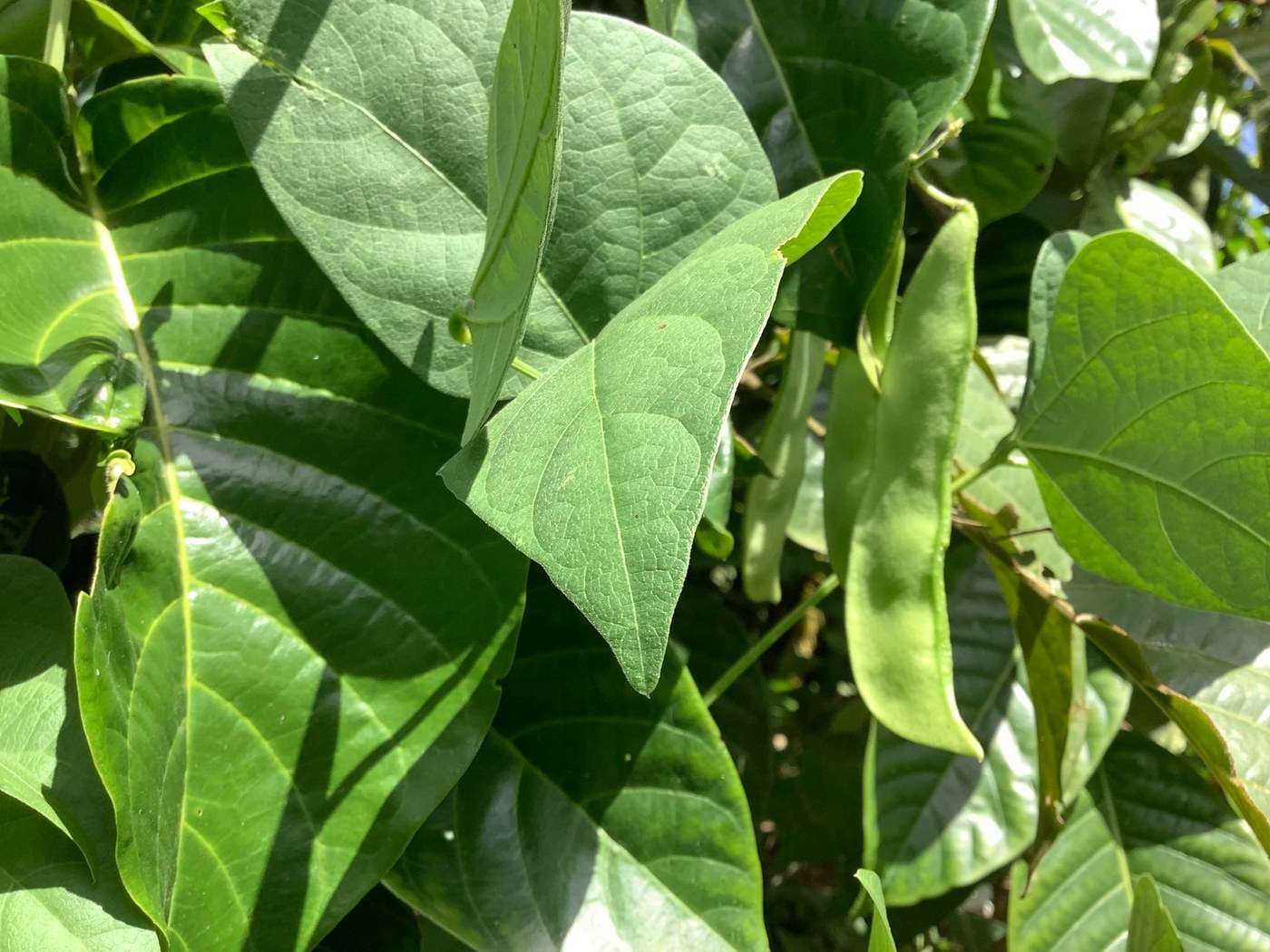
Lima Bean
Phaseolus lunatus
Lima beans are a warm-season legume in the pea family, available in bush and pole forms. They are a heat-loving plant native to the Americas.
- Light
- Full sun
- Water
- Even moisture; avoid waterlogging
- Difficulty
- Easy
Got a plant like this?
Identify any plant from a photo, free.
Overview
The lima bean is a warm-season legume in the pea family (Fabaceae). It comes in compact bush types and climbing pole types.
Named for Lima, Peru, where it was cultivated in ancient times, the plant thrives in heat and produces large, flat, kidney-shaped seeds. Like other legumes, it fixes nitrogen in the soil.
How to identify it
A legume with broad leaflets and flat, curved pods.
- Leaves: Compound with three broad, pointed leaflets
- Habit: Bush types stay around 1-2 ft; pole types climb 8-12 ft on supports
- Flowers: Small white to pale yellow pea-type blooms
- Pods: Broad, flat, slightly curved, holding 2-4 large flat seeds
- Seeds: Large, flat, kidney- to moon-shaped (the name lunatus means moon-shaped), pale green to cream
Care & growing
Light: Full sun.
Water: Even moisture during flowering and pod fill; avoid waterlogged soil, which causes rot.
Soil: Well-drained, warm soil; pH 6.0-6.8. Inoculate seed with rhizobia for best nitrogen fixation.
Temperature: A true heat-lover needing soil above 65 F and a long warm season; frost-sensitive and slow to set pods in cool weather.
Feeding: Low nitrogen needs; phosphorus and potassium aid podding.
Propagation: From seed sown directly once soil is reliably warm; provide tall support for pole varieties.
Habitat & origin
The lima bean was domesticated in the Andes and Mesoamerica thousands of years ago — among the oldest cultivated New World crops — and named after the Peruvian capital, Lima.
It is grown throughout warm temperate, subtropical, and tropical regions, including the southern US, Latin America, Africa, and Asia, wherever long, hot summers allow the pods to mature.
Frequently asked questions
How can I identify a lima bean plant?
It has compound leaves of three broad pointed leaflets, small white to pale yellow pea-type flowers, and broad, flat, slightly curved pods holding 2-4 large flat seeds.
Bush or pole lima beans — which should I grow?
Bush types are compact, need no support, and crop earlier, while pole types climb, crop over a longer period, and often yield more in a small footprint. Choose based on space and season length.
Why aren't my lima beans setting pods?
Lima beans drop blossoms in excessive heat, cold, or drought stress. Provide steady moisture and grow them in a long, warm but not scorching season for good pod set.
Where did the lima bean originate?
It was domesticated in the Andes and Mesoamerica thousands of years ago and is named after the Peruvian capital, Lima.
Lima Bean guides
In-depth guides for identifying, growing, and caring for Lima Bean.
How to Care for Lima Bean
A warm-season legume grown as bush or pole types; give it full sun, warm soil, and even moisture for a vigorous, productive season.
Lima Bean Identification Guide
Identify lima beans by their trifoliate leaves, small pale flowers, and broad, flat, curved green pods containing large flat kidney-shaped seeds, available as bush or climbing pole types.