How to Care for Lingonberry
Grow a compact evergreen lingonberry (Vaccinium vitis-idaea) with acidic soil, even moisture, and simple seasonal care.
Read the full Lingonberry encyclopedia entry →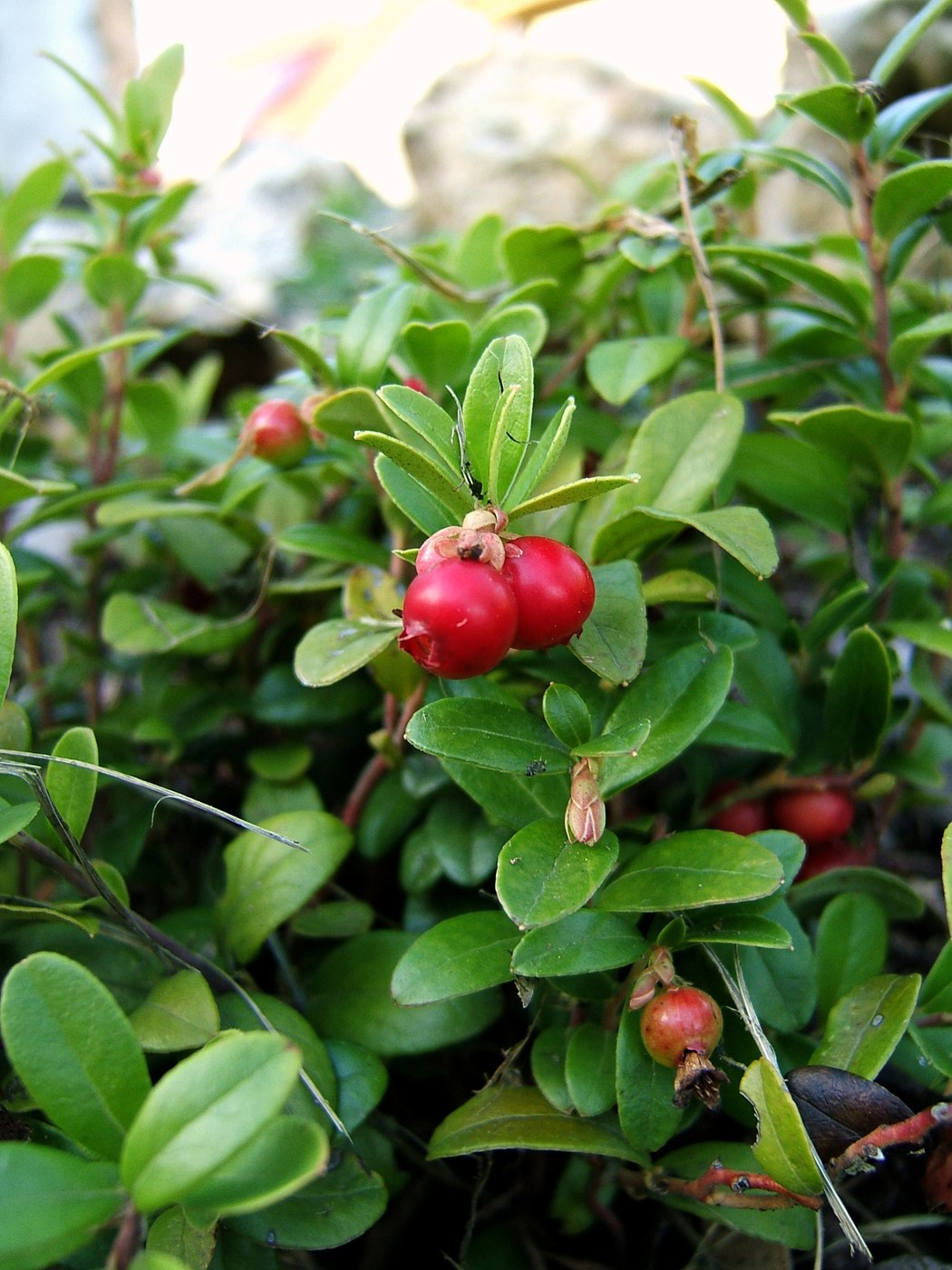
The lingonberry (Vaccinium vitis-idaea) is a low, spreading evergreen shrub with small glossy leaves, delicate bell-shaped flowers, and a neat, mat-forming habit that makes it an excellent ornamental groundcover for acidic gardens and containers. It is closely related to blueberry and shares its love of cool, acidic, moist conditions.
Light
Grow lingonberry in full sun to partial shade. Full sun in cooler climates produces the densest, most floriferous growth and the tidiest habit, while in hot regions light afternoon shade prevents leaf scorch and heat stress. Too much deep shade leads to thin, sparse, leggy plants.
Water
Provide moderate, consistent moisture in moist but well-drained soil. Lingonberry has shallow, fine roots that dislike both drying out and waterlogging, so aim for steady dampness rather than extremes. Water regularly during dry spells and use rainwater where possible, since hard tap water can gradually raise soil pH. A mulch of pine needles or bark keeps roots cool and moist.
Soil & Potting
Acidic soil is essential, ideally in the pH 4.5 to 5.5 range, and the soil must be well-drained yet moisture-retentive with plenty of organic matter. Blend in peat or a peat alternative, composted bark, and coarse sand or grit. For containers, use an ericaceous (acid) potting mix. Lingonberry grows well in raised beds or pots where you can control soil acidity precisely.
Humidity & Temperature
This is a cold-hardy, cool-climate plant, comfortable through roughly USDA zones 3 through 8, and it actually needs winter chill to perform well. It prefers cool summers and moderate humidity and can struggle with prolonged heat. In hot climates, afternoon shade and mulch are important for keeping the shallow roots cool.
Feeding
Feed sparingly. Like other ericaceous plants, lingonberry is sensitive to over-fertilizing and to high-salt fertilizers. Apply a light dose of an acid-formulated (ericaceous) fertilizer in spring if growth seems weak, and refresh organic mulch annually. Avoid lime and alkaline feeds, which raise pH and cause yellowing.
Propagation
Lingonberry spreads naturally by underground rhizomes, so the easiest method is division of rooted runners in spring. It can also be grown from semi-hardwood cuttings taken in summer, dipped in rooting hormone and rooted in a moist, acidic, well-aerated medium under humid conditions. Established mats can be gently lifted and split to make new plants.
Repotting / Pruning
Prune lightly after flowering or in late winter to remove dead or straggly stems and to keep the mat dense and tidy; lingonberry needs little heavy pruning. Repot container plants every two to three years into fresh ericaceous mix, or top-dress annually. Refresh mulch each spring to protect the shallow roots and maintain acidity.
Common Problems & Pests
The most frequent problems come from the wrong soil conditions: yellowing leaves (chlorosis) usually signal soil that is too alkaline, while wilting or root rot points to waterlogging. Lingonberry is relatively pest-resistant, though it can occasionally attract aphids or be affected by fungal leaf spots and Phytophthora root rot in poorly drained soil. Good drainage and correct pH prevent most issues.
Seasonal Care Tips
In spring, refresh mulch, feed lightly with an acid fertilizer if needed, and divide runners to expand plantings. Through summer, keep soil evenly moist and shade the roots in hot regions. In autumn the evergreen foliage often takes on bronze tints; leave it in place. In winter the plant is fully hardy but appreciates a mulch layer in exposed sites.
Frequently asked questions
Why are my lingonberry leaves turning yellow?
Yellowing between the veins usually means the soil is too alkaline for this acid-loving plant. Test the pH, aim for roughly 4.5 to 5.5, water with rainwater, and use an ericaceous mix or acidifying mulch to correct it.
Does lingonberry need acidic soil?
Yes, acidic soil is essential. Like blueberries, lingonberry needs a low pH around 4.5 to 5.5 with plenty of organic matter and good drainage. It grows well in raised beds or pots filled with ericaceous mix.
Can I grow lingonberry as groundcover?
Absolutely. Its low, spreading, evergreen mat-forming habit and rhizomatous growth make it an attractive ornamental groundcover for cool, acidic gardens and the front of borders or containers.
How do I propagate lingonberry?
The simplest way is dividing rooted runners in spring, since the plant spreads by rhizomes. You can also root summer semi-hardwood cuttings in a moist, acidic, well-aerated medium kept humid.
Lingonberry identified by the community
Recent Lingonberry specimens identified with Plant Identifier.