Lingonberry Identification Guide
Identify lingonberry (Vaccinium vitis-idaea) by its low evergreen mats, small glossy leaves with dark dots underneath, and tart bright-red berries.
Read the full Lingonberry encyclopedia entry →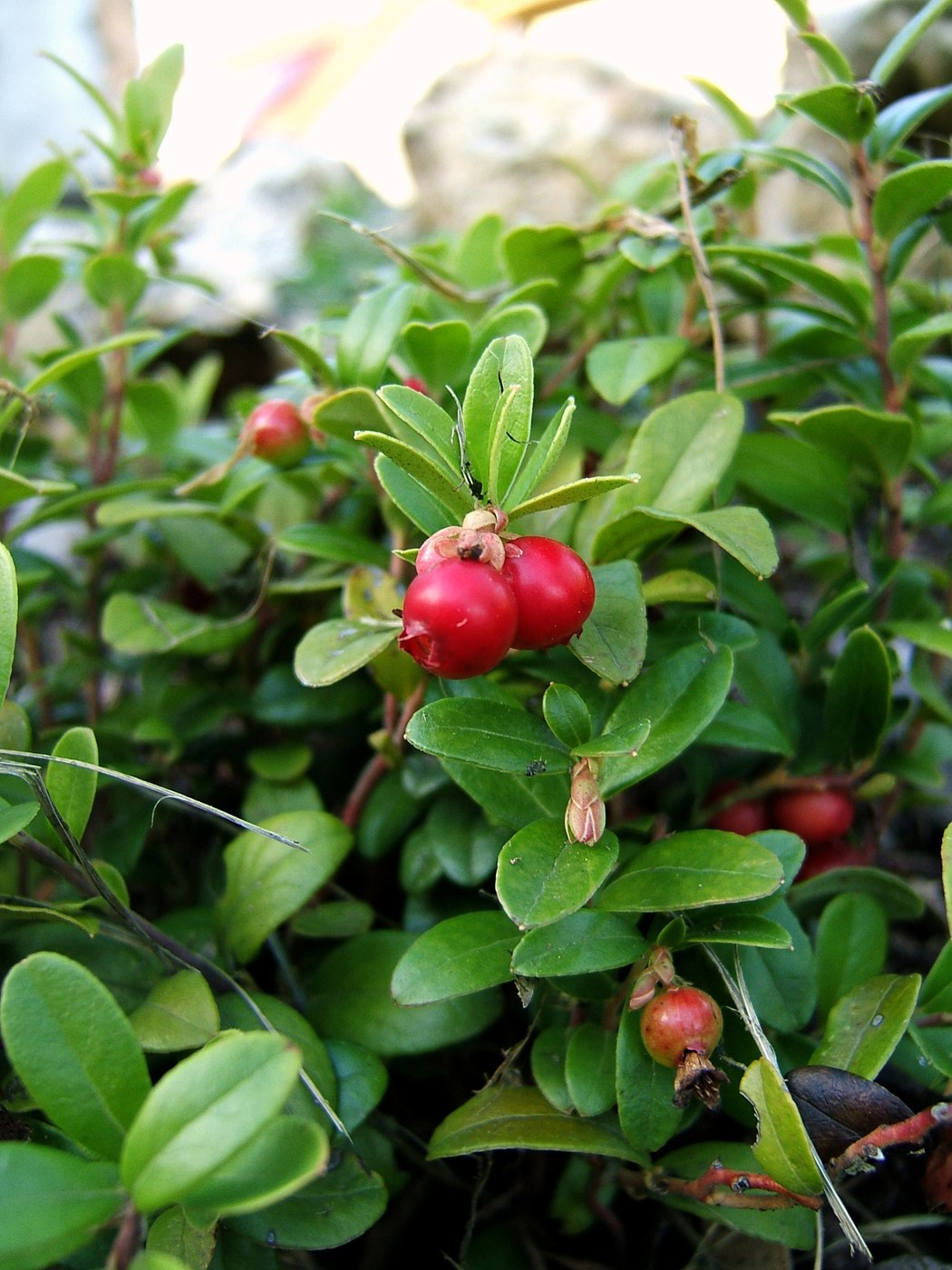
Key Identifying Features
Lingonberry (Vaccinium vitis-idaea), also called cowberry, is a low, creeping evergreen shrub only 4-12 in. tall, forming dense mats by underground runners. It is recognized by its small, leathery, glossy evergreen leaves and clusters of firm, tart, bright-red berries. Unlike most berry plants, it keeps its leaves all winter.
- Evergreen, leathery, box-like leaves year-round
- Very low, mat-forming, spreading by rhizomes
- Bright red, round, firm berries in small clusters at stem tips
- Tiny dark dots (bristly glands) on leaf undersides
Leaves & Stems
Leaves are alternate, small (0.4-1.2 in.), oval, thick and leathery, dark glossy green above and paler beneath with scattered tiny dark bristle-like dots. The leaf margins are smooth and slightly rolled under. Stems are short, woody, and creeping, with upright branchlets. The overall look resembles a miniature boxwood. Because it is evergreen, you can identify it even in winter under snow.
Flowers & Fruit
Flowers are small, bell-shaped, white to pale pink, nodding in short terminal clusters, usually in late spring and sometimes again in summer (two flushes). Fruit ripens in late summer to autumn as round, glossy, scarlet berries 6-10 mm clustered at the branch tips, persisting into winter. They are firm and very tart/acidic, with the typical small crown scar of the heath family. The combination of red berries on evergreen mats is unmistakable in the north.
How to Tell It Apart from Look-Alikes
- Bearberry (Arctostaphylos): Also a low evergreen mat with red berries, but its berries are mealy and dry, and leaves lack the dark dots underneath; lingonberry berries are juicy and tart.
- Cranberry (Vaccinium oxycoccos): Has tiny needle-like leaves on threadlike trailing stems in bogs; lingonberry leaves are broader and grow on firmer, drier ground.
- Cowberry vs partridgeberry (Mitchella): Partridgeberry has paired round leaves with a white midrib and twin-eyed berries; lingonberry leaves are single and dotted beneath.
- Blueberry: Deciduous and blue-fruited — lingonberry is evergreen and red.
Where You'll Find It
Lingonberry is circumboreal, native to northern Europe, Asia, and North America. It grows in acidic, well-drained soils of coniferous forests, heaths, tundra, bogs' drier margins, and rocky alpine slopes. Look for low evergreen carpets under pines and spruces, on mountain ridges, and in arctic and subarctic terrain, often alongside heather and mosses.
Quick ID Checklist
- Very low evergreen mat, 4-12 in.
- Small, leathery, glossy oval leaves with rolled edges
- Dark dots on the leaf underside
- White-to-pink bell flowers in terminal clusters
- Firm, tart, bright-red berries clustered at stem tips
- Acidic northern forest, heath, or tundra habitat
Frequently asked questions
How do I tell lingonberry from bearberry?
Both form low red-berried evergreen mats, but lingonberry berries are juicy and tart with dark dots on the leaf underside, while bearberry berries are dry and mealy.
Is lingonberry the same as cranberry?
No. Cranberry (Vaccinium oxycoccos) has tiny needle-like leaves on threadlike bog stems, while lingonberry has broader leathery leaves on firmer, drier ground.
Does it stay green in winter?
Yes, lingonberry is evergreen with leathery leaves, so you can identify it year-round, and its red berries often persist under the snow.
Why are the berries so sour?
Lingonberries are high in acids, giving a sharp tart flavor, which is why they are usually cooked into sauces and preserves rather than eaten raw.
Lingonberry identified by the community
Recent Lingonberry specimens identified with Plant Identifier.